

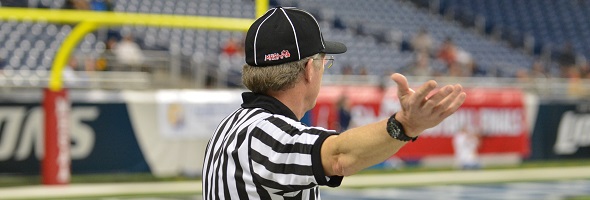
Be the Referee: Officials & Injuries
October 9, 2014
This week, MHSAA assistant director Mark Uyl explains the official's role when it comes to player injuries.
"Be the Referee" is designed to help educate people on the rules of different sports, to help them better understand the art of officiating and to recruit officials. The segment can be heard on Mondays, Wednesdays and Fridays during the school year on The Drive With Jack Ebling on WVFN-AM, East Lansing.
Below is this week's segment - Officials & Injuries - Listen
Player safety is the number one topic in football, from the NFL level to college to high school, all the way down to the youth levels. We often get the question, what is the official’s role when it comes to player injuries?
Officials have no role in diagnosing injuries. However, they must be constantly aware of what’s taking place on the field, and whenever a player is showing signs and symptoms of a possible injury, the game needs to be stopped and that team’s staff alerted to a possible injury.
The decisions on that injury are made by the team’s staff, which often includes a doctor, certified athletic trainer and members of the coaching staff to be certain that the best interests of the student-athlete is being followed in every case.
Past editions
Oct. 1 - Overtime - Listen
Sept. 25 - Field Goals - Listen
Sept. 18 - Tackle Box - Listen
Sept. 11 - Pass Interference - Listen
Aug. 25 - Targeting - Listen
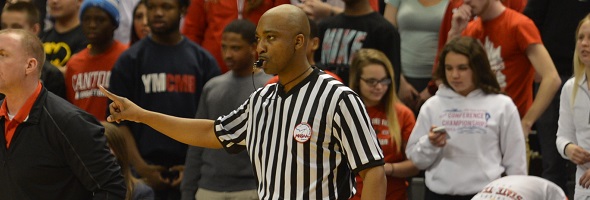
Be the Referee: Registration - Part 2
December 8, 2016
This week, MHSAA assistant director Mark Uyl builds on last week's explanation on becoming a registered high school official with the next step: connecting with a local officials association to learn how to enforce the rules of the game.
Be The Referee is a series of short messages designed to help educate people on the rules of different sports, to help them better understand the art of officiating, and to recruit officials.
Below is this week's segment – Registration - Part 2 - Listen
Today we are going to build on last week’s segment, which dealt with how a person becomes an MHSAA Registered Official.
Once a person completes the first step in the process – passing the basic Officiating Exam through the MHSAA Office, the next step is to get that person connected with a local officials association that specializes in that sport across our state.
These local associations are the ones that do the training – whether it’s on the court, on the field or video training – to get that person interested, for example, in basketball, completely immeresed in the rules, mechanics and coverages of what it takes to become a good basketball official.
Past editions
Dec. 1: Registration - Part 1 - Listen
Nov. 24: You Make the Call - Sleeper Play - Listen
Nov. 17: Automatic 1st Downs - Listen
Nov. 10: Uncatchable Pass - Listen
Nov. 3: The Goal Line - Listen
Oct. 27: Help Us Retain Officials - Listen
Oct. 20: Point After Touchdown - Listen
Oct. 13: Untimed Down - Listen
Oct. 6: Soccer Penalty Kick Change - Listen
Sept. 29: Preparation for Officials - Listen
Sept 22: You Make the Call: Returning Kickoffs - Listen
Sept. 15: Concussions - Listen
Sept 8: Equipment Covering the Knees - Listen
Sept. 1: Play Clock Experiment - Listen
Aug. 25: Clipping in the Free Blocking Zone - Listen