

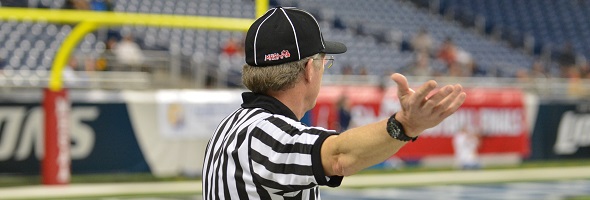
Be the Referee: Officials & Injuries
October 9, 2014
This week, MHSAA assistant director Mark Uyl explains the official's role when it comes to player injuries.
"Be the Referee" is designed to help educate people on the rules of different sports, to help them better understand the art of officiating and to recruit officials. The segment can be heard on Mondays, Wednesdays and Fridays during the school year on The Drive With Jack Ebling on WVFN-AM, East Lansing.
Below is this week's segment - Officials & Injuries - Listen
Player safety is the number one topic in football, from the NFL level to college to high school, all the way down to the youth levels. We often get the question, what is the official’s role when it comes to player injuries?
Officials have no role in diagnosing injuries. However, they must be constantly aware of what’s taking place on the field, and whenever a player is showing signs and symptoms of a possible injury, the game needs to be stopped and that team’s staff alerted to a possible injury.
The decisions on that injury are made by the team’s staff, which often includes a doctor, certified athletic trainer and members of the coaching staff to be certain that the best interests of the student-athlete is being followed in every case.
Past editions
Oct. 1 - Overtime - Listen
Sept. 25 - Field Goals - Listen
Sept. 18 - Tackle Box - Listen
Sept. 11 - Pass Interference - Listen
Aug. 25 - Targeting - Listen
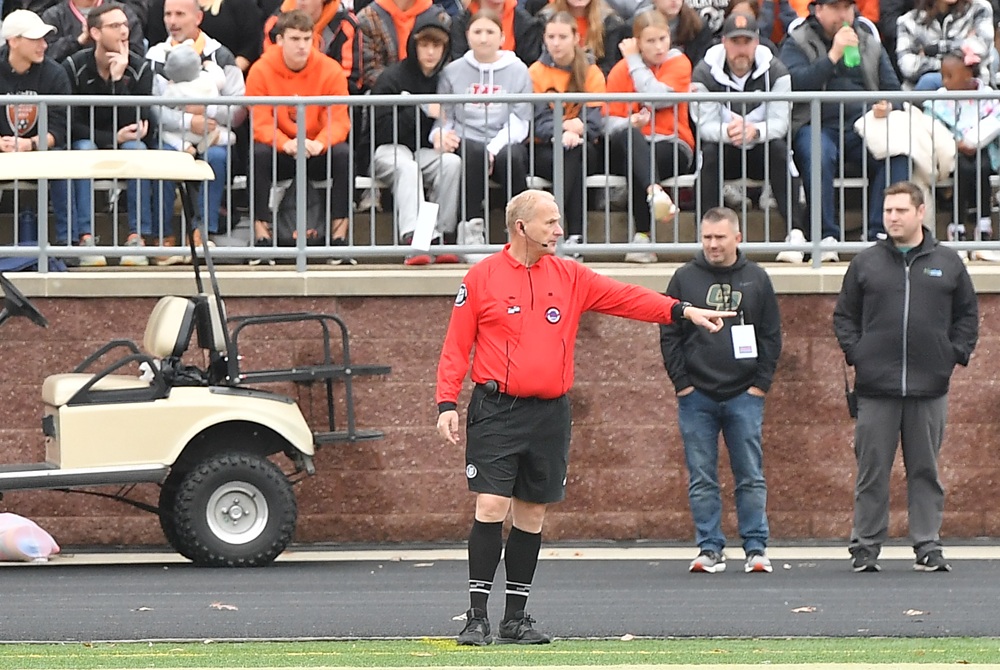
Be the Referee: Soccer Foul After Shot on Goal
By
Paige Winne
MHSAA Director of Brand Management
September 2, 2026
Be The Referee is a series of short messages designed to help educate people on the rules of different sports, to help them better understand the art of officiating, and to recruit officials.
Below is this week's segment – Soccer Foul After Shot on Goal - Listen
We’re on the soccer field today, and the home team has the ball and is on the attack.
The ball makes it around to a forward from the home team, who is on-side and within the penalty area. His shot just misses – going wide for a goal kick.
However, just after the ball crossed the goalline, a player from the away team tackles the home team forward with excessive force.
What’s the call?
Because excessive force was used, it’s a red card for the away team player, which is an automatic ejection. But because it happened after the ball crossed the goalline and not at the time of the shot, it’s still a goal kick for the away team, not a penalty kick for the home team.
Previous 2026-27 editions
Aug. 25: Fumble Out of Bounds - Listen