


Be the Referee: Overtime Differences
November 1, 2018
This week, MHSAA officials coordinator Sam Davis explains how high school football overtime differs from extra play at the college level.
Be The Referee is a series of short messages designed to help educate people on the rules of different sports, to help them better understand the art of officiating, and to recruit officials.
Below is this week's segment – Overtime Differences - Listen
There are a few differences in high school football overtime compared to college games.
During overtime in high school football, each team begins its offensive series 1st-and-Goal from the 10- yard line as opposed to 1st–and-10 at the 25. The only way a team can pick up a first down is on a roughing foul – roughing the passer, the holder, the center or the kicker.
A lost fumble or intercepted pass ends a team’s offensive series, (and on) a try for an extra point following a touchdown, the defense cannot return the ball for a score. And unlike college football, there is never a requirement that a team go for a 2-point conversion. What is common between the two levels is that each team gets one timeout per overtime, and unused timeouts don’t carry over from regulation or from overtimes.
Past editions
October 25: Trickery & Communication - Listen
October 18: Punts & Missed Field Goals - Listen
October 11: What Officials Don't Do - Listen
October 4: Always 1st-and-Goal - Listen
September 27: Unique Kickoff Option - Listen
September 20: Uncatchable Pass - Listen
September 13: Soccer Rules Change - Listen
September 6: You Make the Call: Face Guarding - Listen
August 30: 40-Second Play Clock - Listen
August 23: Football Rules Changes - Listen
Be the Referee: Multiple Contacts in Volleyball
By
Paige Winne
MHSAA Director of Brand Management
September 23, 2025
Be The Referee is a series of short messages designed to help educate people on the rules of different sports, to help them better understand the art of officiating, and to recruit officials.
Below is this week's segment – Multiple Contacts in Volleyball - Listen
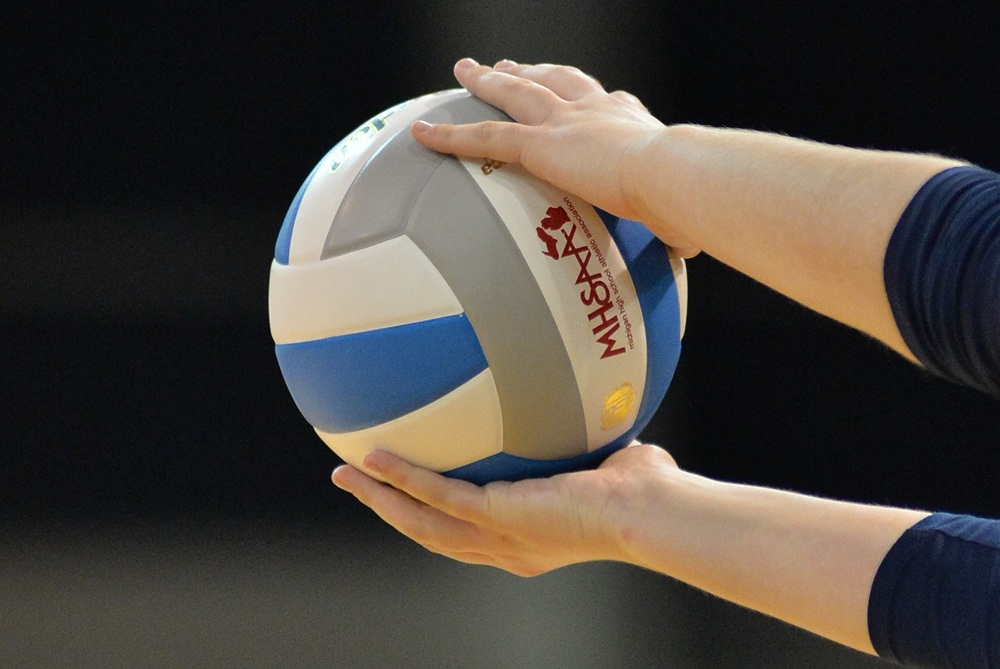
We’re on the volleyball court today, and it's a tight rally in the third set.
Team A’s outside hitter digs up a powerful spike, and then her setter contacts the ball a couple times while trying to set, and then sends it back to the outside hitter, who's right there to play it.
As the referee, you might think "multiple contacts" occurred – but thanks to the updated Rule 9-4-8c, because the ball was next directed to a teammate, that second contact is legal, and play should continue without a whistle.
This rule explicitly removes that judgment call when no advantage is gained, reducing interruptions and coach/official disputes. So in this scenario, you "let it ride" – no call, no stoppage – just free flow and fairness.
Previous 2025-26 editions
Sept. 16: Soccer Penalty Kick - Listen
Sept. 9: Forward Fumble - Listen
Sept. 2: Field Hockey Basics - Listen
Aug. 26: Golf Ball Bounces Out - Listen