


Be the Referee: Post Play
January 26, 2017
This week, MHSAA assistant director Mark Uyl discusses how unnecessary rough basketball play in the post area is being called by officials.
Be The Referee is a series of short messages designed to help educate people on the rules of different sports, to help them better understand the art of officiating, and to recruit officials.
Below is this week's segment – Post Play - Listen
Over the past several years, a point of emphasis in basketball has been to eliminate the unnecessary – and unneeded – rough and physical play, especially in the post area.
This year, a point of emphasis continues to be the calling of an automatic foul whenever a player in the post or lane area commits one of these four actions:
- It will automatically be a foul whenever one of the post players uses an arm bar;
- Or when one of those players uses an elbow to gain position;
- It’s also an automatic foul when that player uses the leg or knee to move an opponent out of the way;
- Or when that player backs down an opponent to establish new position.
Past editions
Jan. 19: Ice Hockey Overtime - Listen
Jan. 12: Free Throw Change - Listen
Jan. 5: Ratings - Listen
Dec. 22: Video Review - Part 2 - Listen
Dec. 15: Video Review - Part 1 - Listen
Dec. 8: Registration - Part 2 - Listen
Dec. 1: Registration - Part 1 - Listen
Nov. 24: You Make the Call - Sleeper Play - Listen
Nov. 17: Automatic 1st Downs - Listen
Nov. 10: Uncatchable Pass - Listen
Nov. 3: The Goal Line - Listen
Oct. 27: Help Us Retain Officials - Listen
Oct. 20: Point After Touchdown - Listen
Oct. 13: Untimed Down - Listen
Oct. 6: Soccer Penalty Kick Change - Listen
Sept. 29: Preparation for Officials - Listen
Sept 22: You Make the Call: Returning Kickoffs - Listen
Sept. 15: Concussions - Listen
Sept 8: Equipment Covering the Knees - Listen
Sept. 1: Play Clock Experiment - Listen
Aug. 25: Clipping in the Free Blocking Zone - Listen
Be the Referee: Soccer Overtime
By
Paige Winne
MHSAA Director of Brand Management
October 24, 2023
Be The Referee is a series of short messages designed to help educate people on the rules of different sports, to help them better understand the art of officiating, and to recruit officials.
Below is this week's segment – Soccer Overtime - Listen
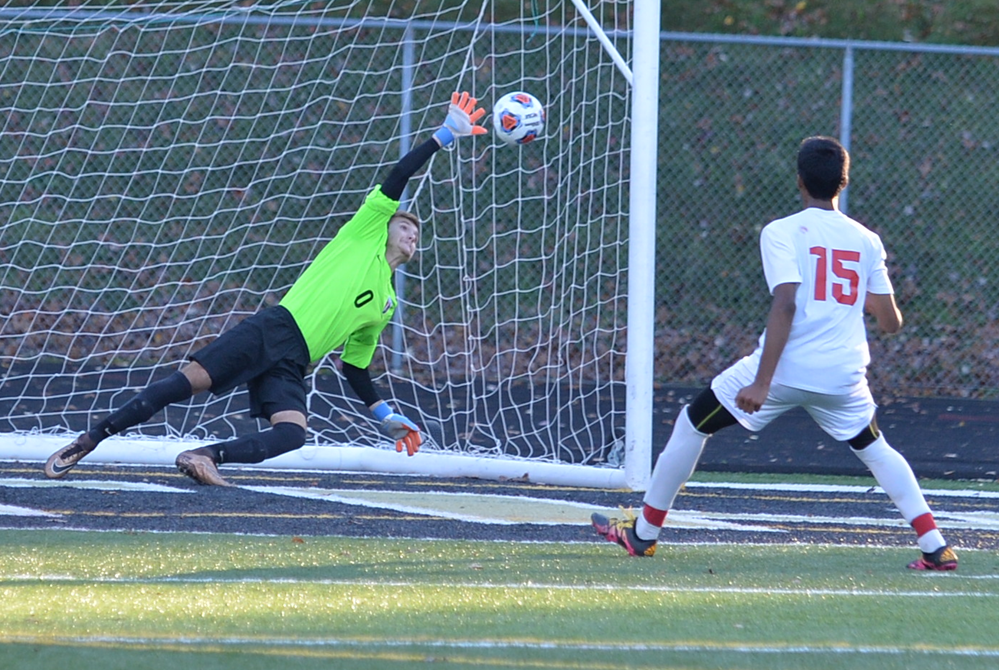
Soccer games in the postseason have one big noticeable difference from the regular season. In the postseason, games cannot end in a tie – so games go to overtime and possibly a shootout.
Here’s how that works:
If the game is tied at the end of regulation, it will go to overtime, which is two 10-minute periods played in its entirety. There is no sudden death or golden goal winner. If there is a winner at the end of the 20 minutes, that team wins and advances to the next round. If there’s still a tie, we move to a shootout.
In the shootout, the teams alternate taking five penalty kicks. If it’s still tied after five kicks, they each kick until the tie is broken.
Previous Editions
Oct. 17: Tennis Spin - Listen
Oct. 10: Blocked Kick - Listen
Oct. 3: Volleyball Double & Lift - Listen
Sept. 26: Registration Process - Listen
Sept. 20: Animal Interference - Listen
Sept. 13: Feet Rule on Soccer Throw-In - Listen
Sept. 6: Volleyball Jewelry - Listen
Aug. 30: Football Rules Similarities - Listen
Aug. 23: Football Rules Differences - Listen