

Be the Referee: Preparation for Officials
October 23, 2014
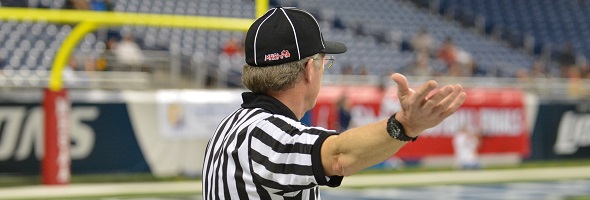
This week, MHSAA assistant director Mark Uyl explains how officials prepare for Friday nights, just like those playing the games and cheering them on.
"Be the Referee" is designed to help educate people on the rules of different sports, to help them better understand the art of officiating and to recruit officials. The segment can be heard on Mondays, Wednesdays and Fridays during the school year on The Drive With Jack Ebling on WVFN-AM, East Lansing.
Below is this week's segment - Preparation for Officials - Listen
Football is a game of preparation. During the week, the teams involved, the cheerleading squads and members of the marching band put in a great deal of work to be ready for Friday night. Officials are no different.
All across the state on Monday nights, referees attend local association meetings where they review film from the previous week’s games, talk about rules, coverages and mechanics, so that our team of officials are just as prepared and ready to go as the teams playing each and every Friday night.
In addition to Friday nights, many officials also work freshman and junior varsity games on Thursday, and often will work games on the weekend - whether they be small college all the way down to youth games - to give those young people on the field the best officiating possible.
Past editions
Oct. 15 - Automatic First Downs - Listen
Oct. 8 - Officials & Injuries - Listen
Oct. 1 - Overtime - Listen
Sept. 25 - Field Goals - Listen
Sept. 18 - Tackle Box - Listen
Sept. 11 - Pass Interference - Listen
Aug. 25 - Targeting - Listen
Be the Referee: Basketball Contact
January 22, 2015
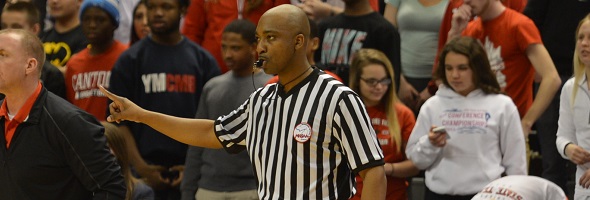
This week, MHSAA assistant director Mark Uyl explains new rules that further define contact fouls in high school basketball.
Be The Referee is a series of short messages designed to help educate people on the rules of different sports, to help them better understand the art of officiating, and to recruit officials.
Below is this week's segment - Basketball Physical Contact - Listen
One of the most challenging jobs for any basketball official is determining how much physical contact to allow over the course of the game. This year, new rules in high school basketball better define what contact against the dribbler or ball handler now results in a foul.
First, it is a foul whenever a defender places two hands at the same time on the dribbler. Second, whenever a defender places an extended arm bar on the dribbler. The third automatic foul is when that defender extends and places and keeps a hand on that dribbler for an extended period of time; and lastly, it’s an automatic foul whenever the defender contacts that dribbler more than once with either the same hand or with alternating hands.
Past editions
Jan. 12 - Video Review Part 2 - Listen
Dec. 29 - Video Review Part 1 - Listen
Dec. 17 - Registration Part 2 - Listen
Dec. 10 - Registration Part 1 - Listen
Dec. 3 - Legacy Program - Listen
Nov. 26 - Sideline Management - Listen
Nov. 19 - 7-Person Mechanics - Listen
Nov. 12 - Blocking Below the Waist - Listen
Nov. 5 - Tournament Selection - Listen
Oct. 29 - Uncatchable Pass - Listen
Oct. 22 - Preparation for Officials - Listen
Oct. 15 - Automatic First Downs - Listen
Oct. 8 - Officials & Injuries - Listen
Oct. 1 - Overtime - Listen
Sept. 25 - Field Goals - Listen
Sept. 18 - Tackle Box - Listen
Sept. 11 - Pass Interference - Listen
Aug. 25 - Targeting - Listen