

Be the Referee: Primary Areas
February 11, 2016
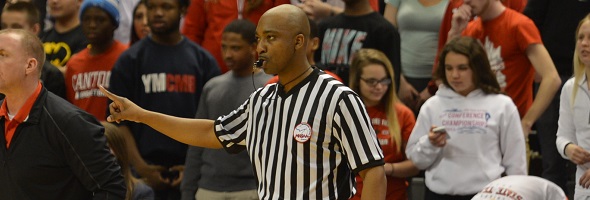
This week, MHSAA assistant director Mark Uyl explains how angle is the most important factor when determining which basketball official should make a call.
Be The Referee is a series of short messages designed to help educate people on the rules of different sports, to help them better understand the art of officiating, and to recruit officials.
Below is this week's segment - Primary Areas - Listen
In just about every single basketball game ever played, there are times where fans will turn to each other and wonder, “Why did that official make the call when there was another member of the crew that was a whole lot closer to the play?”
The most important thing in all of officiating and especially basketball officiating is angle is the most important element for an official.
There will be many times during the game that the official that is closest to the play actually has the worst look or the worst angle. Many times the player is going up in the lane for that shot, and the whistle will come from one of the two outside officials because they had the perfect angle to see all the elements of the play and can rule correctly.
Past editions:
Feb. 4: Block/Charge Calls - Listen
Jan. 28: Dive on the Floor - Listen
Jan. 21: Hockey Officials' Options - Listen
Jan. 14: Recruiting Officials - Listen
Jan. 7: Wrestling Weight Monitoring - Listen
Dec. 31: Respect for Referees - Listen
Dec. 24: Basketball Instant Replay - Listen
Dec. 17: Basketball Communication - Listen
Dec. 10: Basketball Excessive Contact - Listen
Nov. 26: Pregame Communication - Listen
Nov. 19: Trick Plays - Listen
Nov. 12: 7-Person Football Mechanics - Listen
Nov. 5: Make the Call: Personal Fouls - Listen
Oct. 29: Officials Demographics - Listen
Oct. 15: Make the Call: Intentional Grounding - Listen
Oct. 8: Playoff Selection - Listen
Oct. 1: Kick Returns - Listen
Sept. 24: Concussions - Listen
Sept. 17: Automatic First Downs - Listen
Sept. 10: Correcting a Down - Listen
Sept 3: Spearing - Listen
Aug. 27: Missed Field Goal - Listen
Be The Referee: Alternating Possession
December 18, 2019
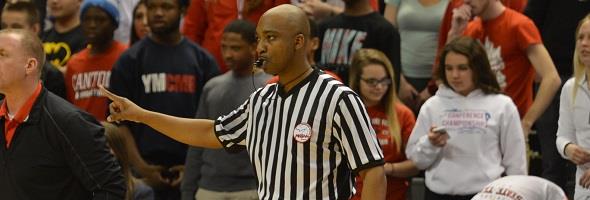
This week, MHSAA assistant director Brent Rice offers a "You Make the Call" regarding alternate possession, or lack thereof, on the basketball court.
Be The Referee is a series of short messages designed to help educate people on the rules of different sports, to help them better understand the art of officiating, and to recruit officials.
Below is this week's segment - Alternating Possession - Listen
With the basketball season now underway, let’s test your rules knowledge with this "You Make The Call."
A game starts with the jump ball. The possession arrow gets set after one team establishes possession. However, on this jump ball, a player for each team tangles for the rock and creates a held-ball situation. You make the call. Remember, alternate possession does not apply yet.
In this case of dual possession of the original jump ball, without the possession arrow being set, a second jump ball of the two players involved is the result, and the game clock does not reset to the beginning of the period.
Past editions
Dec. 12: Ratings - Listen
Dec. 5: Video Review Success - Listen
Nov. 28: More Injury Time - Listen
Nov. 21: Football Review - Listen
Nov. 14: Sideline Safety - Listen
Nov. 7: Officials Playlist - Listen
Oct. 31: Most Important Line - Listen
Oct. 24: Automatic 1st Downs - Listen
Oct. 17: Catch Momentum - Listen
Oct. 10: Golf Rules Changes - Listen
Oct. 3: No Tackle Box - Listen
Sept. 26: You Make the Overtime Call - Listen
Sept. 19: Swimming Finishing Touch - Listen
Sept. 12: Curbing Gamesmanship By Substitution - Listen
Sept. 5: Football Safety Rules Changes - Listen
Aug. 29: 40-Second Play Clock - Listen