

Be the Referee: Soccer Rule Change
September 13, 2018
In this week's edition, MHSAA officials coordinator Sam Davis explains a significant change in soccer regarding fouls in the penalty area.
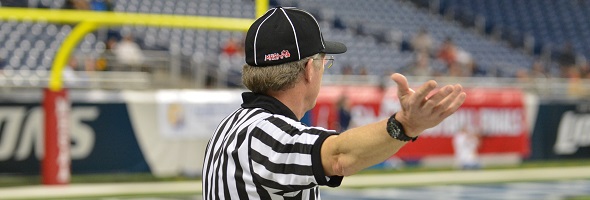
Be The Referee is a series of short messages designed to help educate people on the rules of different sports, to help them better understand the art of officiating, and to recruit officials.
Below is this week's segment – Soccer Rules Change - Listen
There’s a big change in soccer rules this year on plays where a defender denies an obvious goal-scoring opportunity within his or her own penalty area.
The penalty has been amended depending on whether or not the referee determines that the defensive player was attempting to play the ball when committing the foul. If so, the defender will receive a yellow card rather than a red card – and a penalty kick will be awarded. This eliminates the previous double jeopardy on the play – a P-K and a red card.
Of course, in those circumstances where there was no attempt to play the ball, the defender is still disqualified. This brings the high school rule in line with college and international rules.
Past editions
September 3: You Make the Call: Face Guarding - Listen
August 30: 40-Second Play Clock - Listen
August 23: Football Rules Changes - Listen

Be the Referee: Home Run or Not?
May 4, 2016
This week, MHSAA assistant director Mark Uyl presents a "You Make the Call" on a fly ball that ends up over the fence, but with a little bit of help.
Be The Referee is a series of short messages designed to help educate people on the rules of different sports, to help them better understand the art of officiating, and to recruit officials.
Below is this week's segment - Home Run or Not? - Listen
Today let’s play "You Make The Call" with this following baseball or softball situation:
With no runners on base, the batter hits a long fly ball directly down the left field line. The left fielder comes over and attempts to catch the ball directly in front of the outfield fence and the left field foul pole. The ball touches the fielder’s glove in fair territory and then hits off the glove and goes over the outfield fence, but on the foul side of the foul pole.
You Make The Call.
In this case, when the ball was touched in fair territory, it was a fair ball.
But when the ball went over the fence in foul territory, it became a ground rule double.
Past editions:
April 28: Norris Award Winner Linda Hoover - Listen
April 21: Legacy Program - Listen
April 14: Baseball/Softball Replay - Listen
March 24: Use of the Monitor - Listen
March 17: Block/Charge - Listen
March 10: Ball Stuck on the Rim - Listen
March 3: Three Seconds - Listen
Feb. 25: Deciding the Game - Listen
Feb. 18 : Cheer Safety - Listen
Feb. 11: Primary Areas - Listen
Feb. 4: Block/Charge Calls - Listen
Jan. 28: Dive on the Floor - Listen
Jan. 21: Hockey Officials' Options - Listen
Jan. 14: Recruiting Officials - Listen
Jan. 7: Wrestling Weight Monitoring - Listen
Dec. 31: Respect for Referees - Listen
Dec. 24: Basketball Instant Replay - Listen
Dec. 17: Basketball Communication - Listen
Dec. 10: Basketball Excessive Contact - Listen
Nov. 26: Pregame Communication - Listen
Nov. 19: Trick Plays - Listen
Nov. 12: 7-Person Football Mechanics - Listen
Nov. 5: Make the Call: Personal Fouls - Listen
Oct. 29: Officials Demographics - Listen
Oct. 15: Make the Call: Intentional Grounding - Listen
Oct. 8: Playoff Selection - Listen
Oct. 1: Kick Returns - Listen
Sept. 24: Concussions - Listen
Sept. 17: Automatic First Downs - Listen
Sept. 10: Correcting a Down - Listen
Sept 3: Spearing - Listen
Aug. 27: Missed Field Goal - Listen