

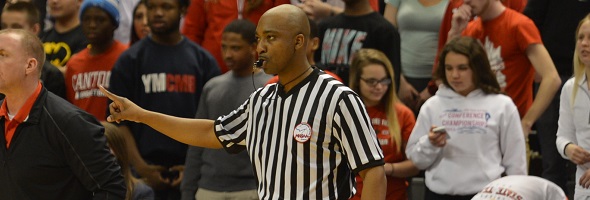
Be the Referee: Three Seconds
March 9, 2016
This week, MHSAA assistant director Mark Uyl explains one of the most misunderstood rules in basketball, the 3-second rule.
Be The Referee is a series of short messages designed to help educate people on the rules of different sports, to help them better understand the art of officiating, and to recruit officials.
Below is this week's segment - Three Seconds - Listen
It's hard to go to a basketball game and not sit near other fans who are yelling about the officials not calling three seconds. The 3-second rule is one of the most misunderstood rules in the game of basketball.
The purpose and philosophy of the rule is to not allow a player who is significantly taller than his or her opponent to camp out in the middle of the lane and create an unfair advantage. The 3-second count is in effect whenever an offensive player has at least one foot in the lane when their team has possession of the ball. That count stops as soon as a try is attempted, or a try is imminent.
Keep this in mind at the next game you attend.
Past editions:
Feb. 25: Deciding the Game - Listen
Feb. 18 : Cheer Safety - Listen
Feb. 11: Primary Areas - Listen
Feb. 4: Block/Charge Calls - Listen
Jan. 28: Dive on the Floor - Listen
Jan. 21: Hockey Officials' Options - Listen
Jan. 14: Recruiting Officials - Listen
Jan. 7: Wrestling Weight Monitoring - Listen
Dec. 31: Respect for Referees - Listen
Dec. 24: Basketball Instant Replay - Listen
Dec. 17: Basketball Communication - Listen
Dec. 10: Basketball Excessive Contact - Listen
Nov. 26: Pregame Communication - Listen
Nov. 19: Trick Plays - Listen
Nov. 12: 7-Person Football Mechanics - Listen
Nov. 5: Make the Call: Personal Fouls - Listen
Oct. 29: Officials Demographics - Listen
Oct. 15: Make the Call: Intentional Grounding - Listen
Oct. 8: Playoff Selection - Listen
Oct. 1: Kick Returns - Listen
Sept. 24: Concussions - Listen
Sept. 17: Automatic First Downs - Listen
Sept. 10: Correcting a Down - Listen
Sept 3: Spearing - Listen
Aug. 27: Missed Field Goal - Listen
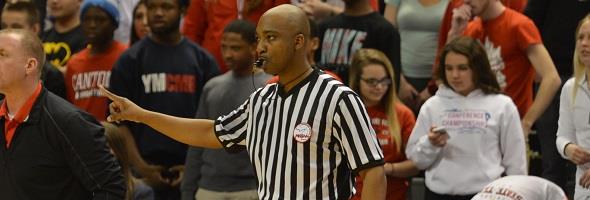
Be the Referee: Selecting Finals Officials
April 9, 2018
In this final edition for the 2017-18 school year, assistant director Mark Uyl explains how officials are selected to work the MHSAA's biggest tournament events.
Be The Referee is a series of short messages designed to help educate people on the rules of different sports, to help them better understand the art of officiating, and to recruit officials.
Below is this week's segment – Selecting Finals Officials - Listen
During every season and every tournament, we get the question, “How were these officials chosen to be working the championship games?”
Just like the tournament progression has the best teams playing until the bitter end, we have a process to where the best officials are also identified to be working those Semifinal and Final games.
Every official gets rated by both schools (every time she or he work a game) over a three-year period on a 1-4 scale. All of this data is compiled to where we then produce the top third, middle third and bottom third in terms of school ratings.
We then also look at recommendations from associations, assigners and leagues and conferences to identify the very best officials being on the very best games.
Past editions
March 15: We Get Letters - Listen
February 22: Block/Charge Calls - Listen
February 15: Dog Days of February - Listen
February 8: National Playing Rules Process - Listen
February 1: Calling Intentional Fouls - Listen
January 25: Points at the Edge of the Mat - Listen
January 18: Behavior Warning - Listen
January 11: Ice Hockey Safe & Sound - Listen
January 4: Why No Shot Clock - Listen
December 21: Coaches Responsible for Equipment - Listen
December 14: Mentoring New Officials - Listen
December 7: Dive on the Floor - Listen
November 30: Wrestling Weight Monitoring - Listen
November 23: Ejections - Listen
November 16: Toughest Call - Listen
November 9: Hurdling - Listen
November 2: The Survey Says - Listen
October 26: Helmet Comes Off - Listen
October 19: Goal Line Rules - Listen
October 12: No 1st-Year Fee - Listen
October 5: Athletic Empty Nesters - Listen
September 28: Misunderstood Football Rules: Kicking - Listen
September 21: Preparation for Officials - Listen
September 14: Always Stay Registered - Listen
September 7: Other Football Rules Changes - Listen
August 31: Pop-Up Onside Kicks - Listen
August 24: Blindside Blocks - Listen