

Be the Referee: Uncatchable Pass
October 30, 2014
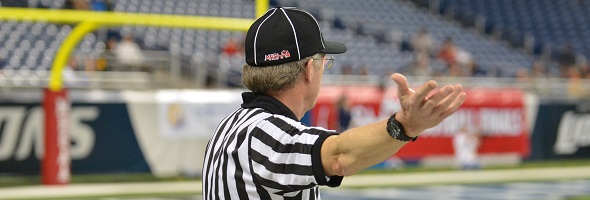
This week, MHSAA assistant director Mark Uyl explains the differences between high school and college and pro rules when it comes to an uncatachable pass.
"Be the Referee" is designed to help educate people on the rules of different sports, to help them better understand the art of officiating and to recruit officials. The segment can be heard on Mondays, Wednesdays and Fridays during the school year on The Drive With Jack Ebling on WVFN-AM, East Lansing.
Below is this week's segment - Uncatchable Pass - Listen
Today we’re going to talk about one of the most misunderstood rules at the high school level, and that deals with the uncatchable pass.
All of us have sat in front of our televisions on Saturday or Sunday and seen the long pass get thrown, followed immediately by the throwing of the flag. As the officials discuss what happened, the referee invariably clicks on the microphone and announces that there is no foul for pass interference because the pass was uncatchable.
At the high school level, that is not a factor in deciding whether or not pass interference has occurred. The ball does not have to be catchable, and if the contact is ruled as pass interference, that foul stands, regardless of the quality of the pass.
Past editions
Oct. 22 - Preparation for Officials - Listen
Oct. 15 - Automatic First Downs - Listen
Oct. 8 - Officials & Injuries - Listen
Oct. 1 - Overtime - Listen
Sept. 25 - Field Goals - Listen
Sept. 18 - Tackle Box - Listen
Sept. 11 - Pass Interference - Listen
Aug. 25 - Targeting - Listen
Be the Referee: Dead Ball Penalty
By
Paige Winne
MHSAA Director of Brand Management
September 15, 2026
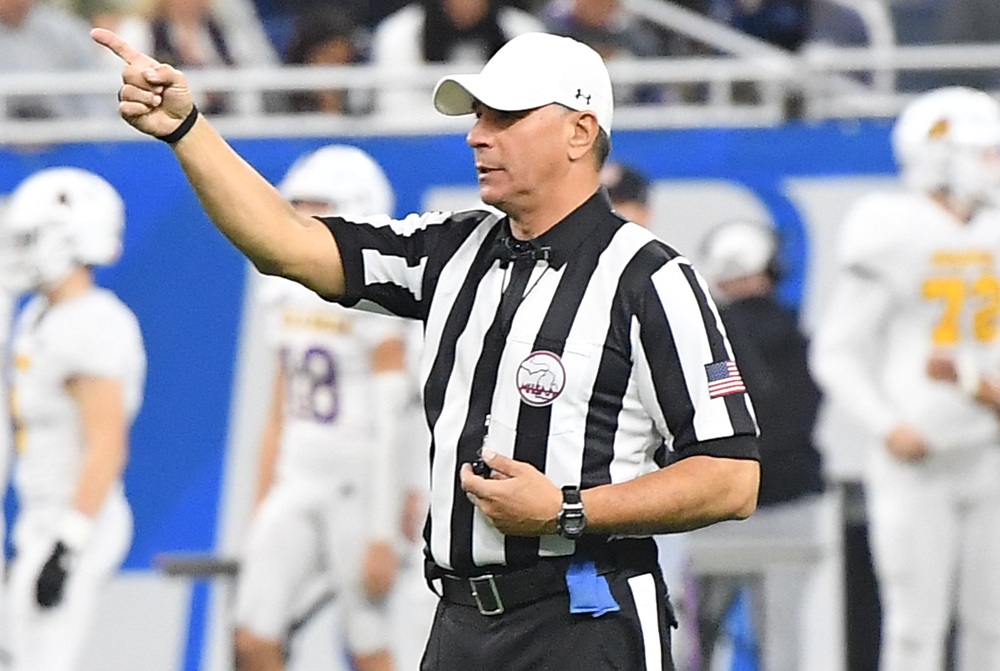
Be The Referee is a series of short messages designed to help educate people on the rules of different sports, to help them better understand the art of officiating, and to recruit officials.
Below is this week's segment – Dead Ball Penalty - Listen
We’ve got 4th-and-10 on the football field today. Team A has the ball on their own 40 and is going for it.
The quarterback scrambles and is pushed out of bounds at the 49-yard line, one yard short of a first down.
A defensive player from Team B hits the quarterback after he’s been pushed out of bounds and is flagged for a dead-ball personal foul. Where should the ball be marked and who has possession?
Is it 1st-and-10 for Team A at Team B’s 36-yard line? Or does the defense get the ball, 1st-and-10 for Team B at their own 36?
If you said Team B’s ball, you are correct. The personal foul was a dead-ball penalty that is enforced after the change of possession.
Previous 2026-27 editions
Sept. 8: Libero Ejected - Listen
Sept. 1: Soccer Foul After Shot on Goal - Listen
Aug. 25: Fumble Out of Bounds - Listen