


Be the Referee: Video Replay - Part 2
December 22, 2016
This week, MHSAA assistant director Mark Uyl explains some of the main obstacles standing in the way of increased use of replay at the high school level.
Be The Referee is a series of short messages designed to help educate people on the rules of different sports, to help them better understand the art of officiating, and to recruit officials.
Below is this week's segment – Video Review - Part 2 - Listen
In last week’s segment, we talked about the expanded use of instant replay for officials at both the collegiate and professional levels. The question is often asked of the MHSAA, “When are you going to use more instant replay at the high school level?”
Currently, there are a number of obstacles that prevent this, the first dealing with volume. With over 700 member schools in the MHSAA, hundreds of games and contests are played on virtually every night of the week. The second deals with cost and camera angles. At the high school level, most games are typically filmed or videoed using only a single camera from a set location, which precludes the use of various angles that would assist in getting the call correct.
Past editions
Dec. 15: Video Review - Part 1 - Listen
Dec. 8: Registration - Part 2 - Listen
Dec. 1: Registration - Part 1 - Listen
Nov. 24: You Make the Call - Sleeper Play - Listen
Nov. 17: Automatic 1st Downs - Listen
Nov. 10: Uncatchable Pass - Listen
Nov. 3: The Goal Line - Listen
Oct. 27: Help Us Retain Officials - Listen
Oct. 20: Point After Touchdown - Listen
Oct. 13: Untimed Down - Listen
Oct. 6: Soccer Penalty Kick Change - Listen
Sept. 29: Preparation for Officials - Listen
Sept 22: You Make the Call: Returning Kickoffs - Listen
Sept. 15: Concussions - Listen
Sept 8: Equipment Covering the Knees - Listen
Sept. 1: Play Clock Experiment - Listen
Aug. 25: Clipping in the Free Blocking Zone - Listen
Be the Referee: Over the Back
By
Sam Davis
MHSAA Director of Officials
March 3, 2026
Be The Referee is a series of short messages designed to help educate people on the rules of different sports, to help them better understand the art of officiating, and to recruit officials.
Below is this week's segment – Over the Back - Listen
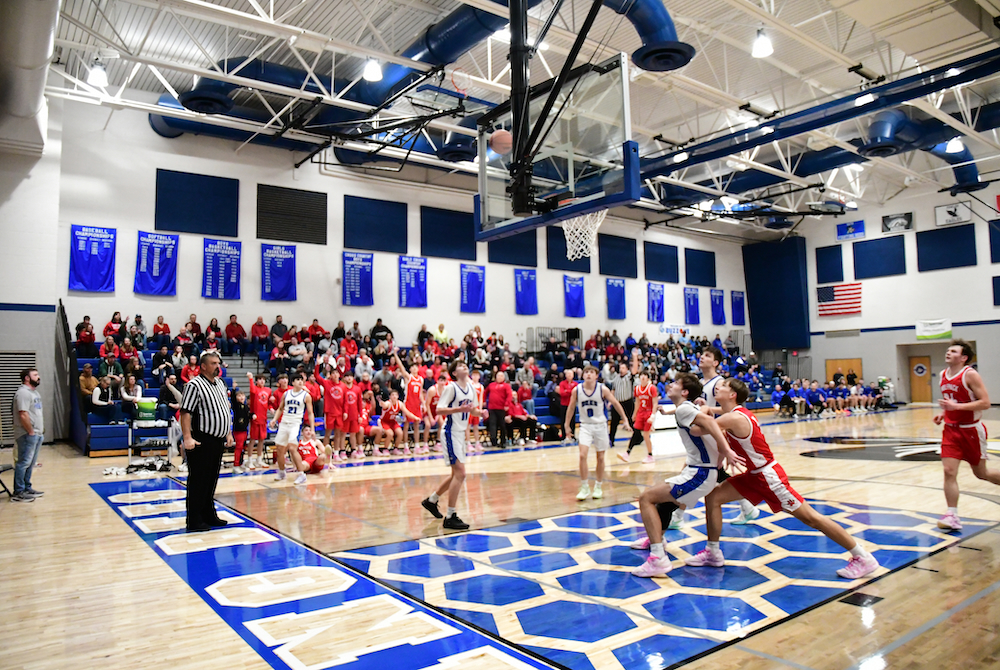
Did you know there is no such thing as “over the back” in basketball? If two players are going for a rebound and the player behind another player is able to grab it over the top of the player in front – that’s not necessarily a foul. He or she did not go over the back.
The player behind another player may have committed a foul such as bumping the player in front, or pushing that player – gaining an advantage to grab the rebound – but that would be whistled for a push or grab. Not over the back.
A taller player or player who can jump higher grabbing a rebound is not a foul. It’s only a foul if they create an advantage by pushing, bumping, or any other kind of illegal contact while in the process of going for a rebound. Fans yell over the back all the time, but an official will never call a foul for going over the back.
Previous 2025-26 editions
Feb. 24: Wrestling Out-of-Bounds - Listen
Feb. 17: Backwards Skiing - Listen
Feb. 10: Faking Being Fouled - Listen
Feb. 3: Bowling Pins - Listen
Jan. 27: Ski Gates - Listen
Jan. 20: Cheer Judges - Listen
Jan. 13: Basketball Over the Back - Listen
Jan. 6: Bowling Ball Bounces Out of Gutter - Listen
Dec. 9: Puck on Goal Netting - Listen
Dec. 2: Goaltending vs. Basket Interference - Listen
Nov. 25: Football Finals Instant Replay - Listen
Nov. 18: Volleyball Libero Uniforms - Listen
Nov. 11: Illegal Substitution/Participation - Listen
Nov. 4: Losing a Shoe - Listen
Oct. 28: Unusual Soccer Goals - Listen
Oct. 21: Field Hockey Penalty Stroke - Listen
Oct. 14: Tennis Double Hit - Listen
Oct. 7: Safety in Football - Listen
Sept. 30: Field Hockey Substitution - Listen
Sept 23: Multiple Contacts in Volleyball - Listen
Sept. 16: Soccer Penalty Kick - Listen
Sept. 9: Forward Fumble - Listen
Sept. 2: Field Hockey Basics - Listen
Aug. 26: Golf Ball Bounces Out - Listen
PHOTO Bath and Laingsburg players get in position to collect the rebound off a missed shot during their District Final on Friday. (Photo by John Johnson/MHSAA.)