

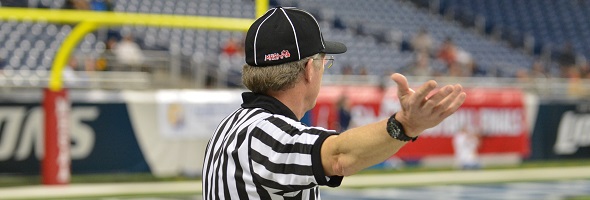
Be the Referee: What Officials Don't Do
October 11, 2018
This week, MHSAA officials coordinator Sam Davis discusses some of the things that do not fall under officials' many game-day responsibilities.
Be The Referee is a series of short messages designed to help educate people on the rules of different sports, to help them better understand the art of officiating, and to recruit officials.
Below is this week's segment – What Officials Don't Do - Listen
Game officials at all levels have a lot of responsibilities. But there are some critical things that take place at local high school games where officials don’t have the authority that some folks think they do.
Let’s start with injuries – specifically concussions. Concussion management starts and ends with the local school. If an official suspects a concussion – or any injury – all he or she can do is notify the coach of the team. The school makes the decision about whether or not a player stays in the game.
We often get calls about whether or not an official is responsible for enforcing MHSAA Handbook rules. Again, it’s up to the school, which agrees to follow and enforce the rules when joining the Association. Even if the official suspects an ineligible player is in the game, it’s not his or her role to enforce that rule. It’s all on the school.
Past editions
October 4: Always 1st-and-Goal - Listen
September 27: Unique Kickoff Option - Listen
September 20: Uncatchable Pass - Listen
September 13: Soccer Rules Change - Listen
September 6: You Make the Call: Face Guarding - Listen
August 30: 40-Second Play Clock - Listen
August 23: Football Rules Changes - Listen

Be the Referee: Video Replay, Part 2
November 29, 2018
This week, MHSAA Executive Director Mark Uyl explains some of the main obstacles standing in the way of increased use of replay at the high school level.
Be The Referee is a series of short messages designed to help educate people on the rules of different sports, to help them better understand the art of officiating, and to recruit officials.
Below is this week's segment – Video Review, Part 2 - Listen
In last week’s segment, we talked about the expanded use of instant replay for officials at both the collegiate and professional levels. The question is often asked of the MHSAA, “When are you going to use more instant replay at the high school level?”
Currently, there are a number of obstacles that prevent this, the first dealing with volume. With over 700 member schools in the MHSAA, hundreds of games and contests are played on virtually every night of the week. The second deals with cost and camera angles. At the high school level, most games are typically filmed or videoed using only a single camera from a set location, which precludes the use of various angles that would assist in getting the call correct.
Past editions
November 22: Video Review, Part 1 - Listen
November 15: You Make the Call - Sleeper Play - Listen
November 8: 7-Person Football Crews - Listen
November 1: Overtime Differences - Listen
October 25: Trickery & Communication - Listen
October 18: Punts & Missed Field Goals - Listen
October 11: What Officials Don't Do - Listen
October 4: Always 1st-and-Goal - Listen
September 27: Unique Kickoff Option - Listen
September 20: Uncatchable Pass - Listen
September 13: Soccer Rules Change - Listen
September 6: You Make the Call: Face Guarding - Listen
August 30: 40-Second Play Clock - Listen
August 23: Football Rules Changes - Listen