

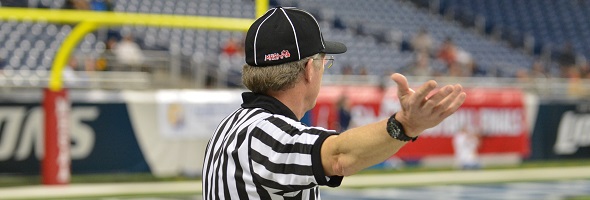
Be the Referee: What Officials Don't Do
October 11, 2018
This week, MHSAA officials coordinator Sam Davis discusses some of the things that do not fall under officials' many game-day responsibilities.
Be The Referee is a series of short messages designed to help educate people on the rules of different sports, to help them better understand the art of officiating, and to recruit officials.
Below is this week's segment – What Officials Don't Do - Listen
Game officials at all levels have a lot of responsibilities. But there are some critical things that take place at local high school games where officials don’t have the authority that some folks think they do.
Let’s start with injuries – specifically concussions. Concussion management starts and ends with the local school. If an official suspects a concussion – or any injury – all he or she can do is notify the coach of the team. The school makes the decision about whether or not a player stays in the game.
We often get calls about whether or not an official is responsible for enforcing MHSAA Handbook rules. Again, it’s up to the school, which agrees to follow and enforce the rules when joining the Association. Even if the official suspects an ineligible player is in the game, it’s not his or her role to enforce that rule. It’s all on the school.
Past editions
October 4: Always 1st-and-Goal - Listen
September 27: Unique Kickoff Option - Listen
September 20: Uncatchable Pass - Listen
September 13: Soccer Rules Change - Listen
September 6: You Make the Call: Face Guarding - Listen
August 30: 40-Second Play Clock - Listen
August 23: Football Rules Changes - Listen
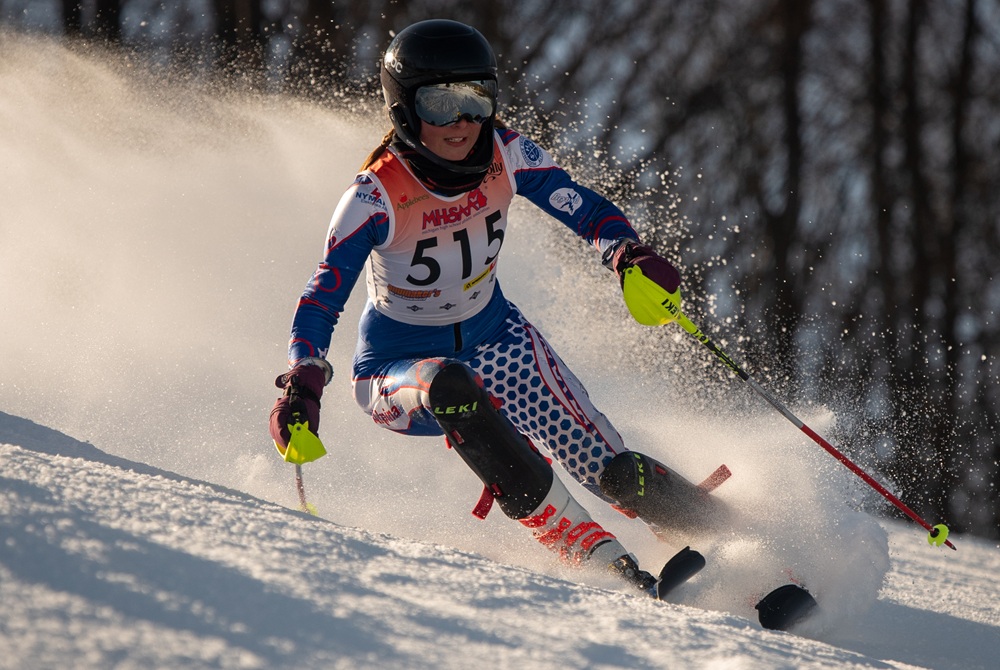
Be the Referee: Backwards Skiing
By
Paige Winne
MHSAA Director of Brand Management
February 17, 2026
Be The Referee is a series of short messages designed to help educate people on the rules of different sports, to help them better understand the art of officiating, and to recruit officials.
Below is this week's segment – Backwards Skiing - Listen
We’re on the hill today, ready to race the Giant Slalom. I’m heading toward the finish and clear the final gate, but as I complete that last turn I lose control. My skis skid out, I spin around, and suddenly I’m sliding toward the finish line backwards. I stay on my feet and cross the line facing uphill instead of down. Is that legal?
Yes, it is.
Ski rules do not require a racer to cross the finish line facing forward. The key is that the skier completes the course correctly and that both feet cross the finish line. It can be on two skis, one ski, or even without skis. Forward or backward does not matter.
If there is a question, the referee and timekeeper make the final decision.
Previous 2025-26 editions
Feb. 10: Faking Being Fouled - Listen
Feb. 3: Bowling Pins - Listen
Jan. 27: Ski Gates - Listen
Jan. 20: Cheer Judges - Listen
Jan. 13: Basketball Over the Back - Listen
Jan. 6: Bowling Ball Bounces Out of Gutter - Listen
Dec. 9: Puck on Goal Netting - Listen
Dec. 2: Goaltending vs. Basket Interference - Listen
Nov. 25: Football Finals Instant Replay - Listen
Nov. 18: Volleyball Libero Uniforms - Listen
Nov. 11: Illegal Substitution/Participation - Listen
Nov. 4: Losing a Shoe - Listen
Oct. 28: Unusual Soccer Goals - Listen
Oct. 21: Field Hockey Penalty Stroke - Listen
Oct. 14: Tennis Double Hit - Listen
Oct. 7: Safety in Football - Listen
Sept. 30: Field Hockey Substitution - Listen
Sept 23: Multiple Contacts in Volleyball - Listen
Sept. 16: Soccer Penalty Kick - Listen
Sept. 9: Forward Fumble - Listen
Sept. 2: Field Hockey Basics - Listen
Aug. 26: Golf Ball Bounces Out - Listen