

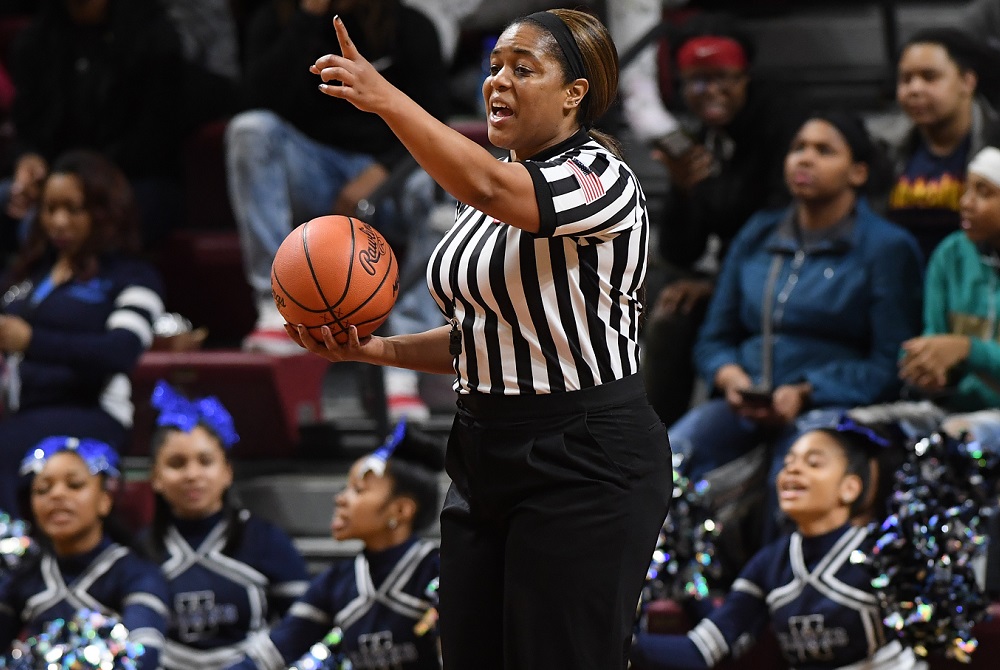
Be the Referee: Winter Officials Mechanics
By
Sam Davis
MHSAA Director of Officials
December 9, 2021
Be The Referee is a series of short messages designed to help educate people on the rules of different sports, to help them better understand the art of officiating, and to recruit officials.
Below is this week's segment – Winter Officials Mechanics - Listen
This season, MHSAA officials will return to the courts, mats and ice under some different conditions than over the past 20 months.
Other than a few select instances, all MHSAA protocols, procedures and playing rules have returned to what they were pre-COVID.
This means the jump ball in basketball returns, postgame handshakes will be permitted as each school sees fit, and traditional ball-handling by officials for free throws and throw-ins is back.
Of course, individual schools may retain certain precautionary measures, and officials are always permitted to use personal medical protective equipment.
The health and welfare of athletes, coaches and spectators is our No. 1 priority, and compliance with all local school district and health department mandates is required.
Previous editions
Nov. 26: Instant Replay - Listen
Nov. 11: Tourney Selection - Listen
Nov. 4: Receiver Carried Out of End Zone – Listen
Oct. 28: Volleyball Back-Row Block – Listen
Oct. 21: Soccer Disallowed Goal – Listen
Sept 30: Field Goal Falls Short – Listen
Sept. 23: Volleyball Obstruction – Listen
Sept. 16: Catch or No Catch – Listen
Sept. 9: Intentional Grounding – Listen
Sept. 2: Pass Interference – Listen
Aug. 26: Protocols and Mechanics – Listen
Be the Referee: Dive on the Floor
March 12, 2015
This week, MHSAA assistant director Mark Uyl explains one of the most misunderstood rules situations in basketball.
Be The Referee is a series of short messages designed to help educate people on the rules of different sports, to help them better understand the art of officiating, and to recruit officials.
Below is this week's segment - Dive on the Floor - Listen
In just about every single basketball game that’s played during the season, a player will hustle and dive for a loose ball that’s on the floor. As that player dives and tries to gain possession of the ball on the floor, yells from every corner of the gym come, screaming for a call of traveling.
This is one of the more misunderstood situations under basketball rules. Once that player dives for the loose ball on the floor and gains possession, there are two ways in which they’re guilty of a traveling violation: The first is if the player takes the ball and attempts to stand up; or the second, the player rolls over from (his or her) back to the front or front to back. Other than that, that’s a legal play, and the ball remains in play.
Past editions
March 2 - Primary Areas - Listen
Feb. 23 - Too Much TV - Listen
Feb. 16 - Video Clip Library - Listen
Feb. 9 - Cheer Safety - Listen
Feb. 2 - Basketball PA Announcers - Listen
Jan. 26 - Wrestling Health Concerns - Listen
Jan. 19 - Basketball Physical Contact - Listen
Jan. 12 - Video Review Part 2 - Listen
Dec. 29 - Video Review Part 1 - Listen
Dec. 17 - Registration Part 2 - Listen
Dec. 10 - Registration Part 1 - Listen
Dec. 3 - Legacy Program - Listen
Nov. 26 - Sideline Management - Listen
Nov. 19 - 7-Person Mechanics - Listen
Nov. 12 - Blocking Below the Waist - Listen
Nov. 5 - Tournament Selection - Listen
Oct. 29 - Uncatchable Pass - Listen
Oct. 22 - Preparation for Officials - Listen
Oct. 15 - Automatic First Downs - Listen
Oct. 8 - Officials & Injuries - Listen
Oct. 1 - Overtime - Listen
Sept. 25 - Field Goals - Listen
Sept. 18 - Tackle Box - Listen
Sept. 11 - Pass Interference - Listen
Aug. 25 - Targeting - Listen