


Be the Referee: Wooden Bats
May 19, 2016
This week, MHSAA assistant director Mark Uyl explains how wooden bats can be used in high school baseball and softball.
Be The Referee is a series of short messages designed to help educate people on the rules of different sports, to help them better understand the art of officiating, and to recruit officials.
Below is this week's segment - Wooden Bats - Listen
You’re out at your next local high school baseball or softball game, and you see one of the hitters step up to home plate, and they wish to use a wood bat. Is this legal?
The answer is yes. Wood bats in both baseball and softball are legal.
Now they’re most commonly seen in professional baseball, but wood bats can also be used at the amateur level.
When players in either sport wish to use an aluminum or non-wood bat, each of those metal bats must have the proper certification mark. With the proper certification mark, those non-wood baseball and softball bats are also legal. These must be checked by umpires during every game.
Past editions:
May 12: Baseball Pitch Counts - Listen
May 5: Home Run or Not? - Listen
April 28: Norris Award Winner Linda Hoover - Listen
April 21: Legacy Program - Listen
April 14: Baseball/Softball Replay - Listen
March 24: Use of the Monitor - Listen
March 17: Block/Charge - Listen
March 10: Ball Stuck on the Rim - Listen
March 3: Three Seconds - Listen
Feb. 25: Deciding the Game - Listen
Feb. 18 : Cheer Safety - Listen
Feb. 11: Primary Areas - Listen
Feb. 4: Block/Charge Calls - Listen
Jan. 28: Dive on the Floor - Listen
Jan. 21: Hockey Officials' Options - Listen
Jan. 14: Recruiting Officials - Listen
Jan. 7: Wrestling Weight Monitoring - Listen
Dec. 31: Respect for Referees - Listen
Dec. 24: Basketball Instant Replay - Listen
Dec. 17: Basketball Communication - Listen
Dec. 10: Basketball Excessive Contact - Listen
Nov. 26: Pregame Communication - Listen
Nov. 19: Trick Plays - Listen
Nov. 12: 7-Person Football Mechanics - Listen
Nov. 5: Make the Call: Personal Fouls - Listen
Oct. 29: Officials Demographics - Listen
Oct. 15: Make the Call: Intentional Grounding - Listen
Oct. 8: Playoff Selection - Listen
Oct. 1: Kick Returns - Listen
Sept. 24: Concussions - Listen
Sept. 17: Automatic First Downs - Listen
Sept. 10: Correcting a Down - Listen
Sept 3: Spearing - Listen
Aug. 27: Missed Field Goal - Listen
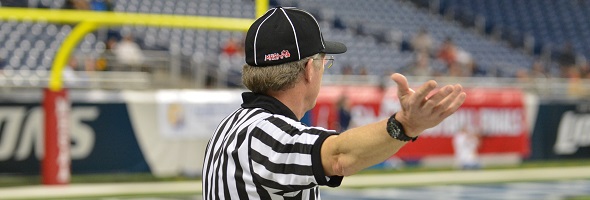
Be the Referee: You Make the OT Call
September 26, 2019
This week, MHSAA assistant director Brent Rice presents a "You Make the Call" regarding a penalty during football overtime.
Be The Referee is a series of short messages designed to help educate people on the rules of different sports, to help them better understand the art of officiating, and to recruit officials.
Below is this week's segment - You Make the Overtime Call - Listen
Let’s test your rules knowledge with this football You Make The Call.
A close game has gone to overtime, and Team A scores a touchdown on its first possession. During the extra point try, the kick is good, but Team B is called for roughing the kicker. What are Team A’s options?
You make the call.
In this case, the kicking team has two options – one is to accept the penalty and reattempt the point after from a yard and a half out, or accept the penalty on the succeeding spot, which would begin Team B’s overtime possession – 1st and Goal – that’s right – 1st and goal – at the 25-yard line.
Sept. 19: Swimming Finishing Touch - Listen
Sept. 12: Curbing Gamesmanship By Substitution - Listen
Sept. 5: Football Safety Rules Changes - Listen
Aug. 29: 40-Second Play Clock - Listen