

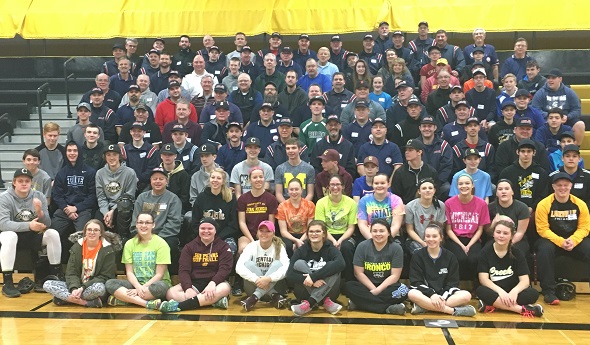
Bullock Creek Hosts 35 Aspiring Umpires
January 27, 2017
By Geoff Kimmerly
Second Half editor
More than 35 aspiring baseball and softball umpires met for instruction from a number of veteran officials as part of the Mid-Michigan Clinic on Jan. 21 at Bullock Creek High School.
High school-aged umpires who received instruction are part of the MHSAA Legacy Student Officials Program, which works to provide opportunities and mentoring to high schools interested in becoming part of the officiating avocation.
Saturday’s instructors included 10 who worked at the college level and three who worked in the minor leagues last season. The clinic received financial support from the Mecosta-Isabella-Clare, Midland and Bay Metro officials associations, plus all adults who attended including those who presented. All legacy umpires also received indicators, brushes and hats as part of their clinic experience.
“An excellent staff provided a full day of training, and it was wonderful to see so many faces young and old,” said MHSAA assistant director Mark Uyl, who serves as director of officials. “This is one of the largest clinics of its kind in our state, and we’re thankful for the work of all who had a hand in such a great event to provide instruction for our next generation of umpires.”
Officials also received assistance from the Lancers’ baseball and softball programs, and in return all revenues from the clinic were donated to those programs.

Be the Referee: Football Review
November 21, 2019
This week, MHSAA officials coordinator Sam Davis explains how video will be used for the first time at this season's MHSAA Football Finals.
Be The Referee is a series of short messages designed to help educate people on the rules of different sports, to help them better understand the art of officiating, and to recruit officials.
Below is this week's segment - Football Video Review - Listen
For the first time this year, video review of potential scoring plays and potential turnovers will take place at the MHSAA Football Finals at Ford Field for the 11-player games.
Under this system, any play which may or may not result in points being scored or any play which may or may not have resulted in a turnover can be reviewed. Personnel in the press box will look at all such plays and contact the referee on the field if a review takes place – and they give the final determination to the crew on the field.
Review may not be initiated by the officiating crew nor by the head coach of either team. Football joins basketball and ice hockey as sports where limited video review may now take place.
Past editions
Nov. 14: Sideline Safety - Listen
Nov. 7: Officials Playlist - Listen
Oct. 31: Most Important Line - Listen
Oct. 24: Automatic 1st Downs - Listen
Oct. 17: Catch Momentum - Listen
Oct. 10: Golf Rules Changes - Listen
Oct. 3: No Tackle Box - Listen
Sept. 26: You Make the Overtime Call - Listen
Sept. 19: Swimming Finishing Touch - Listen
Sept. 12: Curbing Gamesmanship By Substitution - Listen
Sept. 5: Football Safety Rules Changes - Listen
Aug. 29: 40-Second Play Clock - Listen