


MHSAA Officials Registration Open
June 17, 2013
The Michigan High School Athletic Association is accepting registrations by mail and online for game officials for the 2013-14 school year and hopes to build on a program started last year and aimed at recruiting new officials from high schools’ current graduating classes.
The MHSAA again has provided each member high school with two complimentary officials registrations to be awarded to graduating seniors designated by their athletic directors as having the skills and interest in continuing their involvement in MHSAA athletics through officiating. For 2012-13, 27 graduates took advantage of this opportunity to register free of charge.
High school seniors selected do not have to pay registration fees for the next school year, and will receive assistance from MHSAA staff in connecting with local officials’ associations and receiving training opportunities. Graduates who registered during the first year of the program came from the following schools: Adrian Lenawee Christian, Carleton Airport, Dearborn, Detroit International Academy, Detroit Aisha Shule-W.E.B. DuBois Prep Academy, Detroit Southwestern, Engadine, Grand Haven, Grosse Pointe Woods University Liggett, Harrison Township L’Anse Creuse, Imlay City, Ishpeming Westwood, Jonesville, Kalamazoo Loy Norrix, Lowell, Mackinaw City, Marquette, Mayville, Negaunee, New Boston Huron, Owendale-Gagetown, Owosso, Oxford, St. Ignace LaSalle and West Branch Ogemaw Heights.
For other new and returning officials, those who register online again will receive a $5 discount off their processing fees. A $12 fee is charged for each sport in which an official wishes to register, and the online processing fee is $30. Officials submitting registration forms by mail or on a walk-up basis will incur a $35 processing fee. Officials registered in 2012-13 will be assessed a late fee of $30 for registration after July 31. The processing fee includes liability insurance coverage up to $1 million for officials while working contests involving MHSAA schools.
Online registration can be accessed by clicking “Officials” on the Home Page of the MHSAA Website. Forms also are available online that can be printed and submitted by traditional mail or hand delivery to the MHSAA Office. More information about officials registration may be obtained by contacting the MHSAA at 1661 Ramblewood Drive, East Lansing, MI, 48823, by phone at (517) 332-5046 or by e-mail at [email protected].
There is an officials' registration test for first-time officials and officials who were not registered during the past school year. The test consists of 45 questions derived from the MHSAA Officials Guidebook, which also is available on the Officials page of the MHSAA Website. Additional 50-question exams must be taken by those registering for football or basketball for the first time or those who were not registered for those sports during the previous school year. Manuals for both sports also are available on the Officials page.
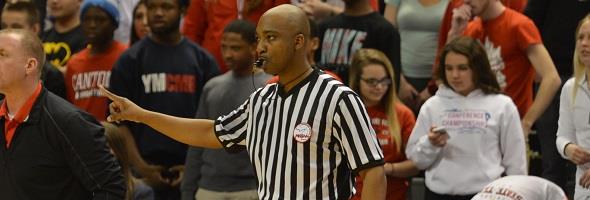
Be the Referee: Equipment Responsibility
December 21, 2017
In this week's edition, assistant director Mark Uyl explains that coaches are responsible for making sure their players are properly equipped.
Be The Referee is a series of short messages designed to help educate people on the rules of different sports, to help them better understand the art of officiating, and to recruit officials.
Below is this week's segment – Coaches Responsible for Equipment - Listen
Over the past decade, just about all new playing rules have tended to focus on improving the health and safety of those playing the game. In all sports, it’s the responsibility of the head coach to make sure that his or her players are properly equipped according to the rules of the game.
It’s generally one of the first things the official will ask the head coach before play begins. This can cover everything from bats in baseball and softball, to helmets and face masks in football or ice hockey, or to those sports where mouth guards are required. This is to ensure that each school and the head coach is taking responsibility when it comes to the equipment being worn and keeping those playing the game safe.
Past editions
December 14: Mentoring New Officials - Listen
December 7: Dive on the Floor - Listen
November 30: Wrestling Weight Monitoring - Listen
November 23: Ejections - Listen
November 16: Toughest Call - Listen
November 9: Hurdling - Listen
November 2: The Survey Says - Listen
October 26: Helmet Comes Off - Listen
October 19: Goal Line Rules - Listen
October 12: No 1st-Year Fee - Listen
October 5: Athletic Empty Nesters - Listen
September 28: Misunderstood Football Rules: Kicking - Listen
September 21: Preparation for Officials - Listen
September 14: Always Stay Registered - Listen
September 7: Other Football Rules Changes - Listen
August 31: Pop-Up Onside Kicks - Listen
August 24: Blindside Blocks - Listen