

What's My Why: Official Cindy Tyzo
June 8, 2026
Cindy Tyzo, West Bloomfield
Tyzo is one of what surely are only a handful of officials who have been registered for two MHSAA-sponsored sports since their first seasons as part of the championship lineup. She's is completing her 33rd year overall after first registering for the inaugural season of competitive cheer in 1993-94, and she also officiated the first season of MHSAA field hockey this past fall.
Tyzo also just completed her eighth season officiating girls lacrosse.
I love officiating because I love working with the young people and providing the opportunity for them to do the sport that they love. Because without officials, there's not game.
“What’s My Why” is a weekly feature telling the stories of MHSAA-registered officials in their own words. If you’re an MHSAA official and would like to share your reason why, please submit a 15 to 45-second video, taken horizontally, to director of officials Sam Davis at [email protected].
Don't miss Officiate Michigan Day 2026, July 25 in Grand Rapids! Check out MHSAA.com/OMD to register and learn more.
What's My Why
June 3: Jeff Spedoske, DeWitt - Watch
June 1: Mike Carrier, Commerce Township - Watch
May 27: Stan Wright, Warren - Watch
May 26: Murray Rose, Zeeland - Watch
May 22: Mike VanLaan, Alto - Watch
May 18: Clint Abbott, Newaygo - Watch
Be the Referee: Post Play
January 26, 2017
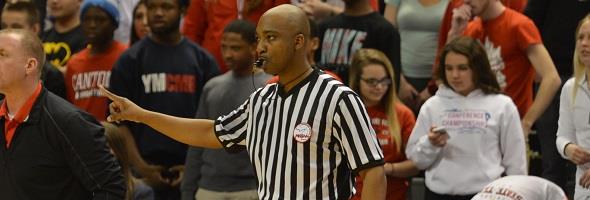
This week, MHSAA assistant director Mark Uyl discusses how unnecessary rough basketball play in the post area is being called by officials.
Be The Referee is a series of short messages designed to help educate people on the rules of different sports, to help them better understand the art of officiating, and to recruit officials.
Below is this week's segment – Post Play - Listen
Over the past several years, a point of emphasis in basketball has been to eliminate the unnecessary – and unneeded – rough and physical play, especially in the post area.
This year, a point of emphasis continues to be the calling of an automatic foul whenever a player in the post or lane area commits one of these four actions:
- It will automatically be a foul whenever one of the post players uses an arm bar;
- Or when one of those players uses an elbow to gain position;
- It’s also an automatic foul when that player uses the leg or knee to move an opponent out of the way;
- Or when that player backs down an opponent to establish new position.
Past editions
Jan. 19: Ice Hockey Overtime - Listen
Jan. 12: Free Throw Change - Listen
Jan. 5: Ratings - Listen
Dec. 22: Video Review - Part 2 - Listen
Dec. 15: Video Review - Part 1 - Listen
Dec. 8: Registration - Part 2 - Listen
Dec. 1: Registration - Part 1 - Listen
Nov. 24: You Make the Call - Sleeper Play - Listen
Nov. 17: Automatic 1st Downs - Listen
Nov. 10: Uncatchable Pass - Listen
Nov. 3: The Goal Line - Listen
Oct. 27: Help Us Retain Officials - Listen
Oct. 20: Point After Touchdown - Listen
Oct. 13: Untimed Down - Listen
Oct. 6: Soccer Penalty Kick Change - Listen
Sept. 29: Preparation for Officials - Listen
Sept 22: You Make the Call: Returning Kickoffs - Listen
Sept. 15: Concussions - Listen
Sept 8: Equipment Covering the Knees - Listen
Sept. 1: Play Clock Experiment - Listen
Aug. 25: Clipping in the Free Blocking Zone - Listen