

What's My Why: Official Mike VanLaan
May 20, 2026
Mike VanLaan, Alto
VanLaan is completing his eighth year as an MHSAA-registered official. He began with football in 2018-19 and added boys lacrosse the following year.
So in 2018 I decided to get started in officiating. I started with football because that was the sport that gave me the most opportunity when I was younger. I played a lot of football and just wanted to give back to the game.
I loved it so much that I decided I also wanted to add a spring sport. So a couple of years later I added boys lacrosse, and now I officiate high school football and high school boys lacrosse.
Things that drove me to add another sport – just fell in love with the camaraderie, working with other officials, good people. And then also, just realizing how important it is to stay active physically and mentally, and this allows me to do that.
“What’s My Why” is a weekly feature telling the stories of MHSAA-registered officials in their own words. If you’re an MHSAA official and would like to share your reason why, please submit a 15 to 45-second video, taken horizontally, to director of officials Sam Davis at [email protected].
Don't miss Officiate Michigan Day 2026, July 25 in Grand Rapids! Check out MHSAA.com/OMD to register and learn more.
What's My Why
May 20: Clint Abbott, Newaygo - Watch
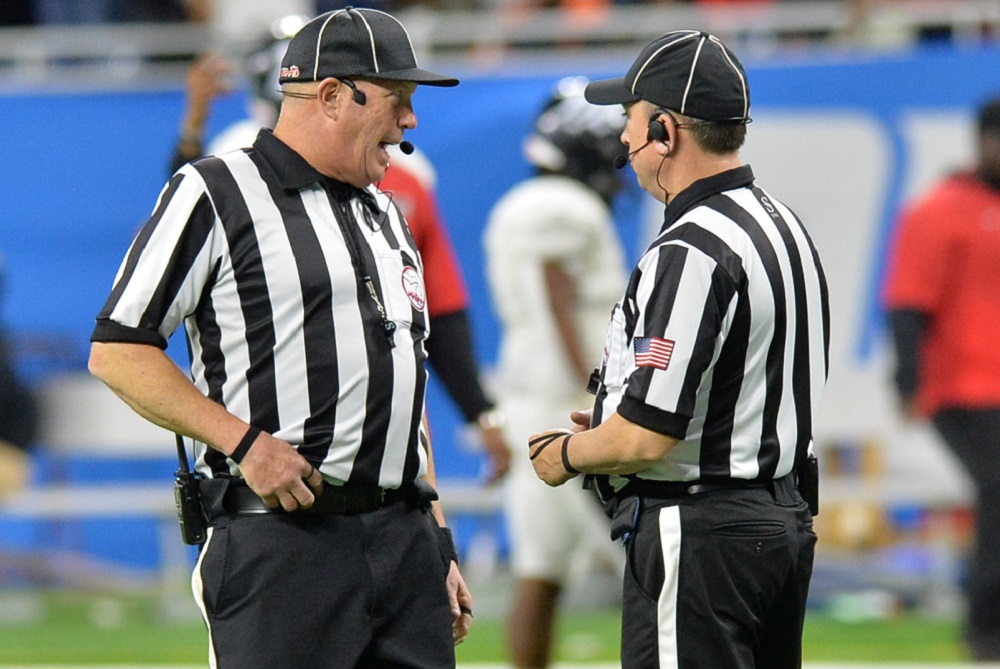
Be the Referee: Intentional Grounding Change
By
Sam Davis
MHSAA Director of Officials
August 23, 2022
Be The Referee is a series of short messages designed to help educate people on the rules of different sports, to help them better understand the art of officiating, and to recruit officials.
Below is this week's segment – Intentional Grounding Change - Listen
New this year in football is a change to intentional grounding.
What’s staying the same? A quarterback in the free block zone – who throws a pass to an area with no receiver nearby – will continue to be flagged for intentional grounding. That’s a five-yard penalty and loss of down.
So what’s different? Now … a quarterback outside of the free blocking zone can legally throw the ball away as long as the pass lands past the original line of scrimmage. This used to be flagged for grounding, but is now legal.
In fact, this rule doesn’t just pertain to the quarterback. Any passer, outside of the free blocking zone, can throw the ball away as long as it lands past the line of scrimmage.