

What's My Why: Official Mike VanLaan
May 20, 2026
Mike VanLaan, Alto
VanLaan is completing his eighth year as an MHSAA-registered official. He began with football in 2018-19 and added boys lacrosse the following year.
So in 2018 I decided to get started in officiating. I started with football because that was the sport that gave me the most opportunity when I was younger. I played a lot of football and just wanted to give back to the game.
I loved it so much that I decided I also wanted to add a spring sport. So a couple of years later I added boys lacrosse, and now I officiate high school football and high school boys lacrosse.
Things that drove me to add another sport – just fell in love with the camaraderie, working with other officials, good people. And then also, just realizing how important it is to stay active physically and mentally, and this allows me to do that.
“What’s My Why” is a weekly feature telling the stories of MHSAA-registered officials in their own words. If you’re an MHSAA official and would like to share your reason why, please submit a 15 to 45-second video, taken horizontally, to director of officials Sam Davis at [email protected].
Don't miss Officiate Michigan Day 2026, July 25 in Grand Rapids! Check out MHSAA.com/OMD to register and learn more.
What's My Why
May 20: Clint Abbott, Newaygo - Watch
NFHS Voice: Good Time to Appreciate Officials
April 9, 2020
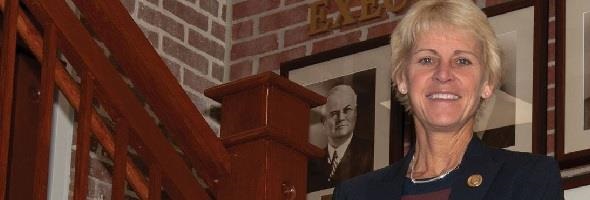
By Karissa Niehoff
NFHS Executive Director
During this shutdown of normal life in our nation, we are learning to deal with a new challenge – how to handle the unexpected time on our hands at home. Simply keeping up with the days of the week is a major accomplishment!
While we anxiously await the re-opening of schools and a return of high school sports and performing arts, this down time can be used in positive ways to take advantage of educational opportunities. And kudos to some individuals who already are seizing those opportunities – men and women who officiate high school sports.
Two weeks ago, we began to offer the 11 officiating courses on the NFHS Learning Center free of charge, and the response has been nothing short of amazing. By the end of March – merely a week into this new opportunity – more than 5,200 courses had been taken.
In addition to veteran officials fine-tuning techniques in one or more of the seven sports featured in these courses, this has been a great opportunity for individuals interested in officiating to take a free course to determine their interest level.
Those of us in leadership positions are so appreciative of these individuals who give freely of their free time to officiate high school sports or adjudicate music contests. We would suggest that everyone – student-athletes, coaches, parents and other fans – use this down time to do the same.
At various times this year before the shutdown of schools, officials have been the victim of verbal and physical abuse. Inappropriate behavior by parents and other fans was causing officials to quit before they even reached two years on the job.
And yet, in the past three years, more than 35,000 individuals have signed up to become officials through the NFHS’ #BecomeAnOfficial campaign and 5,200 courses that have been taken in the past couple of weeks by men and women who want to give back to high school sports. These are good signs more people will continue to be involved in officiating when the games return.
But what about the parents and other fans in the stands? Will their behavior be changed upon return? The conclusion of the New Mexico Activities Association’s state basketball tournament last month provided an interesting perspective on the impact of fans to the atmosphere at high school sporting events.
After completing the first two days of its state tournament with fans in the stands, the NMAA conducted the final three days without fans because of concerns about the spread of the COVID-19 virus. Dana Pappas, commissioner of officials for the NMAA, noted the following about the final three days of competition:
“Officials would make a call and if coaches had a question about it, they asked – calmly and respectfully. In huddles during time-outs, coaches just talked to their players, without raised voices. The behavior of coaches on the sidelines from Thursday through Saturday was in stark contrast to what we witnessed on Tuesday and Wednesday. Perhaps they did not feel the need to be overly emotional for the benefit of their fans.
“My hope is that the absence of sport throughout the world gives us all a moment to gain perspective and do a ‘gut check’ as to the kind of fans we are at contests. If the quality of the game is unchanged (or even better) without fans there to scream at the coaches, officials and players, then is that behavior really necessary when the games resume?”
The message here is that while the games can continue without fans, the ideal situation is for stands full of fans positively cheering for their teams.
Dr. Karissa L. Niehoff is in her second year as executive director of the National Federation of State High School Associations (NFHS) in Indianapolis, Indiana. She is the first female to head the national leadership organization for high school athletics and performing arts activities and the sixth full-time executive director of the NFHS, which celebrated its 100th year of service during the 2018-19 school year. She previously was executive director of the Connecticut Association of Schools-Connecticut Interscholastic Athletic Conference for seven years.