

What's My Why: Official Robert Williams
July 1, 2026
Robert Williams, Redford
Williams officiated 52 years total through his final football season in 2023, also contributing in basketball, baseball and softball during his highly-respected run. He received the MHSAA's Vern L. Norris Leadership in Officiating Award in 2011 for his contributions not only as one of the best on the field but to mentorship and education of officials, and multiple Norris winners since have recalled his support as they were beginning their own legendary careers making the call.
My dad was a coach, so there had to be some adversity in the house. So I had to become an official, but that actually helped me.
I loved officiating because of the fact that I’m with the kids, I can give back to the game, I’m right there – best seat in the house. You see the best games whenever you officiate, because the kids are there.
It’s just helping the kids out and helping the sports that you officiate.
“What’s My Why” is a weekly feature telling the stories of MHSAA-registered officials in their own words. If you’re an MHSAA official and would like to share your reason why, please submit a 15 to 45-second video, taken horizontally, to director of officials Sam Davis at [email protected].
Don't miss Officiate Michigan Day 2026, July 25 in Grand Rapids! Check out MHSAA.com/OMD to register and learn more.
What's My Why
June 24: Will Godfrey, Jackson - Watch
June 19: Jarrett Skorup, Midland - Watch
June 12: Brady Driver, Sturgis - Watch
June 8: Cindy Tyzo, West Bloomfield - Watch
June 3: Jeff Spedoske, DeWitt - Watch
June 1: Mike Carrier, Commerce Township - Watch
May 27: Stan Wright, Warren - Watch
May 26: Murray Rose, Zeeland - Watch
May 22: Mike VanLaan, Alto - Watch
May 18: Clint Abbott, Newaygo - Watch
Be the Referee: Preparation for Officials
October 23, 2014
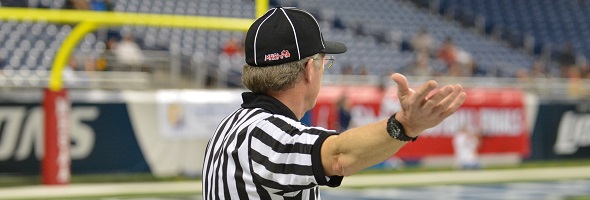
This week, MHSAA assistant director Mark Uyl explains how officials prepare for Friday nights, just like those playing the games and cheering them on.
"Be the Referee" is designed to help educate people on the rules of different sports, to help them better understand the art of officiating and to recruit officials. The segment can be heard on Mondays, Wednesdays and Fridays during the school year on The Drive With Jack Ebling on WVFN-AM, East Lansing.
Below is this week's segment - Preparation for Officials - Listen
Football is a game of preparation. During the week, the teams involved, the cheerleading squads and members of the marching band put in a great deal of work to be ready for Friday night. Officials are no different.
All across the state on Monday nights, referees attend local association meetings where they review film from the previous week’s games, talk about rules, coverages and mechanics, so that our team of officials are just as prepared and ready to go as the teams playing each and every Friday night.
In addition to Friday nights, many officials also work freshman and junior varsity games on Thursday, and often will work games on the weekend - whether they be small college all the way down to youth games - to give those young people on the field the best officiating possible.
Past editions
Oct. 15 - Automatic First Downs - Listen
Oct. 8 - Officials & Injuries - Listen
Oct. 1 - Overtime - Listen
Sept. 25 - Field Goals - Listen
Sept. 18 - Tackle Box - Listen
Sept. 11 - Pass Interference - Listen
Aug. 25 - Targeting - Listen