

'Prepapalooza' Kicks Off 3-Week Celebration
May 31, 2016
By Geoff Kimmerly
Second Half editor
Nearly 30,000 athletes will take part over the next six days in what will again be the busiest week of the MHSAA calendar, with teams in all nine spring sports competing for District, Regional or Finals championships at sites across both peninsulas.
The first Finals champions of this spring will be awarded Wednesday in Upper Peninsula boys tennis (UPDATE: both U.P. tennis Finals have been moved to Thursday due to rainy weather concerns), followed by six more in Upper Peninsula boys and girls golf Thursday. Four divisions of Lower Peninsula girls tennis start their two-day tournament Friday, and on Saturday, more than 7,000 athletes will join them competing in four Lower and three Upper Peninsula Track & Field Finals.
In addition, baseball, softball and girls soccer teams begin District action tonight, with most of those tournaments wrapping Saturday. Girls and boys lacrosse teams continue Regional play this week, and Lower Peninsula boys golf teams will play Regionals on Wednesday, Thursday and Friday.
Second Half again will serve as your home for all MHSAA Finals coverage, with correspondents providing stories and photos, along with full results, from all of the Upper Peninsula Finals this week and then all 18 LP and UP Finals this weekend, Lacrosse and LP Golf Finals on June 14, and Baseball, Softball and Soccer Finals being played June 19-21.
Check back as well for video highlights from most competitions and sign up to watch all broadcast tournament action over the next three weeks for only $9.95 on MHSAA.tv. All schedules, lists of competitors and tournament brackets updated with scores real-time can be found on MHSAA.com. Keep connected as well with the MHSAA’s social media on Facebook, Twitter and Instagram.
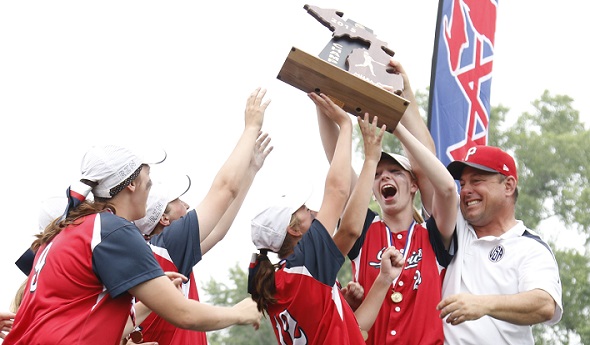
PHOTO: The Unionville-Sebewaing softball team celebrates last season's Division 4 championship.

Is My Student Athlete's Pain More Than Just Growing Pains?
February 14, 2023
There are a few factors that can make student athletes prone to injury. They might be overusing their muscles (thanks to a more rigorous exercise regimen), and they might not yet have developed the proper technique for their sport.
 “These factors, combined with the fact that student athletes have growing bodies that they’re still getting used to—especially after a growth spurt — can make them more prone to injury,” says Nancy White, M.D., a sports medicine physician with Henry Ford Health System.
However, just because your child is feeling pain doesn’t necessarily mean they’ve sustained an injury. There is such a thing as growing pains, although the term may be misleading. “Most experts feel that growth itself does not cause pain,” says Dr. White. “The most likely reason for ‘growing pains’ is overuse of the muscles, causing pain and soreness after an activity.”
These growing pains typically occur at the front of the thighs, the back of the knees and the calves, she says, and occur commonly in the late afternoon, evening, or night. If your child is experiencing pain outside of these areas or times of day, it might not be growing pains — and it’s a good idea to get it checked out by a doctor.
Tell-Tale Signs That Pain Should Be Examined
If the pain goes away by the next day — if your child has rested during night and feels better the next morning — there’s no need for concern. But you should head to the doctor if:
► the pain is lingering into the next day.
► the pain is also accompanied by bruising, swelling or redness.
► the pain is so intense that they’re unable to put weight on their legs.
“In these cases, don’t wait — the longer you wait, the more dangerous the injury can become,” says Dr. White.
How Student Athletes Can Help Prevent Injuries
Encourage your child to take proper precautions and maintain healthy habits, all of which can lower the likelihood that they’ll sustain an injury. Dr. White recommends the following tips:
- Maintain proper technique. “Knowing and understanding the movements needed for whatever sport they practice is so important,” says Dr. White. “Figure skating and gymnastics are two sports where I tend to see injuries more often during growth phases. These athletes are often learning difficult skills at a time in their lives when they’re going through a growth spurt, and that combination can lead to injury.”
- Stretch before and after playing a sport. “Try dynamic stretching — where you’re actually moving while stretching — instead of static stretching, where you’re holding the stretch,” says Dr. White. “Dynamic stretching is a great warm up. It can help improve flexibility and reduce the risk of injury.”
- Strength train, especially in the core and limbs. Doing so will help create stable, strong muscles to keep the body properly aligned and lessen the chances of injury.
- Eat a balanced diet and stay hydrated. While it’s normal for kids to have sugar every once in a while, filling the bulk of their diet with plenty of water, fresh fruits and vegetables, healthy protein, fats and carbohydrates will help them function to their best ability.
- Get enough rest each night. Sleep is necessary for health and well-being in general, but when it comes to athletes, rest is incredibly important to help their bodies recuperate. In general, kids need about 10 hours of sleep per night. So if your child plays a sport, you want to really be sure that they’re hitting that 10-hour mark, says Dr. White.
Dr. Nancy White is a sports medicine physician with Henry Ford Health System. She sees patients at Henry Ford Medical Center – Columbus in Novi, and Henry Ford Medical Center — Bloomfield Township.
Want to learn more? Henry Ford Health System sports medicine experts are treating the whole athlete, in a whole new way. From nutrition to neurology, and from injury prevention to treatment of sports-related conditions, they can give your athlete a unique game plan. To find a sports medicine physician at Henry Ford, visit henryford.com or call 1-800-436-7936.