

'Prepapalooza' Kicks Off 3-Week Celebration
May 31, 2016
By Geoff Kimmerly
Second Half editor
Nearly 30,000 athletes will take part over the next six days in what will again be the busiest week of the MHSAA calendar, with teams in all nine spring sports competing for District, Regional or Finals championships at sites across both peninsulas.
The first Finals champions of this spring will be awarded Wednesday in Upper Peninsula boys tennis (UPDATE: both U.P. tennis Finals have been moved to Thursday due to rainy weather concerns), followed by six more in Upper Peninsula boys and girls golf Thursday. Four divisions of Lower Peninsula girls tennis start their two-day tournament Friday, and on Saturday, more than 7,000 athletes will join them competing in four Lower and three Upper Peninsula Track & Field Finals.
In addition, baseball, softball and girls soccer teams begin District action tonight, with most of those tournaments wrapping Saturday. Girls and boys lacrosse teams continue Regional play this week, and Lower Peninsula boys golf teams will play Regionals on Wednesday, Thursday and Friday.
Second Half again will serve as your home for all MHSAA Finals coverage, with correspondents providing stories and photos, along with full results, from all of the Upper Peninsula Finals this week and then all 18 LP and UP Finals this weekend, Lacrosse and LP Golf Finals on June 14, and Baseball, Softball and Soccer Finals being played June 19-21.
Check back as well for video highlights from most competitions and sign up to watch all broadcast tournament action over the next three weeks for only $9.95 on MHSAA.tv. All schedules, lists of competitors and tournament brackets updated with scores real-time can be found on MHSAA.com. Keep connected as well with the MHSAA’s social media on Facebook, Twitter and Instagram.
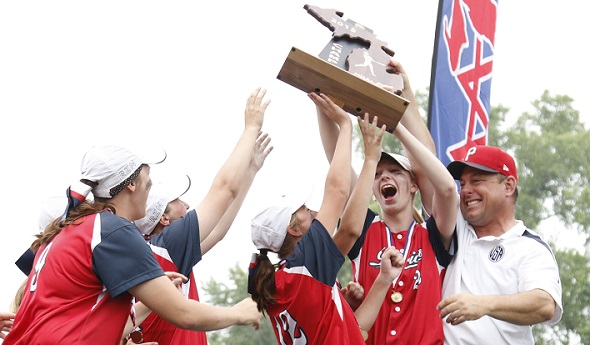
PHOTO: The Unionville-Sebewaing softball team celebrates last season's Division 4 championship.
5 Tips to Prevent Sports-Related Injuries
December 3, 2019

Henry Ford Health System
Participating in sports provides so many benefits to kids and teens. There are the obvious benefits of physical fitness and promoting regular exercise. Then, there are also the character-building lessons learned from being part of a team, working hard toward a goal, celebrating tough competition and gracefully accepting defeat. But sports don’t come without some risk.
Sports-related injuries are the leading cause of emergency room visits for kids ages 12-17, according to the Centers for Disease Control and Prevention (CDC).
These injuries impact twice as many males as females. Not surprisingly, contact sports also have higher injury rates. Football, basketball, baseball and soccer account for roughly 80 percent of all sports-related emergency room visits for children.
Sports injuries depend on the age of the athlete and the type of sport played, according to Bridget McArdle, D.O., a Henry Ford pediatrician. Generally, she says, sports injuries are divided into two groups: injuries from overuse like strains and tendonitis, and acute injuries such as concussions, fractures and tears.
The teen years pose special hazards, too. The adolescent growth spurt places teens at higher risk for injuries.
“The growth plates could still be open, which increases the risk for damage,” Dr. McArdle says. “This can lead to long-term problems.”
5 Important Injury Prevention Tips
Fortunately, many sports-related injuries can be prevented — the CDC estimates that as many as half of them could be avoided.
Here are Dr. McArdle’s tips for injury prevention for parents and coaches:
1. Ease into training. It’s important to start gradually in order to decrease the chance of sports injuries. “When you train too quickly at full peak, you are more likely to get hurt. Ease into it – and don’t overdo it,” says Dr. McArdle.
2. Cross train. Changing up the way your child trains is one way to help prevent sports injuries. “Taking a break from one sport to play another is important,” she recommends. Training a different way and using different muscles decreases the strain placed on the same body parts. Practicing gentle stretching exercises such as yoga or Pilates can also help, she adds.
3. Use the right equipment. Everything from the proper shoes and appropriate, properly fitted safety gear for the particular sport are essential for minimizing the risk of injury, as well.
4. Avoid excessive heat. The American Academy of Pediatrics (AAP) recommends young athletes avoid heat illness by wearing light clothing and drinking plenty of fluids before, during and after exercise or play. Coaches should decrease or stop practices during high heat or high humidity periods.
5. Take time to recover. If a sports injury does occur, taking time to recover is very important. Returning to play too soon increases the risk of making the injury worse, and increases the chance of long-term consequences. “Make sure the injury is completely healed before returning. Don’t allow your child to play through pain,” advises Dr. McArdle.
If you have questions or concerns about your child’s readiness to play, be sure to get a sports physical and talk with your pediatrician or primary care provider.
Dr. Bridget McArdle is a board-certified pediatrician, seeing patients at Henry Ford Medical Center – Sterling Heights.
Want to learn more? Henry Ford Health System sports medicine experts are treating the whole athlete, in a whole new way. From nutrition to neurology, and from injury prevention to treatment of sports-related conditions, they can give your athlete a unique game plan.
Visit henryford.com/sports or call (313) 972-4216 for an appointment within 24 business hours.