

'Prepapalooza' Kicks Off 3-Week Celebration
May 31, 2016
By Geoff Kimmerly
Second Half editor
Nearly 30,000 athletes will take part over the next six days in what will again be the busiest week of the MHSAA calendar, with teams in all nine spring sports competing for District, Regional or Finals championships at sites across both peninsulas.
The first Finals champions of this spring will be awarded Wednesday in Upper Peninsula boys tennis (UPDATE: both U.P. tennis Finals have been moved to Thursday due to rainy weather concerns), followed by six more in Upper Peninsula boys and girls golf Thursday. Four divisions of Lower Peninsula girls tennis start their two-day tournament Friday, and on Saturday, more than 7,000 athletes will join them competing in four Lower and three Upper Peninsula Track & Field Finals.
In addition, baseball, softball and girls soccer teams begin District action tonight, with most of those tournaments wrapping Saturday. Girls and boys lacrosse teams continue Regional play this week, and Lower Peninsula boys golf teams will play Regionals on Wednesday, Thursday and Friday.
Second Half again will serve as your home for all MHSAA Finals coverage, with correspondents providing stories and photos, along with full results, from all of the Upper Peninsula Finals this week and then all 18 LP and UP Finals this weekend, Lacrosse and LP Golf Finals on June 14, and Baseball, Softball and Soccer Finals being played June 19-21.
Check back as well for video highlights from most competitions and sign up to watch all broadcast tournament action over the next three weeks for only $9.95 on MHSAA.tv. All schedules, lists of competitors and tournament brackets updated with scores real-time can be found on MHSAA.com. Keep connected as well with the MHSAA’s social media on Facebook, Twitter and Instagram.
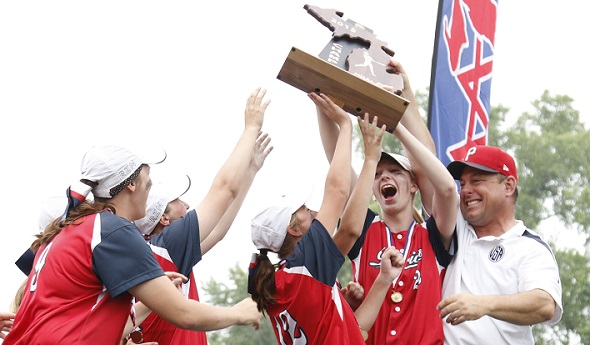
PHOTO: The Unionville-Sebewaing softball team celebrates last season's Division 4 championship.

7 Sleeping Tips for Student-Athletes
November 5, 2019

Henry Ford Health System
Many athletes seem to believe time spent not training is time wasted. But, on the contrary.
The time athletes spend resting and sleeping is actually just as important. Take the world’s best female skier, Mikaela Shiffrin, for example. Shiffrin reportedly not only sleeps nine hours each night, but naps at least an hour every day.
So, what does sleeping have to do with her success? When asleep, the body not only has time to recover, but the information that was taken in during the day goes from short-term memory and becomes long term.
“Being an elite athlete is a 24-hour profession, and sleep and recovery are integral to optimal performance,” says Meeta Singh, M.D., a sleep medicine specialist at Henry Ford Health System.
Here are seven tips to help your student athlete catch some Zzzs during the season:
1. Limit caffeine. Caffeine is a popular ingredient in many pre-workout drinks, and many athletes choose to use it for an energy boost. However, having caffeine late in the day may make falling asleep and staying asleep difficult. But, everyone reacts differently to caffeine, so athletes should try logging their intake to determine what time to stop consuming and how much is okay to consume.
2. Maintain a regular sleep schedule. The body has an internal clock that’s largely affected by environment. Going to bed and waking up at approximately the same time each day can add a natural rhythm to the body’s internal clock, which can cause people to feel more awake during the day and fall asleep easily at night.
3. Workout early. Often times, working out later in the day gives people a burst of energy that can keep them up late into the night. For example, exercising after 9 p.m. can boost body temperature, making sleep difficult. However, research shows morning workouts can help achieve deeper sleep, and working out in the afternoon can help reduce insomnia.
4. Unplug. Nothing can keep one up at night like a buzzing smartphone. Additionally, the blue light a phone emits may slow the production of melatonin, making sleep difficult. Advise your children to leave electronics out of reach while they’re sleeping. And as an added bonus: If their phone is their alarm, it will force them out of bed in the mornings.
5. Use essential oils. Essential oils have seen growing popularity in recent years, and this is in part because scent helps trigger memory. Oils can be diffused, rubbed on temples or drops can be spread on pillows. Popular oils for promoting sleep are lavender, valerian root and roman chamomile.
6. Focus on breathing. Focusing on breath can help steady heart rate and relax the body. A popular breathing technique is the 4-7-8 exercise, in which one inhales through the nose for four seconds, holds their breath for seven, and exhales for eight.
7. Keep it dark, cool and quiet. Having the right environment is an important part of falling asleep … and staying asleep.
Ultimately, when it comes to enhancing athletic performance, getting proper sleep, resting and recovering can be just as important as training or hitting the gym.
“Since sleep can modulate reaction time and accuracy, it’s important to ensure an athlete gets his or her Zzzs,” Dr. Singh says.
See also: Is Your Teen Sleep Deprived?
Want to learn more? Henry Ford Health System sports medicine experts are treating the whole athlete, in a whole new way. From nutrition to neurology, and from injury prevention to treatment of sports-related conditions, they can give your athlete a unique game plan.
Visit henryford.com/sports or call (313) 972-4216 for an appointment within 24 business hours.