


Rivaling for a Cause
January 25, 2013
It’s impossible to include all the perspective we gain from every “Battle of the Fans” visit.
But this anecdote, although it didn't make Tuesday’s story about our Frankenmuth trip, tells of another great example for what student cheering sections can accomplish.
Frankenmuth and Millington are heated rivals, to say the least, separated by 13 miles and made more competitive by plenty of championship-deciding matchups over the years.
But for their boys basketball game Jan. 10 at Frankenmuth, student section leaders from both schools almost completely on their own set up the game as a cancer awareness night, complete with Frankenmuth students in black shirts and Millington’s wearing pink.
The idea was the brainchild of a of Frankenmuth section leader, who then received help from a local bank and contacted Millington to get the ball rolling.
Battle of the Fans has shown us the obvious – these student sections need strong leaders – but also the special things they can accomplish with additional initiative.
“Never Forgotten”
 Two more rivals, Fennville and Saugatuck, met late last month for their second “Never Forgotten” boys and girls basketball games with proceeds going to the Wes Leonard Heart Team for the purchase of AEDs.
Players wore jerseys with names on the backs of friends and family members who had died, and those jerseys were then given to family members after the games. Officials Ace Cover, Chris Dennie and Kyle Bowen also donated their game checks to the Heart Team, as did the winner of that night’s 50-50 raffle.
Leonard died from sudden cardiac arrest after making the game-winning shot in a basketball game March 3, 2011. The two schools played their first “Never Forgotten” games last season.
More support for less specialization
I’m asked once a year at least about sport specialization – that is, athletes focusing on just one sport, often from an early age, and if it pays off some way down the road.
Most of my evidence to support my belief in the well-rounded athlete has been anecdotal, based on conversations with people at the high school and college levels over the years. But a British study published this fall in the Journal of Sport Sciences by University of Birmingham researchers provides some interesting empirical findings.
The study of 1,006 people from the United Kingdom showed that those who participated in three sports at ages 11, 13 and 15 were “significantly more likely to compete at a national rather than club standard” between ages 16-18 than those who had practiced only one sport.
In other words, the study found that those who played more sports at earlier ages played at a higher level during their high school-age years, which seems to contradict the one-sport focus philosophy.
Click for more perspective on the study from Chris Kennedy, the Superintendent of Schools in West Vancouver, British Columbia.
PHOTO: The boys and girls teams for Fennville and Saugatuck pose together after their "Never Forgotten" games Dec. 21 at Fennville High. (Photo courtesy of Al LaShell.)
The Inside Scoop On Ski Safety: 6 Tips
January 10, 2023
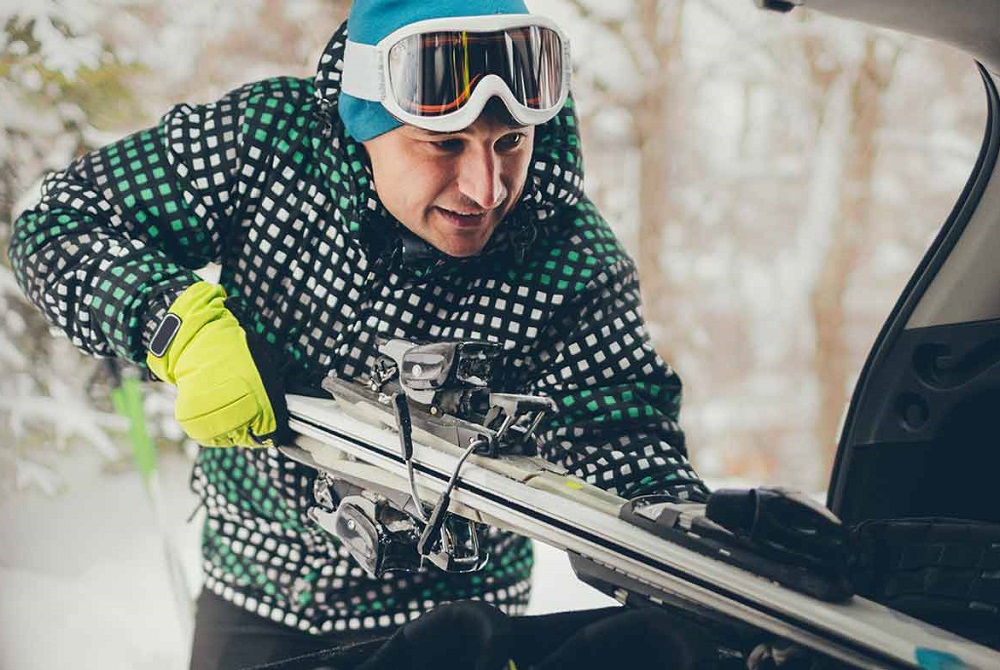
Injuries happen to skiers of all levels, even under pristine conditions and when using the best available equipment. “Beginners are more likely to get injured. But when experienced skiers go down, they tend to have more severe injuries,” says Michelle Gambino-Gorney, a certified athletic trainer at the Henry Ford Kutcher Clinic for Concussion and Sports Neurology.
 But you don’t have to let the risk of injury hold you back from having fun on the slopes. A few basic safety tips? Stay within your ability level and ensure your skis are in good condition. That said, going beyond ski safety basics and learning how to avoid injuries can help you stay safe on the slopes. Here are six expert tips:
Use caution when getting on and off the ski lift. Ski lifts make a lot of people anxious. Being high off the ground on your journey up the mountain can invoke a fear of falling. “But it’s getting on and off the ski lift where the vast majority of lift-related injuries occur,” Gambino-Gorney says. To lower your risk of injury, remove pole straps and backpacks before loading, look over your shoulder to make sure you sit squarely on the seat at the correct time, and don't try to retrieve items you lose hold of (including poles, gloves and phones). It’s best to let them go and ski back for them.
Keep it simple at terrain parks. Terrain parks include human-made features like ramps and rails that enable skiers to do jumps, flips and other maneuvers. Any time your skis leave the ground, injuries are possible. You can safely enjoy terrain parks by starting with smaller obstacles and maneuvers and mastering them before moving on to other challenges. Do not rely on online tutorials to learn new skills. Ski instructors can help you learn the correct technique and provide personalized tips for achieving your goals.
Beware of trees. Trees present multiple dangers. Colliding with a tree, especially at high speed, leads to some of the most severe ski injuries. A small number of skiers die each year from tree collisions. To avoid collisions, ski with control. Other concerns include tree wells and snow immersion suffocation. This type of injury occurs when a person falls head first into a pocket of loose snow near a tree trunk and gets trapped. Skiing with a partner on ungroomed paths, which typically run past tree wells, is essential. If you become immersed in a tree well, a partner can step in to help you break free.
Pay extra attention during your final run of the day. Injuries are more common during skiers’ last runs. “Skiing later in the day can be dangerous because small changes can affect your ability to maneuver and react to conditions,” Gambino-Gorney says. Fresh powder may get matted down. Groomed areas become bumpy. And fatigue can make you less aware of hazards and other skiers. While it may be tempting to give it your all on your last run, it’s better to ease up and take your time.
Follow the Skier Code of Responsibility. People of all ages, abilities and ski levels can safely share the slopes when everyone follows the National Ski Area Association™ Responsibility Code. Key points include: Giving right of way to people ahead of (downhill from) you, staying off closed trails, and looking uphill for other skiers when merging.
Expedite access to help in an emergency. Being prepared can help you quickly reach ski patrol in an emergency. Most ski areas list their ski patrol phone number near the lifts. While you are waiting in the ski lift line, program it into your phone. If you or someone nearby experiences an injury, being able to call for help will save precious time. Instead of waiting for someone to ski down the mountain and ask for help, you can stay with the injured person and call for help. Calling also makes it easier to share important details so that ski patrol arrives with the appropriate people and equipment.
“Skiing is like any sport in that there’s a risk of injury. But many people hit the slopes without incident. Some skiers go decades without a single fall,” Gambino-Gorney says. Follow these insider tips and don't forget to wear a helmet so you can relish your next powder day and get the most out of the season.
To find a sports medicine provider at Henry Ford, visit henryford.com/sports or call 313-651-1969.
Michelle Gambino-Gorney is a certified athletic trainer at the Henry Ford Kutcher Clinic for Concussion and Sports Neurology.