


Rivaling for a Cause
January 25, 2013
It’s impossible to include all the perspective we gain from every “Battle of the Fans” visit.
But this anecdote, although it didn't make Tuesday’s story about our Frankenmuth trip, tells of another great example for what student cheering sections can accomplish.
Frankenmuth and Millington are heated rivals, to say the least, separated by 13 miles and made more competitive by plenty of championship-deciding matchups over the years.
But for their boys basketball game Jan. 10 at Frankenmuth, student section leaders from both schools almost completely on their own set up the game as a cancer awareness night, complete with Frankenmuth students in black shirts and Millington’s wearing pink.
The idea was the brainchild of a of Frankenmuth section leader, who then received help from a local bank and contacted Millington to get the ball rolling.
Battle of the Fans has shown us the obvious – these student sections need strong leaders – but also the special things they can accomplish with additional initiative.
“Never Forgotten”
 Two more rivals, Fennville and Saugatuck, met late last month for their second “Never Forgotten” boys and girls basketball games with proceeds going to the Wes Leonard Heart Team for the purchase of AEDs.
Players wore jerseys with names on the backs of friends and family members who had died, and those jerseys were then given to family members after the games. Officials Ace Cover, Chris Dennie and Kyle Bowen also donated their game checks to the Heart Team, as did the winner of that night’s 50-50 raffle.
Leonard died from sudden cardiac arrest after making the game-winning shot in a basketball game March 3, 2011. The two schools played their first “Never Forgotten” games last season.
More support for less specialization
I’m asked once a year at least about sport specialization – that is, athletes focusing on just one sport, often from an early age, and if it pays off some way down the road.
Most of my evidence to support my belief in the well-rounded athlete has been anecdotal, based on conversations with people at the high school and college levels over the years. But a British study published this fall in the Journal of Sport Sciences by University of Birmingham researchers provides some interesting empirical findings.
The study of 1,006 people from the United Kingdom showed that those who participated in three sports at ages 11, 13 and 15 were “significantly more likely to compete at a national rather than club standard” between ages 16-18 than those who had practiced only one sport.
In other words, the study found that those who played more sports at earlier ages played at a higher level during their high school-age years, which seems to contradict the one-sport focus philosophy.
Click for more perspective on the study from Chris Kennedy, the Superintendent of Schools in West Vancouver, British Columbia.
PHOTO: The boys and girls teams for Fennville and Saugatuck pose together after their "Never Forgotten" games Dec. 21 at Fennville High. (Photo courtesy of Al LaShell.)
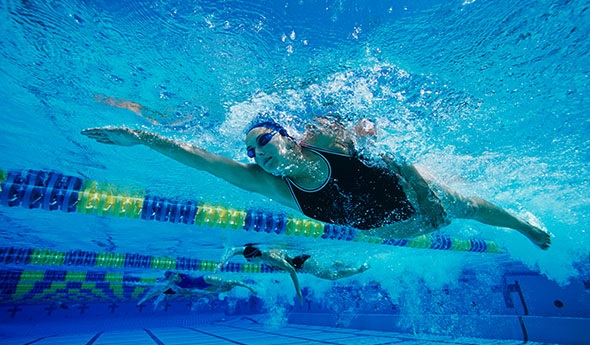
5 Tips to Prevent Sports-Related Injuries
December 3, 2019

Henry Ford Health System
Participating in sports provides so many benefits to kids and teens. There are the obvious benefits of physical fitness and promoting regular exercise. Then, there are also the character-building lessons learned from being part of a team, working hard toward a goal, celebrating tough competition and gracefully accepting defeat. But sports don’t come without some risk.
Sports-related injuries are the leading cause of emergency room visits for kids ages 12-17, according to the Centers for Disease Control and Prevention (CDC).
These injuries impact twice as many males as females. Not surprisingly, contact sports also have higher injury rates. Football, basketball, baseball and soccer account for roughly 80 percent of all sports-related emergency room visits for children.
Sports injuries depend on the age of the athlete and the type of sport played, according to Bridget McArdle, D.O., a Henry Ford pediatrician. Generally, she says, sports injuries are divided into two groups: injuries from overuse like strains and tendonitis, and acute injuries such as concussions, fractures and tears.
The teen years pose special hazards, too. The adolescent growth spurt places teens at higher risk for injuries.
“The growth plates could still be open, which increases the risk for damage,” Dr. McArdle says. “This can lead to long-term problems.”
5 Important Injury Prevention Tips
Fortunately, many sports-related injuries can be prevented — the CDC estimates that as many as half of them could be avoided.
Here are Dr. McArdle’s tips for injury prevention for parents and coaches:
1. Ease into training. It’s important to start gradually in order to decrease the chance of sports injuries. “When you train too quickly at full peak, you are more likely to get hurt. Ease into it – and don’t overdo it,” says Dr. McArdle.
2. Cross train. Changing up the way your child trains is one way to help prevent sports injuries. “Taking a break from one sport to play another is important,” she recommends. Training a different way and using different muscles decreases the strain placed on the same body parts. Practicing gentle stretching exercises such as yoga or Pilates can also help, she adds.
3. Use the right equipment. Everything from the proper shoes and appropriate, properly fitted safety gear for the particular sport are essential for minimizing the risk of injury, as well.
4. Avoid excessive heat. The American Academy of Pediatrics (AAP) recommends young athletes avoid heat illness by wearing light clothing and drinking plenty of fluids before, during and after exercise or play. Coaches should decrease or stop practices during high heat or high humidity periods.
5. Take time to recover. If a sports injury does occur, taking time to recover is very important. Returning to play too soon increases the risk of making the injury worse, and increases the chance of long-term consequences. “Make sure the injury is completely healed before returning. Don’t allow your child to play through pain,” advises Dr. McArdle.
If you have questions or concerns about your child’s readiness to play, be sure to get a sports physical and talk with your pediatrician or primary care provider.
Dr. Bridget McArdle is a board-certified pediatrician, seeing patients at Henry Ford Medical Center – Sterling Heights.
Want to learn more? Henry Ford Health System sports medicine experts are treating the whole athlete, in a whole new way. From nutrition to neurology, and from injury prevention to treatment of sports-related conditions, they can give your athlete a unique game plan.
Visit henryford.com/sports or call (313) 972-4216 for an appointment within 24 business hours.