


Second Half Hits the Road
March 2, 2012
Follow Second Half as we follow the Finals over the next four weeks. Here's a glimpse of some of the coverage you'll be able to find on the MHSAA's Second Half during the next two.
Tonight: Check back late for coverage from the Divsion 1 Cheer Final at the Grand Rapids Delta Plex, plus the Team Bowling Finals.
Saturday: We'll have coverage from 56 MHSAA Individual Finals championship matches. We also will post results from the Division 2-4 Cheer Finals and Singles Bowling Finals.
March 9: We'll head back to Grand Rapids, this time to Kenowa Hills High School, for the Team Gymnastics Finals.
March 10: We'll cover at least one hockey and one swimming and diving Final, and include results from all of the rest plus the Individual Gymnastics Finals.
And don't forget to check back every day for something new in our "Daily Dish," plus features and previews of all MHSAA championships. See live events at MHSAA.tv, including the Individual Wrestling and Cheer Finals.
Sports Injuries & Student Athletes: A Parent’s Guide
February 6, 2024
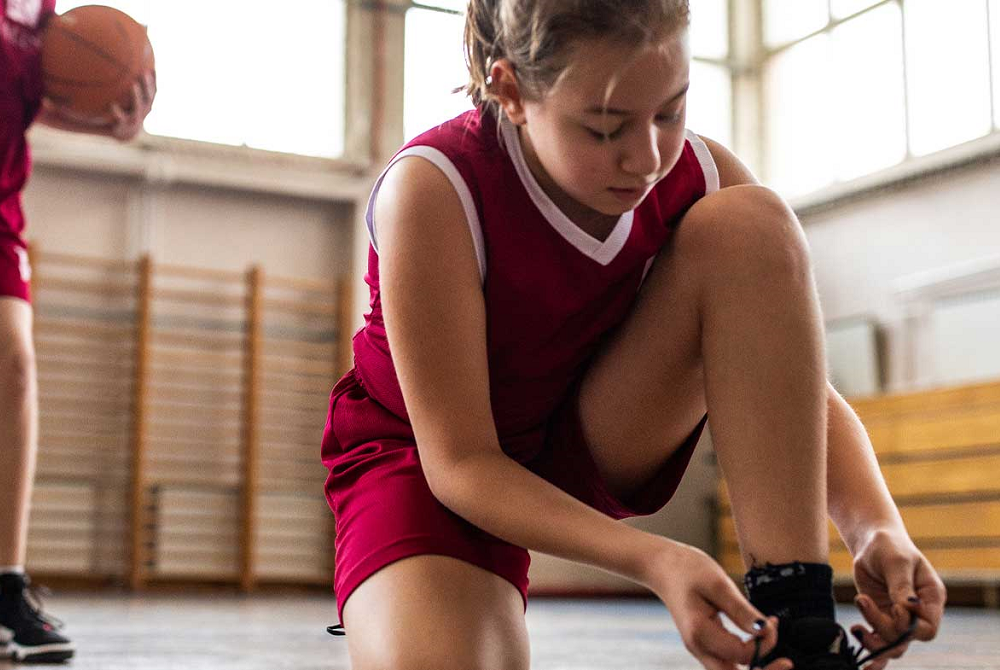
Playing sports is a great way for children of all ages to maintain a healthy lifestyle. It also builds confidence and teaches them valuable life lessons, like working as a team and the value of hard work. While it may be every sports fanatic’s dream to have their kid make it big time in the arena or on the diamond, sometimes pushing young athletes to be the best at a young age can lead to serious injuries that will take them out of the game altogether.
 "Sports help with physical and psychological well-being," says Matthew Santa Barbara, M.D., a sports medicine physician at Henry Ford Health. "However, year-round participation in a single sport at a young age can lead to overuse injuries and mental burnout."
Nowadays, many kids will start playing one sport at a young age and continue to play that same sport year-round for years. This can be harmful to your child because his or her soft tissue and bone structures aren't fully developed. Furthermore, the pressures of year-round participation and focus on excelling, rather than enjoyment, can negatively affect a young athlete's mental health.
Basketball causes the most injuries among high schoolers, causing many visits to the emergency room each year for stressed and torn ankle ligaments. In baseball, the Tommy John surgery, a procedure to reconstruct torn ligaments in the elbow after overuse, has also been increasingly used to treat young athletes still in high school.
How To Prevent Sports Injuries
Preparing your children appropriately before a sports season begins and supporting them during the season is important. Dr. Santa Barbara offers four key pieces of advice to help your youth athletes avoid injury.
1. Don’t limit your child to one sport. Playing a variety of sports in different seasons is a great way to work different parts of the body. When your child gets older, they can make the transition to playing a single sport they are good at and enjoy.
2. Warm up. Make sure your child is properly warming up before they play any sport. Dynamic warmups--incorporating exercises that involve moving the body such as lunges, high knees and arm circles – are preferable to stretching alone.
3. Strengthen core muscles. Building up core strength takes pressure off joints in the arms and legs. It gives young athletes more momentum and can help improve their performance.
4. Abide by rest rules. Many schools and sports leagues have rules in place to limit how many teams kids are on or how often they play. Follow these to ensure your child is allowing time for their joints and muscles to recover from physical activity.
Children participating in a sport should never push through pain, and injuries should be promptly evaluated by a sports medicine physician. Physical injuries are often more obvious, while mental health issues due to sports participation can be more subtle. Symptoms such as fatigue and declining performance can be signs of burnout. In these situations, rest is also important.
"Sports should be fun for kids," says Dr. Santa Barbara. "Avoiding single-sports specialization at a young age keeps the focus on enjoyment while reducing the physical and psychological risks of year-round participation."
To find a sports medicine provider at Henry Ford Health, visit henryford.com/sportsmedicine or call 313-651-1969.
Matthew Santa Barbara, M.D., is a non-operative sports medicine physician at Henry Ford Health. He sees patients at the Henry Ford Center for Athletic Medicine in Detroit, Henry Ford West Bloomfield Hospital, Henry Ford Medical Center - Columbus, Henry Ford Medical Center - Bloomfield Township and Henry Ford Medical Center - Fairlane.