


Special Year Thanks to No Specialization
August 7, 2015
By Geoff Kimmerly
Second Half editor
As we embark on another sports-filled school year Monday, we can look to a recent Monroe St. Mary Catholic Central grad for the value of a school year filled with sports.
As specialization at the highs school level continues to be debated, Bryce Windham will start his college baseball career this fall at Division I Old Dominion University – after playing baseball but also football and basketball for the Falcons.
 The MHSAA has long advocated athletes taking on as many sports as they have interest instead of focusing on just one in pursuit of a college scholarship – a position that’s received plenty of public backing of late, be it from stars of the U.S. women’s soccer team after their World Cup championship run or former Lansing Waverly multi-sport athlete John Smoltz during his enshrinement in the Major League Baseball Hall of Fame.
Enter Windham – who easily could’ve been excused for focusing on baseball, or even basketball as his dad is the St. Mary’s varsity boys coach. Instead, Bryce quarterbacked the football team to last season’s Division 6 championship – breaking Ithaca’s national-best 69-game winning streak in the Final – before being named Class C Player of the Year by The Associated Press in basketball and earning a Most Valuable Player honor at the baseball state coaches association all-star game at Comerica Park this spring.
All three of Windham's teams reached at least the MHSAA Quarterfinals.
“His participation in football and basketball helped land a Division 1 baseball scholarship to Old Dominion. They were able to see his athleticism in basketball and toughness in football, and ODU’s coach loved it,” dad and hoops coach Randy Windham said.
“He probably would’ve given up football, and that ended up his greatest memory by winning a state championship.”
Click to read about Windham’s multitude of accomplishments as reported last month by the Monroe Evening News.
Honors Abound
National coaching honors were bestowed on a trio of Michigan coaches over the summer:
- Retired Trenton ice hockey coach Mike Turner – the winningest hockey coach in MHSAA history with a record of 629-126-52 from 1974-81 and then 1995-2014 – was named National Coach of the Year in Special Sports by the National High School Athletic Coaches Association. His teams won 11 MHSAA titles and finished runner-up four times. “I was there when the MHSAA added hockey as one of their sanctioned sports and crowned their first MHSAA state championships in 1975. At that time there were 60-70 high school teams participating, and now there are 170,” Turner said. “It has been great to be a part of the advancements made in the sport of high school hockey, with more teams participating, more player development, and more opportunities that exist for players after high school.”
- Traverse City Central boys track and field and cross country coach John Lober won his second national coaching honor of the 2014-15 school year, named the NHSACA Coach of the Year for track and field to go with a previous honor earned in January from the National Federation of State High School Associations. He has coached the Traverse City Central boys track and field team since 1977 and also the boys cross country team since 1989. His 1992 track team won the Class A championship, and he has coached 17 individual MHSAA Finals champions. He was inducted into the Michigan Interscholastic Track Coaches Association Hall of Fame in 2006.
- Ann Arbor Pioneer assistant girls swimming and diving coach Liz Hill was named the Assistant Coach of the Year for all girls sports by the NHSACA. Hill, a former All-American at the University of Michigan and standout sprinter at Pioneer, began assisting her husband Denny Hill in 1983 before becoming his fulltime assistant a few seasons later. Together they’ve led the Pioneers girls to 15 MHSAA team titles, the last two as co-head coaches.
Michigan Mourns
Fremont and the high school athletic community statewide mourned the death July 21 of longtime coach Rich Tompkins, who led Fremont’s boys cross country teams to six MHSAA cross country championships including three and a runner-up finish during his last decade of coaching before retiring in 1997.
The Muskegon Chronicle reported that his boys and girls cross country teams and boys track and field team combined for 45 league championships, with his boys cross country team winning 116 straight duals from 1977-88. Tompkins was executive director of the Michigan High School Coaches Association for more than a decade and served on its board for more than two decades.
Click to read more from the Chronicle on Tompkins’ legacy.
Officials in the News
The Monroe County Officials Association took to the county fair to encourage passers-by to “Be the Referee” – and received 47 sign-ups from people interested in the avocation. Visitors to an MCOA booth at the fair were told in some detail what is involved with being an MHSAA official, and those who then signed up to find out more about officiating football, basketball, baseball or softball (sports the MCOA trains for and schedules) will be invited to an orientation session where they will become eligible for one of 20 complimentary registration fees for this school year.
 The West Michigan Officials Association marked a decade of support at the start of this summer for the Visually Impaired Sports and Activity Day, sponsored by the Helen DeVos Children’s Foundation. The WMOA has contributed nearly $18,000 to the event over the last 10 years as well as taking part in the event, which includes a number of sports and other activities.
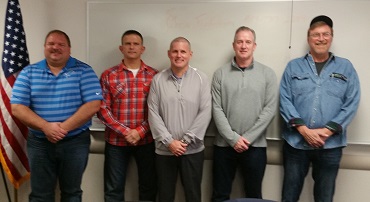
The Saginaw Athletic Officials Association sent along this photo of five members who worked 2013-14 MHSAA Finals, from left: Mark Jarlock (baseball), Tom Behmlander (softball), Scott Helmka (football), Dale Brown (softball and football) and Mark Schoenow (football). The Baseball Final was Jarlock’s first; the other officials had worked Finals in the past.
PHOTO: (Top) Monroe St. Mary quarterback Bryce Windham unloads a pass during last season's Division 6 Final win over Ithaca at Ford Field.
5 Concussion Myths Debunked
November 8, 2022
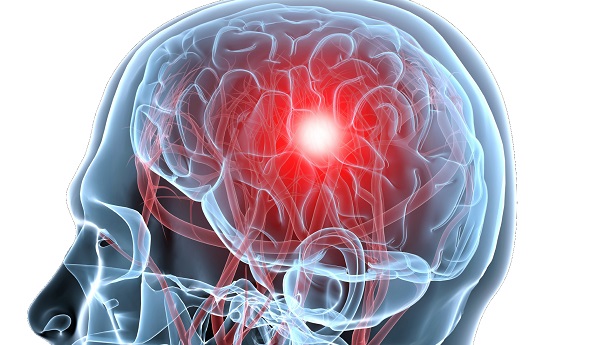
Awareness about the dangers of concussions is at an all-time high. In response, athletic organizations — from Pop Warner football (a nonprofit program for kids 5 to 16) to USA Hockey — have safe-play protocols in place. But misconceptions about injury — prevention, management and return to play — are still all too common.
 "It's great that parents, coaches and athletes are focused on the potential for concussions, but they also need to be aware of the complexities involved in evaluating, diagnosing and managing concussion," says Jeffrey Kutcher, M.D., a sports neurologist who treats athletes at the Henry Ford Kutcher Clinic for Concussion and Sports Neurology.
The best way to get the knowledge you need? Learn how to separate fact from fiction.
Separating Concussion Fact From Fiction
Here’s the truth behind five common concussion myths:
Myth #1: Concussions are only caused by blows to the head.
Concussions happen in response to force. While they often result from a blow to the head, they can also occur after a hit to the neck, shoulders or anywhere else on the body. To cause brain injury, the force of the impact only needs to cause the head to move rapidly back and forth (think whiplash from a car crash or a spill down the stairs).
Myth #2: Concussions always involve a loss of consciousness.
A very small percentage of all concussions, 10 percent or less, result in a loss of consciousness. For the remaining injuries, parents, coaches and medical providers should watch for additional symptoms such as:
· Confusion
· Balance problems
· Slurred speech
· Physical complaints including headache, nausea and vomiting.
Myth #3: You should keep a person awake overnight after a concussion has occurred.
It's important to observe and interact with a recently concussed person for the first few hours to recognize the potential signs of a more serious injury. However, if they are interacting normally after four hours, it’s okay to let them sleep. If you have any doubts or questions, always err on the side of caution and seek medical attention.
Myth #4: After a concussion, kids should avoid digital media until they feel better.
Unless digital activities or screen time significantly worsen symptoms, there's no reason to avoid them. "You shouldn't force people who have suffered a concussion to rest too much — or deprive them of sensory input — if they are comfortable engaging in activity," Dr. Kutcher says. What’s more, taking away activities that bring a person joy or keep them socially connected could end up prolonging their recovery by creating additional symptoms.
Myth #5: All physical activity should be avoided after a concussion.
It’s important to rest for the first two to three days after a concussion. However, you need to be careful not to rest too much or avoid all activity for too long.
Engaging in physical, mental and social activities can be beneficial. But knowing how much to do and when to take it easy can be difficult. If you have any questions, consult a sports neurologist for specific recommendations.
Ground Rules for Concussion Prevention and Management
When it comes to preventing concussion, common sense offers the greatest impact, Dr. Kutcher notes. He recommends starting with these four tenets:
- Whenever possible, limit the amount of contact in practices and games.
- Wear proper fitting and certified helmets or other head protection whenever appropriate.
- Spread contact drills out over time as much as possible.
- Practice good technique and play by the rules.
Athletes — especially those who play contact sports — should undergo an annual neurological evaluation that includes a comprehensive, focused neurological history and examination. This information provides a critical point of reference for medical professionals.
Knowing the truth about concussions — including what to watch for and what to do if one occurs — is really the best game plan.
Dr. Jeffrey Kutcher is a sports neurologist at the Henry Ford Concussion and Sports Neurology Clinic and the global director of the Kutcher Clinic.
Want to learn more? Henry Ford Health System sports medicine experts are treating the whole athlete, in a whole new way. From nutrition to neurology, and from injury prevention to treatment of sports-related conditions, they can give your athlete a unique game plan.
Visit henryford.com/sports or call (313) 972-4216 for an appointment within 24 business hours.