


Thank You from Second Half
January 25, 2013
By Geoff Kimmerly
Second Half editor
Next week will mark the one-year birthday of Second Half, our place to tell your high school sports stories.
And I thank you for helping us to such a great start.
 We knew what we hoped to accomplish starting this site a year ago, but we've learned quite a bit during a relatively short time. Although we continue to pursue the mission of being home of the state’s best high school stories and a daily stop for fans, we’ll continue to experiment to figure out what you'd most like to see and how best we can continue to pass along the great things happening in MHSAA athletics.
A few things to call to your attention as we move ahead:
- First and foremost, we strive to tell your stories – hoping to hit every sport and all regions of our state – and have some intriguing ones coming up as we get into the second half of the winter season. Stay tuned.
- Second Half is the home for the “Battle of the Fans II.” We have visits to Buchanan and Vandercook Lake next week, followed by Ann Arbor Gabriel Richard and Zeeland East the week after. We’ll announce the winner Feb. 22. All will be found here first.
- We've revamped our video page (see menu across the top of this screen) and will be adding more videos more regularly in the year to come.
- After a brief hiatus, we’ll next week bring back “High 5s” featuring two athletes and a team that have done great things this season.
- What you’re reading now is the first of a weekly “First Pitch” blog that will allow us to post more of the quick hits we run across in our regular travels. Make sure to continue checking out the twice-weekly blog by Executive Director Jack Roberts, as well as the Viewpoints and SAC Sound-Offs supplied regularly by our friends from the Michigan State University Institute for the Study of Youth Sports and the members of our Student Advisory Council, respectively.
- We began providing in-depth statewide coverage – both previewing and then postgame reporting – of our Finals in every sport this fall, and hope to become your first and fastest source for the stories behind our championships.
We’re always looking for ideas both for stories or any other features you’d like to see – and feel free to send them directly to me at [email protected].
And again, thank you again for coming to our site today. We look forward to seeing you more in the year to come.
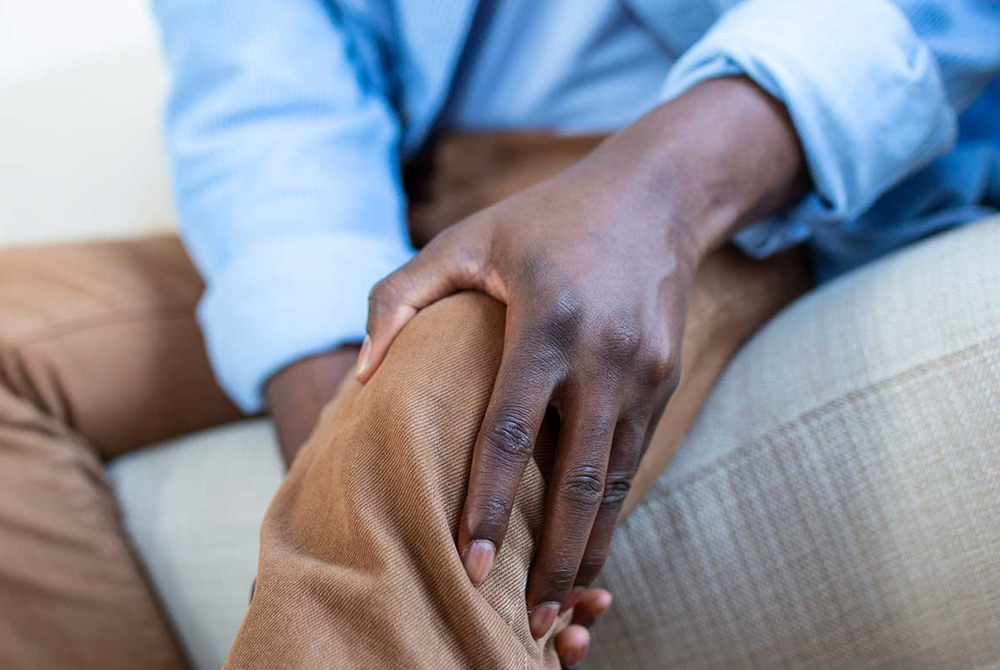
Symptoms of a Meniscus Tear — and When to Seek Treatment
April 2, 2024
Meniscus tears are not one size fits all: Sometimes they cause no pain, other times they’re excruciating.
 Once in a while they heal or adapt on their own, but more often than not they require physical therapy or surgery.
“Your meniscus is a fiber elastic cartilage that acts as a shock absorber for the knee,” says Ahmad Bazzi, M.D., a sports medicine physician at Henry Ford Health. “It also helps stabilize the knee joint. But when it tears — which can occur in young athletes after a pivot injury or in older people who have arthritis — it can be painful.”
Here, Dr. Bazzi shares symptoms of a meniscus tear and when to see a doctor.
What Does A Meniscus Tear Feel Like?
Depending upon the level of injury and type of tear, meniscus tears can either be asymptomatic or cause symptoms like:
- Locking. When the meniscus tears, a piece of it might move into the knee joint, causing mechanical issues like stiffness and locking of the knee joint.
- Catching or clicking. This often feels like a sudden ‘click’ in the knee joint, where it suddenly gives out while you’re walking or doing certain movements.
- Localized pain on the inner or outer part of the knee. In young athletes, a meniscus tear often causes an impaired range of motion and localized pain on the inner or outer part of the knee.
- Pain and swelling. In older people, a meniscus tear often causes swelling and an overall aching pain in the knee.
Treatment Options For Meniscus Tears
A meniscus tear can only heal on its own if the tear is on the outer part of the knee where it has better access to blood supply. If you’re experiencing pain a few days after injury and you have limited range of motion, instability and/or swelling in the knee, Dr. Bazzi recommends seeing a doctor to get an examination and, if needed, an MRI for diagnosis.
“It’s hard to tell what type of meniscus tear you have if you haven’t seen a doctor,” says Dr. Bazzi. “If you have a mechanically unstable tear and it goes untreated, it could lead to worsening range of motion and stiffness, or worsening arthritis. It’s important to get seen by a doctor to get an accurate diagnosis and the proper treatment. It may take one to three months for a full recovery.”
Here, Dr. Bazzi shares treatment options:
Surgery
If someone is having mechanical symptoms like locking or catching, surgery may be considered right away, especially if it’s an athlete younger than 40 years old. “Meniscus tear surgery has a shorter recovery compared to other knee surgeries,” says Dr. Bazzi. “Surgery could either consist of a meniscectomy, which is partial or complete removal of the meniscus, or sometimes just a meniscus repair.”
Hyaluronic acid or cortisone injections
Non-operative treatments are often recommended for older people who have degenerative tears due to arthritis. “This is because meniscus surgery doesn’t often relieve their pain since they have underlying arthritis, meaning they have cartilage loss in the meniscus,” says Dr. Bazzi.
Instead, a cortisone injection, which is an anti-inflammatory medication that can be injected into the knee, can reduce inflammation, swelling and pain caused by arthritis.
A hyaluronic acid injection may also be considered, which adds cushioning in the knee. “Hyaluronic acid is one of the substances that make up our cartilage, so this injection helps us mimic the lost cartilage,” says Dr. Bazzi. “It also has anti-inflammatory properties.”
Physical therapy
Physical therapy is another great option, especially for older people who need non-operative treatment options. It can help the knee adapt to the tear, reduce pain and encourage full range of motion. “Physical therapy for meniscus tears focuses on balance exercises and exercises to strengthen the muscles around the knee,” says Dr. Bazzi. “This helps to uphold the knee joint to achieve full range of motion and strength while being pain-free.”
To find a sports medicine provider at Henry Ford Health, visit henryford.com/athletes or call 313-651-1969.
Reviewed by Ahmad Bazzi, M.D., a sports medicine physician who sees patients at Henry Ford Medical Center – Fairlane.