


Thank You from Second Half
January 25, 2013
By Geoff Kimmerly
Second Half editor
Next week will mark the one-year birthday of Second Half, our place to tell your high school sports stories.
And I thank you for helping us to such a great start.
 We knew what we hoped to accomplish starting this site a year ago, but we've learned quite a bit during a relatively short time. Although we continue to pursue the mission of being home of the state’s best high school stories and a daily stop for fans, we’ll continue to experiment to figure out what you'd most like to see and how best we can continue to pass along the great things happening in MHSAA athletics.
A few things to call to your attention as we move ahead:
- First and foremost, we strive to tell your stories – hoping to hit every sport and all regions of our state – and have some intriguing ones coming up as we get into the second half of the winter season. Stay tuned.
- Second Half is the home for the “Battle of the Fans II.” We have visits to Buchanan and Vandercook Lake next week, followed by Ann Arbor Gabriel Richard and Zeeland East the week after. We’ll announce the winner Feb. 22. All will be found here first.
- We've revamped our video page (see menu across the top of this screen) and will be adding more videos more regularly in the year to come.
- After a brief hiatus, we’ll next week bring back “High 5s” featuring two athletes and a team that have done great things this season.
- What you’re reading now is the first of a weekly “First Pitch” blog that will allow us to post more of the quick hits we run across in our regular travels. Make sure to continue checking out the twice-weekly blog by Executive Director Jack Roberts, as well as the Viewpoints and SAC Sound-Offs supplied regularly by our friends from the Michigan State University Institute for the Study of Youth Sports and the members of our Student Advisory Council, respectively.
- We began providing in-depth statewide coverage – both previewing and then postgame reporting – of our Finals in every sport this fall, and hope to become your first and fastest source for the stories behind our championships.
We’re always looking for ideas both for stories or any other features you’d like to see – and feel free to send them directly to me at [email protected].
And again, thank you again for coming to our site today. We look forward to seeing you more in the year to come.
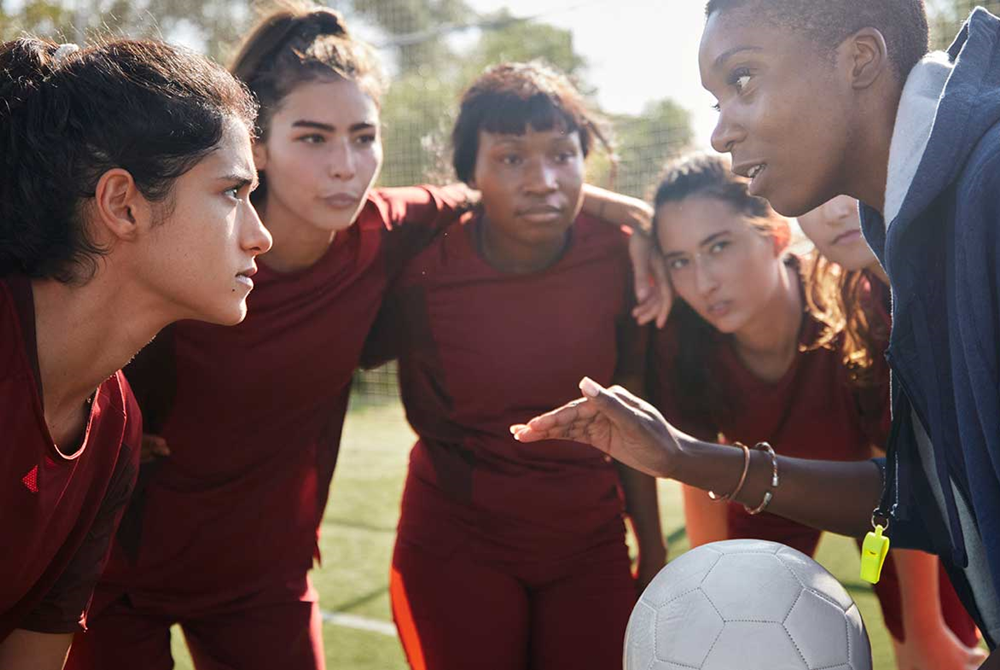
Why Athletes Should See A Sport Psychologist
By
Elizabeth Swanson
Henry Ford Health
January 9, 2024
Whether at the professional or intramural level, there are so many benefits to being an athlete. Participating in a sport teaches communication skills, how to overcome adversity—and regular exercise has so many incredible health effects on the mind and body.
 But that’s not to say athletes don’t have their own set of challenges. Pressures to perform, physical injuries and intense schedules can take a toll on anyone’s mental health, which is where a sport psychologist comes in.
“It’s helpful that a sport psychologist knows the culture of athletics and the typical stressors that athletes face,” says Seth Swary, Ph.D., a sport psychology clinician at the Henry Ford Center for Athletic Medicine. “We’re familiar with the influence the world of athletics can have on someone and how it can affect their well-being.
“Athletes have a whole team around them to help them perform — athletic trainers, nutritionists, etc.— so why shouldn’t they have an expert who is dedicated to supporting their mental health? A sport psychologist acts as a strength-training coach for the mind.”
Mental Health Challenges That Athletes Face & How Sport Psychology Can Help
Athletes often have a built-in support system: teammates and coaches who know what they’re going through and trainers and physicians who can help manage aches and injuries. But still, it’s not always easy. Some of the difficulties that athletes face include:
- Increased attention on body image. Especially if you play a sport that requires revealing outfits — or a sport with increased focus on weight — it might be difficult to maintain a healthy body image. For some, this can lead to an increased risk of developing an eating disorder.
- The pressure to perform. “If you’re an athlete at the college or professional level and play badly during a game, you get roasted on Twitter,” says Dr. Swary. “But even if you’re not in the public eye, there is pressure to perform — from coaches, teammates, family members.”
- Navigating demanding schedules. “I work with many college athletes and their schedules are packed — practicing at least two hours a day, team meetings, traveling to and from games — and then they’re trying to keep up with school,” says Dr. Swary. “It can be stressful.”
- Debilitating physical injuries. The physical demand of sports can also bring about its own set of challenges — especially when injuries occur. “You’re not only dealing with surgery and rehabilitation, but you’re also out of the game for a while,” says Dr. Swary.
- Making career transitions. “I’ve worked with many athletes who are transitioning from one level of athletics to another (for example, middle school to high school, high school to college, college to professional) along with athletes who are transitioning out of their career,” says Dr. Swary. “They wonder how they can leave this sport they’ve been doing their whole lives — some since they were 3 or 4 years old. It can be a huge part of their identity and a tough transition to make. Even more so if it’s an injury that abruptly derails their career. We can provide them with ways to make a smooth, healthy transition.”
That said, nothing “bad” has to happen to benefit from sport psychology. As Dr. Swary says, you don’t see a personal trainer because you’re not strong, you see a personal trainer because you could benefit from being stronger. It’s the same with sport psychology — and it can help improve your performance.
“We have specific skills we work on for performance optimization,” says Dr. Swary. “How do we talk to ourselves? How do we respond in certain situations? How do we stay in the moment when we’re distracted?
“A high school athlete may have had a rough day at school; then they have to refocus and find energy at the end of the day for their game. It can be helpful for any athlete at any time.”
Reviewed by Seth Swary, Ph.D., a sport psychology clinician at the Henry Ford Center for Athletic Medicine.
To learn more about the sport psychology program at Henry Ford or to request an appointment, visit henryford.com/sportpsychology.