


Thank You from Second Half
January 25, 2013
By Geoff Kimmerly
Second Half editor
Next week will mark the one-year birthday of Second Half, our place to tell your high school sports stories.
And I thank you for helping us to such a great start.
 We knew what we hoped to accomplish starting this site a year ago, but we've learned quite a bit during a relatively short time. Although we continue to pursue the mission of being home of the state’s best high school stories and a daily stop for fans, we’ll continue to experiment to figure out what you'd most like to see and how best we can continue to pass along the great things happening in MHSAA athletics.
A few things to call to your attention as we move ahead:
- First and foremost, we strive to tell your stories – hoping to hit every sport and all regions of our state – and have some intriguing ones coming up as we get into the second half of the winter season. Stay tuned.
- Second Half is the home for the “Battle of the Fans II.” We have visits to Buchanan and Vandercook Lake next week, followed by Ann Arbor Gabriel Richard and Zeeland East the week after. We’ll announce the winner Feb. 22. All will be found here first.
- We've revamped our video page (see menu across the top of this screen) and will be adding more videos more regularly in the year to come.
- After a brief hiatus, we’ll next week bring back “High 5s” featuring two athletes and a team that have done great things this season.
- What you’re reading now is the first of a weekly “First Pitch” blog that will allow us to post more of the quick hits we run across in our regular travels. Make sure to continue checking out the twice-weekly blog by Executive Director Jack Roberts, as well as the Viewpoints and SAC Sound-Offs supplied regularly by our friends from the Michigan State University Institute for the Study of Youth Sports and the members of our Student Advisory Council, respectively.
- We began providing in-depth statewide coverage – both previewing and then postgame reporting – of our Finals in every sport this fall, and hope to become your first and fastest source for the stories behind our championships.
We’re always looking for ideas both for stories or any other features you’d like to see – and feel free to send them directly to me at [email protected].
And again, thank you again for coming to our site today. We look forward to seeing you more in the year to come.
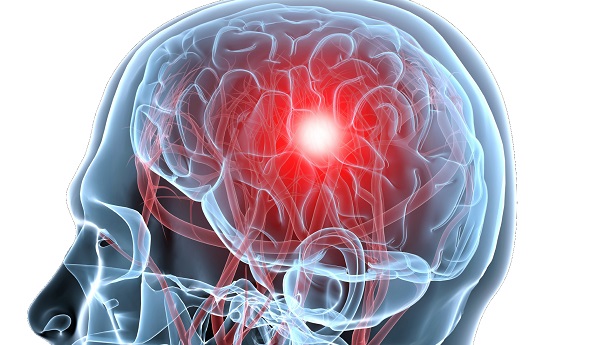
Concussion Care: Signs & Symptoms to Watch
November 1, 2022
When you experience a blow to the head, knowing whether you've suffered a concussion isn't always clear cut.
 Head injuries have a range of physical, psychological and intellectual effects — and only a small number of people lose consciousness.
"It's critical for parents, coaches, players and trainers to recognize the potential signs and symptoms of a concussion," says Jeffrey Kutcher, M.D., a sports neurologist who treats athletes at the Henry Ford Kutcher Clinic for Concussion and Sports Neurology. "The basic rule is that a concussion can affect any aspect of brain function."
Signs of Concussion
The Latin root of the word "concussion" means "to shake violently" — which makes sense. Concussions happen when there's a combination of movement and impact. So, any injury that involves a hit to the head — a fall, collision or hard hit by a heavy object — could cause one. So could a hit to the body that causes the head to move quickly.
"But every brain injury is different," Dr. Kutcher says. "Some symptoms show up right away while others develop gradually over days."
Here are common concussion symptoms to watch for — both immediately following a head injury and in the hours and days after:
Physical Concussion Symptoms
- Changes in sleep patterns
- Difficulty with balance
- Dizziness or lightheadedness
- Fatigue
- Headache
- Light sensitivity
- Nausea
- Numbness or tingling
- Sensitivity to sound
- Visual problems
- Vomiting
Emotional Concussion Symptoms
- Anxiety
- Depression
- Irritability
- Mood swings
Cognitive Concussion Symptoms
- Confusion
- Difficulty concentrating
- Feeling "slow" or "foggy"
- Memory problems
Diagnosing Concussion: Getting It Right
One reason concussions are frequently misdiagnosed is because they're assessed on the field or courtside during game play or practice. Coaches, trainers and parents often make lightning fast decisions about whether symptoms, such as headache, nausea and light sensitivity, are signs of concussion.
"Unfortunately, it’s more complicated than completing a concussion checklist. Everyone — and every concussion — is different. So, observers shouldn’t be diagnosing a head injury on the spot, but rather making a triage decision for safety. They should leave the diagnosis to the medical professionals," Dr. Kutcher says. In fact, those in-the-moment assessments are wrong about half of the time.
People should focus instead on getting immediate, emergency care for anyone who displays the following signs and symptoms right after a hit:
- Difficulty walking
- Weakness on one or both sides
- Not waking up
- Repeated vomiting
- Persistent confusion
- Seizures
- Unconsciousness
No matter how hard (or lightly) you think you've been hit, it's important to take head injury symptoms seriously. Even a seemingly minor blow could have a major impact. A complete evaluation by a medical professional will not only determine whether you have a concussion, it can also identify more serious, or even life-threatening, concerns.
"In every case, medical professionals are better equipped to assess the extent of the damage if you have a comprehensive baseline evaluation on file," Dr. Kutcher says. This thorough evaluation with a sports neurologist, including a complete family and neurological history, can act as a critical point of reference when trainers and medical professionals are trying to diagnose or manage a concussion.
Dr. Jeffrey Kutcher is a sports neurologist and the medical director of the Henry Ford Kutcher Clinic for Concussion and Sports Neurology.
Want to learn more? Henry Ford Health System sports medicine experts are treating the whole athlete, in a whole new way. From nutrition to neurology, and from injury prevention to treatment of sports-related conditions, they can give your athlete a unique game plan.
Visit henryford.com/sports or call (313) 972-4216 for an appointment within 24 business hours.