


Thank You from Second Half
January 25, 2013
By Geoff Kimmerly
Second Half editor
Next week will mark the one-year birthday of Second Half, our place to tell your high school sports stories.
And I thank you for helping us to such a great start.
 We knew what we hoped to accomplish starting this site a year ago, but we've learned quite a bit during a relatively short time. Although we continue to pursue the mission of being home of the state’s best high school stories and a daily stop for fans, we’ll continue to experiment to figure out what you'd most like to see and how best we can continue to pass along the great things happening in MHSAA athletics.
A few things to call to your attention as we move ahead:
- First and foremost, we strive to tell your stories – hoping to hit every sport and all regions of our state – and have some intriguing ones coming up as we get into the second half of the winter season. Stay tuned.
- Second Half is the home for the “Battle of the Fans II.” We have visits to Buchanan and Vandercook Lake next week, followed by Ann Arbor Gabriel Richard and Zeeland East the week after. We’ll announce the winner Feb. 22. All will be found here first.
- We've revamped our video page (see menu across the top of this screen) and will be adding more videos more regularly in the year to come.
- After a brief hiatus, we’ll next week bring back “High 5s” featuring two athletes and a team that have done great things this season.
- What you’re reading now is the first of a weekly “First Pitch” blog that will allow us to post more of the quick hits we run across in our regular travels. Make sure to continue checking out the twice-weekly blog by Executive Director Jack Roberts, as well as the Viewpoints and SAC Sound-Offs supplied regularly by our friends from the Michigan State University Institute for the Study of Youth Sports and the members of our Student Advisory Council, respectively.
- We began providing in-depth statewide coverage – both previewing and then postgame reporting – of our Finals in every sport this fall, and hope to become your first and fastest source for the stories behind our championships.
We’re always looking for ideas both for stories or any other features you’d like to see – and feel free to send them directly to me at [email protected].
And again, thank you again for coming to our site today. We look forward to seeing you more in the year to come.
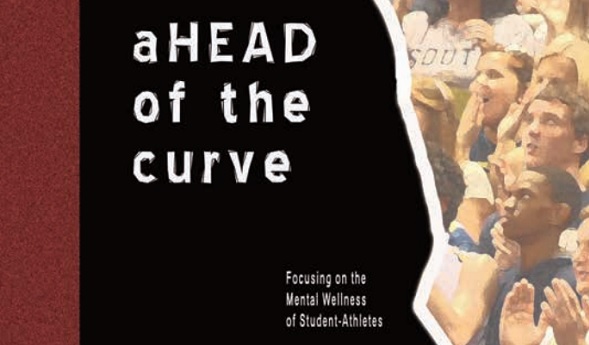
More States Begin Mental Health Efforts
January 2, 2020
Editor’s Note: This is part of a series on NFHS News addressing the challenges of mental health issues in high school athletics. This article explores one statewide approach to this important subject.
Suicide is a serious public health problem. It is the second-leading cause of death of high school-aged individuals in the United States. (National Vital Statistics Report 2016 Data Published by the CDC July 2018)
In Oregon, the suicide rate is higher than the national average, and a recent survey of 11th-graders found that within the past year, 18 percent seriously considered suicide and 7 percent attempted suicide. (Youth Suicide Annual Report 2017 & Oregon Healthy Teens Survey 2017)
More concerning is the fact that the rate of completed suicides in youth has been increasing since 2011. Not only does suicide lead to a life lost much too early, it leaves a devastating impact on those left behind.
Fortunately, suicides are preventable. The Oregon Youth Suicide Intervention and Prevention Plan was created calling for “Zero Suicide ... through collective action among health and behavioral health systems, schools, communities, parents and other systems that touch the lives of youth.” (Youth Suicide Annual Report 2017) For numerous reasons, schools are being used as the primary means of dissemination and implementation of suicide prevention interventions.
One group of school personnel that had not been traditionally considered in school-based efforts are school activities personnel: coaches, athletic trainers and athletic administrators. These individuals spend a great deal of time with students, developing relationships that may go beyond what a student typically has with a teacher.
 Coaches, athletic trainers and athletic administrators are in the ideal position to recognize behavioral warning signs or be the point person for students to go to if they have concerns about a peer. This is vital as youth considering suicide often talk about suicide and exhibit behaviors and/or moods associated with increased suicide risk. Additionally, activities personnel are school leaders who are often known and trusted by parents, thus creating more opportunities for dialogue on suicide prevention.
Realizing the impact youth suicide has on school communities and the prevention opportunities that exist, the leadership of the Oregon School Activities Association (OSAA), the Oregon Athletic Coaches Association, the Oregon Athletic Directors Association and the Oregon Athletic Trainers’ Society partnered to promote the role of high school activities personnel in preventing youth suicide. While these groups had multiple means of reaching out to the intended audience, the leadership realized help was needed from experts for a statewide education campaign to be successful. The Suicide Intervention Coordinator for the Oregon Health Authority (the state agency charged with overseeing Oregon’s health-related programs) was contacted and agreed to assist in developing a statewide educational campaign geared to activities personnel.
The Campaign
It was determined that a series of articles geared specifically to activities personnel would be written by the Oregon Health Authority and then disseminated by the OSAA throughout the academic year.
The articles typically contained two pages of practical information and tips. The campaign was not designed to replace a formal suicide gatekeeper training; rather, it served to promote awareness of the role activities personnel play in countering the rising problem. The articles and additional resources were also posted to the OSAA website.
The OSAA Foundation provided funding for a poster that was provided to schools to be placed in locker rooms, team rooms, athletic training rooms and other areas where students congregate. The primary goal of the poster was to provide students with contact information for crisis lines.
Toward the end of the campaign, workshops were presented by a representative from the American Foundation for Suicide Prevention at the Oregon Athletic Directors Association’s annual statewide conference. The goal was to provide information on programs and policies that athletic administrators could implement at their schools.
While the campaign only spanned the 2017-18 academic year, the leadership of the stakeholder groups believed there was still more that could be done. In 2018-19, a campaign on anti-hazing and anti-bullying (which is a risk factor for suicide) was implemented using a similar approach as the suicide prevention campaign.
In addition, the groups coordinated a high school coaches’ symposium that included breakout sessions on suicide prevention, hazing prevention and character education.
Lessons Learned
Individuals who work with students involved with high school activity programs realize the power and opportunities which exist for positive character development. The focus of this campaign was to highlight a significant and growing public health problem – youth suicide. The goal of the campaign was to increase awareness and provide appropriate resources – not to create experts in suicide prevention.
The collaborative nature of this campaign strengthened the relationships between the different groups working together with a specific purpose. The groups have now partnered on several additional campaigns – the aforementioned anti-hazing/anti-bullying campaign and promoting the development of Emergency Action Plans.
The campaign also allowed the groups to work closely with state public health officials. While the OSAA had previously partnered with state public health officials regarding air quality policies and a guidance document for medical providers on pre-participation physical exams, this campaign provided several new and distinct advantages.
State public health officials were able to see the positive impact of participation in high school activity programs beyond just the activity itself – namely the positive mentorship relationships that may develop. They were also impressed by the large audience the campaign reached and the feedback provided (due to the expansive network of activities administrators, coaches and athletic trainers that the OSAA reaches). Ideally, this will spur additional collaborations in the future.
A major challenge for schools and school personnel is the competing demands for time and resources for the many worthy interventions and activities. Unfortunately, it is impossible to commit to all interventions and activities that may benefit students. While there was a monetary cost for the posters to be distributed to schools, development of the actual campaign articles and presentations were done by individuals as part of their job related to suicide prevention, so the campaign was relatively inexpensive. Since it was distributed throughout the year, it did not require a large time commitment from activities personnel and the monthly articles kept the issue front and center.
Conclusion
The statewide Youth Suicide Awareness Campaign is just one example of how the unique role of school activities personnel can be leveraged and how stakeholder organizations and state public health agencies can maximize their impact and reach through collaboration. While we will continue to review suicide incidence in Oregon during the coming years, the campaign is seen as a success at this point. It has strengthened relationships between the involved entities, and it promoted the role of coaches, athletic trainers and athletic administrators as mentors and trusted individuals to make an impact that extends beyond wins and losses.
— Sam Johnson, Rob Younger, Peter Weber, NFHS News, March 12, 2019
Colorado Institutes Mental Health Requirement
In a major step aimed at improving mental health of students across Colorado high schools, the CHSAA Board of Directors approved as a requirement that all coaches take a course on student mental health.
It is among the major topics facing high school students today. According to the U.S. Department of Health & Human Services, 31 percent of high school students reported symptoms of depression in 2017, and 17 percent reported they seriously considered attempting suicide.
 So, starting this fall, all coaches must take a course “Student Mental Health and Suicide Prevention” on the NFHS Learning Center, or a district-led mental health training. The NFHS Learn course is free.
In order to be a registered coach, this requirement must be satisfied. Unregistered coaches are not permitted to coach, per CHSAA bylaws. Other required courses or training are based around concussion, first aid, mandatory reporting, and the CHSAA coaches course.
“CHSAA’s vision is to deconstruct the stereotypes around mental health and help start the conversations that need to happen around our kids,” said CHSAA commissioner Rhonda Blanford-Green. “The mental and physical well-being of our student participants is our priority.”
The decision was made with the full support of the Sports Medicine Advisory Committee (SMAC), which discussed the topic at length during its meeting last school year.
“The committee was focused on finding great tools that we can give to our schools and coaches to help provide awareness around mental health, which is among the most important issues our students face,” said Jenn Roberts-Uhlig, the CHSAA staff liaison to SMAC. “We believe it is important for coaches to not be afraid to look for the signs and symptoms of a student who is struggling with their mental health, and this training will provide valuable instruction in how to do that.”
— Ryan Casey/CHSAA, June 27, 2019