


Coaches Must Set the Example
October 15, 2012
By Scott Westfall
MSU Institute for the Study of Youth Sports
NOTE: This is part one of a two-part viewpoint explaining the importance of coaches and parents setting proper examples for young athletes in their treatment of game officials.
 In light of the recent uproar over NFL replacement officials, it seems that never before has it been so common and socially accepted to yell disgust at referees.
While this trend is prevalent in both professional and college football, it has unfortunately trickled down into the high school ranks. What is actually accomplished when a coach or fan yells at an official? Do people really believe that if they become irate, a ‘bad call’ will be erased? In all of my years watching, playing, and coaching athletics, not once have I seen a referee change his or her ruling because a coach or a fan yelled at him or her.
When adults lose control and scream at referees, who does this bad behavior really affect? Since youth learn their emotional control from adult leaders, I believe the true damage is done to the young minds that are witnessing their mentors lose their cool. After their display of anger, how can these same adults hope for kids to stay calm when things do not go their way in life? It is pure hypocrisy to expect otherwise.
Whether we like it or not, referees are the absolute authority in athletic contests; they control the game from start to finish, make the tough calls on the playing surface, and even decide who gets to stay and who is sent to the locker room. Yet, it is baffling how often their authority is disrespected.
It is the coach’s responsibility to establish his or her program as one that respects authority. Since players watch all of the moves their coaches make, it is imperative that coaches respect the officials – especially when the calls do not go their way. If a player sees his or her coach going berserk due to a ‘bad call,’ the same player will think it is OK to act like this down the road when upset or faced with adversity. Even more detrimental to these kids is hearing their coach preach a message but contradict it by not backing it up with actions.
Great high school coaches will use the playing surface as an extension of their classroom. In my years as a head coach, I tried my hardest to set a good example for my players and told them to never question, back-talk, or disrespect an official. However, I made the mistake of breaking my own rule on one occasion by questioning the referee’s judgment.
When I was a younger coach, I may have attributed my actions to the heat of the moment, or defended myself on the criteria that I was trying to stick up for my team. However, being a veteran leader who wanted to practice what I preached, I saw my mistake as a teaching moment.
The next practice, when we conducted team discipline conditioning, “Reminders” (usually reserved for players with unacceptable school behavior or poor grades), I asked my players what I had taught them about respecting authority and if I had broken my own rule. The players agreed that I had broken my rule and had not respected the referee.
I let them know that this rule applied to me as much as them. I then lined-up on the goal line and ran my own set of wind sprints as the players, assistant coaches, and managers watched in disbelief. Afterward, to even my surprise, several players thanked me for holding myself accountable.
One kid even had tears in his eyes, and said that after watching my self-imposed discipline, he wanted more than ever to be a man of his word and do the right thing.
Scott Westfall has spent the last 10 years as a teacher, coach, and athletic director in Fort Collins, Colo. He currently is working on his Doctorate at Michigan State University, with an emphasis in Sport Psychology and Athletic Administration, and assisting the MHSAA with its student leadership programs. Westfall is a former athlete who participated in football, wrestling, tennis and cross country at the high school level, and rugby at the collegiate level. He can be reached at [email protected].
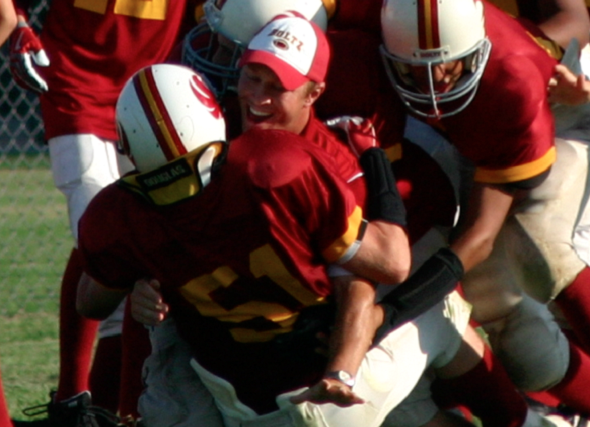
PHOTO: Scott Westfall celebrates with his football team while serving as a coach at Boltz Middle School in Fort Collins, Colo.

Pandemic Planning: Creating a Schedule
December 15, 2020

By Stacy Leatherwood Cannon, M.D.
Henry Ford Health System
With coronavirus continuing to grab headlines and physical distancing orders still in place, every day tends to feel the same.
More parents than ever are working from home, have reduced hours or may even be out of work due to the pandemic. Those who are working at full capacity may feel the strain of trying to balance work and childcare. Many schools and extracurricular programs have been moved online or canceled.
With both parents and kids feeling the stress of new daily routines, it's more important than ever to create a schedule that all family members can follow.
Staying On Schedule
When schedules are off (particularly sleep schedules), children and teens may be at greater risk for depression and anxiety. Younger children may act out because they have increased energy with no outlet. The good news: Creating a schedule — and sticking with it — can help everyone feel more grounded.
Children thrive with an understanding of the daily routine. Knowing what to expect and what they need to do reduces anxiety and helps kids feel more in control.
A few ways to achieve an effective schedule:
• Make it a family affair: Instead of drawing up a schedule and expecting everyone to stick to it, involve your children in the process. Call a family meeting where you come up with sleep and waking times, mealtimes and breaks. Kids are more likely to embrace a new schedule if they played a hand in creating it.
• Enforce bedtime: Children doing remote learning may not have to rise as early to make it to school on time. Even so, it's important to set a regular bedtime so they can remain on task during daylight hours. Your best bet: Establish a bedtime routine that includes calming activities (like a bath and reading) and ensure your children go to bed at an appropriate hour. School-aged kids should get about 9 to 10 hours of sleep each night.
• Stick to mealtimes: Keeping mealtime consistent allows for a structured break where kids and parents can reconnect and troubleshoot when necessary. This is especially important with older adolescents who may work independently during the school day. Unfortunately, what works for one family member may not work for another. Ideally, families should work together to establish mealtimes, then adjust based on each individual's needs and assignments.
• Encourage breaks: Kids and adults alike become zombie-like after sitting in front of a screen for extended periods. For children who are distance learning, frequent breaks are especially important. The younger the child is, the more breaks they need to stay engaged. That said, even older kids should take breaks every 30 minutes or so to walk around, get a snack and do some simple stretches. Better yet, take your breaks together and do some jumping jacks or share a snack as a family.
Successful Scheduling
Coming up with an effective schedule that the whole family can follow is not something you do at the last minute. Plan for the week ahead over the weekend. Sit down as a family and discuss what worked — and what didn't — the previous week. Then tweak as necessary.
Most important, be patient. These are unprecedented times for all of us. And while we have months of experience dealing with this pandemic, transitioning back to school has brought new challenges.
Try to shift your focus toward the perks of this experience. This is a rare moment in history when families can come together and spend a lot of quality time together. It could be a time of growth and transformation for your whole family.
Concerned about how your children are managing the pandemic? Help is available. To find a doctor or pediatrician at Henry Ford, visit henryford.com or call 1-800-HENRYFORD (436-7936).
Stacy Leatherwood Cannon, M.D., is a board-certified pediatrician and the physician champion for childhood wellness for Henry Ford LiveWell. She sees patients at Henry Ford Medical Centers in midtown Detroit and Sterling Heights. Learn more about Dr. Leatherwood Cannon
PHOTO: Novi's Abigail Pheiffer, a senior on the MHSAA Student Advisory Council, gets in some wall sits during a break in her day.