

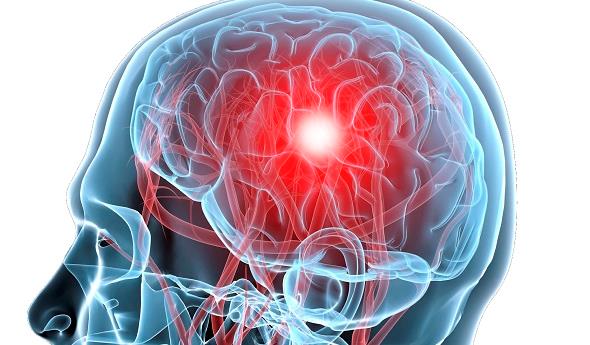
Concussion Care: Signs & Symptoms to Watch
October 27, 2020

Henry Ford Health System
When you experience a blow to the head, knowing whether you've suffered a concussion isn't always clear cut.
Head injuries have a range of physical, psychological and intellectual effects — and only a small number of people lose consciousness.
"It's critical for parents, coaches, players and trainers to recognize the potential signs and symptoms of a concussion," says Jeffrey Kutcher, M.D., a sports neurologist who treats athletes at the Henry Ford Kutcher Clinic for Concussion and Sports Neurology. "The basic rule is that a concussion can affect any aspect of brain function."
Signs of Concussion
The Latin root of the word "concussion" means "to shake violently" — which makes sense. Concussions happen when there's a combination of movement and impact. So, any injury that involves a hit to the head — a fall, collision or hard hit by a heavy object — could cause one. So could a hit to the body that causes the head to move quickly.
"But every brain injury is different," Dr. Kutcher says. "Some symptoms show up right away while others develop gradually over days."
Here are common concussion symptoms to watch for — both immediately following a head injury and in the hours and days after:
Physical Concussion Symptoms
- Changes in sleep patterns
- Difficulty with balance
- Dizziness or lightheadedness
- Fatigue
- Headache
- Light sensitivity
- Nausea
- Numbness or tingling
- Sensitivity to sound
- Visual problems
- Vomiting
Emotional Concussion Symptoms
- Anxiety
- Depression
- Irritability
- Mood swings
Cognitive Concussion Symptoms
- Confusion
- Difficulty concentrating
- Feeling "slow" or "foggy"
- Memory problems
Diagnosing Concussion: Getting It Right
One reason concussions are frequently misdiagnosed is because they're assessed on the field or courtside during game play or practice. Coaches, trainers and parents often make lightning fast decisions about whether symptoms, such as headache, nausea and light sensitivity, are signs of concussion.
"Unfortunately, it’s more complicated than completing a concussion checklist. Everyone — and every concussion — is different. So, observers shouldn’t be diagnosing a head injury on the spot, but rather making a triage decision for safety. They should leave the diagnosis to the medical professionals," Dr. Kutcher says. In fact, those in-the-moment assessments are wrong about half of the time.
People should focus instead on getting immediate, emergency care for anyone who displays the following signs and symptoms right after a hit:
- Difficulty walking
- Weakness on one or both sides
- Not waking up
- Repeated vomiting
- Persistent confusion
- Seizures
- Unconsciousness
No matter how hard (or lightly) you think you've been hit, it's important to take head injury symptoms seriously. Even a seemingly minor blow could have a major impact. A complete evaluation by a medical professional will not only determine whether you have a concussion, it can also identify more serious, or even life-threatening, concerns.
"In every case, medical professionals are better equipped to assess the extent of the damage if you have a comprehensive baseline evaluation on file," Dr. Kutcher says. This thorough evaluation with a sports neurologist, including a complete family and neurological history, can act as a critical point of reference when trainers and medical professionals are trying to diagnose or manage a concussion.
Dr. Jeffrey Kutcher is a sports neurologist and the medical director of the Henry Ford Kutcher Clinic for Concussion and Sports Neurology.
Want to learn more? Henry Ford Health System sports medicine experts are treating the whole athlete, in a whole new way. From nutrition to neurology, and from injury prevention to treatment of sports-related conditions, they can give your athlete a unique game plan.
Visit henryford.com/sports or call (313) 972-4216 for an appointment within 24 business hours.
NFHS Voice: Nationally, Lost Spring Ends
May 8, 2020
By Karissa Niehoff
NFHS Executive Director
On Monday, the New Jersey State Interscholastic Athletic Association became the 51st and final NFHS member state high school association to cancel its spring sports championships due to the Coronavirus pandemic.
The cancellation announcements began in late March and stretched to early May as states made every attempt possible to conduct spring sports and other activity programs.
Driven by a desire to offer perhaps a few weeks of competition – particularly for graduating seniors – many states waited as long as possible to move from postponed to cancelled, ultimately forced to make decisions when schools were closed to in-person learning for the remainder of the academic year.
While the leaders of our state associations knew that spring activities could not occur if schools did not re-open, and that the health and safety of the millions of participants ultimately drove these decisions, having to make these announcements was perhaps the most difficult task they had experienced as state leaders.
“We are disappointed for the thousands of New Jersey student-athletes who will be unable to compete this spring,” said Larry White, executive director of the New Jersey State Interscholastic Athletic Association. “While we remained hopeful to the end, and left open every possibility, competition simply is not feasible given the circumstances. It has been a harrowing time for everyone, and we know our student-athletes are extremely disappointed. That said, these unfortunate circumstances may have put an intriguing challenge in the path of our young people. As New Jersey’s own Vince Lombardi once said, ‘It's not whether you get knocked down, it's whether you get up.’ We’re confident all our kids will get back up and stand tall.”
Rhonda Blanford-Green, commissioner of the Colorado High School Activities Association, showed her emotions in making the difficult decision in her state:
“This decision, unlike the many decisions our office makes over the course of a year, has been extremely difficult because we are personally connected as former participants and officials, current parents and grandparents of graduating seniors, as well as educators and members of our high school communities. Our hats are off to the many seniors who have shown maturity and resolve as their culminating year of high school has been impacted beyond activities and athletics due to the worldwide COVID-19 pandemic. The Class of 2020 will not be forgotten.”
Craig Anderson, executive director of the Illinois High School Association, said, “Our thoughts are with all the impacted students, coaches and communities, especially the seniors. It will be difficult for them to find a silver lining in all of this, but we stress that even if they don’t get the chance to compete again at the high school level, they are better for having been a part of their respective high school teams. They were exposed to life lessons in teamwork, leadership and overcoming adversity that are difficult to replicate elsewhere.”
What was at stake and who was affected by these cancellation announcements? More than 500 girls and boys spring sports championships in about 18 sports and involving about three million student-athletes. Along with multiple classes for both boys and girls in track & field, other sports affected this spring were baseball, softball, lacrosse, golf, tennis, soccer, flag football, boys volleyball, water polo, weightlifting, gymnastics, riflery, judo, Unified track & field and ultimate Frisbee. Also grounded were perhaps another million participants in band, choir, orchestra, speech, debate, robotics and other activity programs.
And last, but far from least, we remember the thousands of volunteers who make these events happen every year – ticket-takers, concession stand workers, booster club parents, meet officials and the leaders in communities throughout the country where these events were planned. We thank these individuals for their faithful service year after year, and we look forward to the day we are all back together again.
Dr. Karissa L. Niehoff is in her second year as executive director of the National Federation of State High School Associations (NFHS) in Indianapolis, Indiana. She is the first female to head the national leadership organization for high school athletics and performing arts activities and the sixth full-time executive director of the NFHS, which celebrated its 100th year of service during the 2018-19 school year. She previously was executive director of the Connecticut Association of Schools-Connecticut Interscholastic Athletic Conference for seven years.