

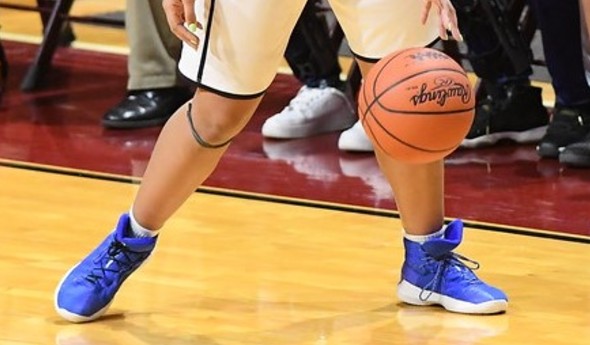
Navigating Twists, Turns Of Ankle Sprains
November 30, 2020

Henry Ford Health System
Oh, how the ankle turns! If you’ve had a misstep or wrong turn result in a sprained ankle, you know how painful this injury can be. Henry Ford podiatric surgeon Paul Di Liddo, DPM, discusses ankle sprains and treatments.
Ankle Injury 101
From risk factors to treatments (and nearly everything in between), here’s what to know — and do — about ankle sprains.
Sprained Ankles Are Painfully Common
In fact, they’re among the most frequent injuries in the United States, with up to 25,000 people per day spraining their ankles. Although often associated with sports, ankle sprains can happen to anyone, anywhere. “I see ankle sprains from tripping over curbs, stepping in holes in a yard or simply walking,” says Dr. Di Liddo. “Ankle sprains — like accidents — happen.”
Ankle Sprains Injure Ligaments
“Ankle sprains occur when the ankle suddenly and forcefully twists or rolls past a point that the ankle ligaments can tolerate,” remarks Dr. Di Liddo. “The ankle ligaments will stretch or tear, either partially or completely.” An ankle can twist, turn or roll during a fall, jump or change of direction, while walking on uneven ground and more.
A Weak Ankle Is A Vulnerable Ankle
Most sprained ankles heal without long-term concern. In some cases, however, ligaments may not fully heal, resulting in a weak or unstable ankle. “A weak or unstable ankle can make an individual more susceptible to repeated ankle sprains,” explains Dr. Di Liddo.
High Arches Can Be Risky Business
People who have high-arched feet are more at risk of rolling — and therefore spraining — their ankles. So are people who have “loose joints,” because the ankle can overstretch with a seemingly minor twist. People who are at-risk for ankle sprains should take extra precautions when playing sports or performing other activities.
Some Sprains Can Be Treated At Home — Emphasis On Some
How you treat a sprained ankle depends on the severity of the injury. Minor sprains can be treated at home with the RICE method. The RICE method include:
- Rest by avoiding use of the injured ankle
- Ice applied to the ankle (without touching the skin) for no more than 20 minutes every three to four hours
- Compression with an elastic bandage
- Elevation above the heart
Ice, compress and elevate your ankle for the first few days. Rest and refrain from sports until ankle pain and swelling have subsided.
At-home treatments aren’t right for everyone — or every ankle injury. “A swollen ankle is typical if you have experienced a sprain,” says Dr. Di Liddo. “However, if you have severe ankle swelling, are in extreme pain or notice an odd ankle appearance, seek medical attention.” This is also true if you can’t walk more than a few steps or have limited ankle mobility. A foot and ankle specialist can diagnose your injury and begin treatment.
Ankle Treatments Abound
Ankle sprain treatments are designed to decrease pain and swelling, while protecting the ligaments from further injury. Treatments include wearing an ankle brace, walking boot or cast. Physical therapy to strengthen the ankle and maintain range of motion may also be incorporated after the ligaments have started to heal.
“Of course, for more severe injuries, a thorough physical exam and X-rays are necessary,” says Dr. Di Liddo. “This helps ensure that there is no other underlying injury, such as a fractured ankle or Achilles tendon rupture.”
Healing Times Vary
The recovery time for a sprained ankle depends on the severity of the injury. Sprains with minimal ligament stretching and no tear require one to three weeks. Partially torn ankle ligaments may take up to six to eight weeks to heal. A fully torn ligament can take several months to fully heal.
What To Do When Ankle Problems Persist
For people who continue to experience ankle instability, there are a host of options. “Physical therapy is the first step — but not the only one,” says Dr. Di Liddo. “If physical therapy has not been beneficial, we can discuss surgical approaches.”
Surgical options include:
- Ligament repair or reinforcement via an outpatient procedure
- Osteotomy, which is surgical cutting of bone, to lower arches when ankle instability is caused by high arches
For those with frequent ankle sprains or instability, a medical assessment is necessary and may include:
- Physical exam
- X-rays to assess bones and joints
- MRI to evaluate ankle ligaments
With this information in mind, you can prevent — or address — the twists and turns of ankle sprains.
Want to learn more? Henry Ford Health System sports medicine experts are treating the whole athlete, in a whole new way. From nutrition to neurology, and from injury prevention to treatment of sports-related conditions, they can give your athlete a unique game plan.
Visit henryford.com/sports or call (313) 972-4216 for an appointment within 24 business hours.

5 Tips to Prevent Sports-Related Injuries
December 3, 2019
Henry Ford Health System
Participating in sports provides so many benefits to kids and teens. There are the obvious benefits of physical fitness and promoting regular exercise. Then, there are also the character-building lessons learned from being part of a team, working hard toward a goal, celebrating tough competition and gracefully accepting defeat. But sports don’t come without some risk.
Sports-related injuries are the leading cause of emergency room visits for kids ages 12-17, according to the Centers for Disease Control and Prevention (CDC).
These injuries impact twice as many males as females. Not surprisingly, contact sports also have higher injury rates. Football, basketball, baseball and soccer account for roughly 80 percent of all sports-related emergency room visits for children.
Sports injuries depend on the age of the athlete and the type of sport played, according to Bridget McArdle, D.O., a Henry Ford pediatrician. Generally, she says, sports injuries are divided into two groups: injuries from overuse like strains and tendonitis, and acute injuries such as concussions, fractures and tears.
The teen years pose special hazards, too. The adolescent growth spurt places teens at higher risk for injuries.
“The growth plates could still be open, which increases the risk for damage,” Dr. McArdle says. “This can lead to long-term problems.”
5 Important Injury Prevention Tips
Fortunately, many sports-related injuries can be prevented — the CDC estimates that as many as half of them could be avoided.
Here are Dr. McArdle’s tips for injury prevention for parents and coaches:
1. Ease into training. It’s important to start gradually in order to decrease the chance of sports injuries. “When you train too quickly at full peak, you are more likely to get hurt. Ease into it – and don’t overdo it,” says Dr. McArdle.
2. Cross train. Changing up the way your child trains is one way to help prevent sports injuries. “Taking a break from one sport to play another is important,” she recommends. Training a different way and using different muscles decreases the strain placed on the same body parts. Practicing gentle stretching exercises such as yoga or Pilates can also help, she adds.
3. Use the right equipment. Everything from the proper shoes and appropriate, properly fitted safety gear for the particular sport are essential for minimizing the risk of injury, as well.
4. Avoid excessive heat. The American Academy of Pediatrics (AAP) recommends young athletes avoid heat illness by wearing light clothing and drinking plenty of fluids before, during and after exercise or play. Coaches should decrease or stop practices during high heat or high humidity periods.
5. Take time to recover. If a sports injury does occur, taking time to recover is very important. Returning to play too soon increases the risk of making the injury worse, and increases the chance of long-term consequences. “Make sure the injury is completely healed before returning. Don’t allow your child to play through pain,” advises Dr. McArdle.
If you have questions or concerns about your child’s readiness to play, be sure to get a sports physical and talk with your pediatrician or primary care provider.
Dr. Bridget McArdle is a board-certified pediatrician, seeing patients at Henry Ford Medical Center – Sterling Heights.
Want to learn more? Henry Ford Health System sports medicine experts are treating the whole athlete, in a whole new way. From nutrition to neurology, and from injury prevention to treatment of sports-related conditions, they can give your athlete a unique game plan.
Visit henryford.com/sports or call (313) 972-4216 for an appointment within 24 business hours.