


NFHS Voice: Committed to HS Football
February 12, 2020
By Karissa Niehoff
NFHS Executive Director
The enduring popularity of football in the United States was celebrated in the past year at all levels of the sport.
The NFHS celebrated its 100th year of service in all areas of high school sports, including the writing of football playing rules, although the first-known games date to the 1870s.
This past year, the NCAA recognized the 150th anniversary of college football which started in 1869 when Princeton and Rutgers met for the first time. And the National Football League just closed its 100th season, which started with a 1919 game between Dayton and Columbus.
From those beginnings to today, the impact of football on life in America is incalculable. From the youth leagues, through high school and college, and on to the NFL, football is the runaway leader as this country’s most popular sport – both from a participant standpoint with about three million players annually at all levels, to the millions of fans who attend or watch games.
Every fall, millions of families spend a portion of their weekends supporting their grade-school kids in youth football programs. Through these programs, kids are exposed to the basics of the sport and, more importantly, they begin to learn teamwork, sportsmanship and how to win and lose in a proper manner.
On Friday nights, beyond the one million high school students – boys and girls – actually playing football, there are more than 150 million fans who attend games each year. Parents are involved in booster club activities, and homecoming activities occur during one football game every year. In many communities – particularly smaller cities and towns – Friday night football is often the most anticipated event of the week.
Another 50,000-plus players are involved in college football on Saturdays. As is the case at the high school level, homecoming events are tied to one football game every fall. Postseason bowl games have been a part of American culture for decades, and the new College Football Playoff has brought even more excitement to the end of the season.
NFL games on Sunday complete the three-day weekend focus on the country’s favorite sport. Thanks, in part, to the singular weekly focus as opposed to multiple games each week in the other three major professional sports, football dwarfs its competitors.
The interest level in playing football – and following the sport at all levels – has never been higher. With that continued interest in the sport comes the expectation that everything possible is being done – at all levels – to ensure that the safety of each and every participant is of the upmost concern.
With that backdrop, last week we met with leaders from USA Football, several state high school association executive directors and high school coaches and athletic directors representing the National High School Football Coaches Alliance and the National Interscholastic Athletic Administrators Association, respectively.
Collectively, these groups are committed to consistent messaging and support to ensure the ongoing popularity of the sport for the next 100 years. We believe the Football Development Model (FDM) enacted by USA Football will re-invigorate interest in the sport at the youth levels. The FDM reduces contact in youth football and advances the game through comprehensive education, game progressions and safety standards.
There was also agreement about the importance of high school football coaches. By connecting with coaches of youth football programs in their communities, high school football coaches can spur excitement on the part of youth players and their parents and improve chances of kids continuing to play the sport. Without a doubt, high school football coaches can be the focal point to success of programs in communities across the nation.
Working together, we can count on a continuation of the sport’s popularity at the high school level.
Dr. Karissa L. Niehoff is in her second year as executive director of the National Federation of State High School Associations (NFHS) in Indianapolis, Indiana. She is the first female to head the national leadership organization for high school athletics and performing arts activities and the sixth full-time executive director of the NFHS, which celebrated its 100th year of service during the 2018-19 school year. She previously was executive director of the Connecticut Association of Schools-Connecticut Interscholastic Athletic Conference for seven years.
Put a Stop to Recurring Injuries
May 5, 2020
 By Nick Parkinson, M.Ed., AT, ATC, TSAC-F
Henry Ford Health System
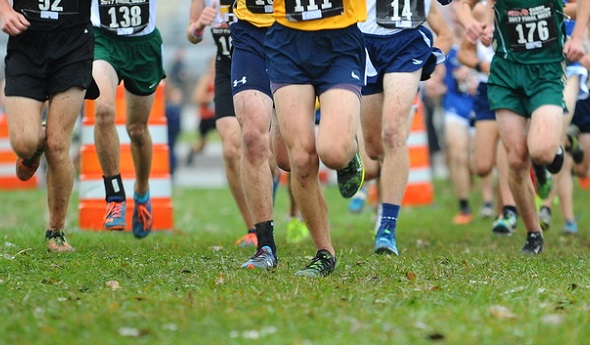
Recurring injuries happen — and they're especially common among single-sport athletes or people who focus on one type of exercise, like runners. The reason: You're working the same muscles repeatedly. The end result: Your joints, muscles and tissues get worn out.
Breaking Down Recurring Injuries
Overuse injuries are a big deal. Continuing to re-injure the same muscle groups can take you out of the game entirely and limit your ability to participate in other activities. Here's what you need to know about these all-to-common ailments:
What are Recurring Injuries?
Recurring injuries, also called repetitive and overuse injuries, are injuries that happen repeatedly in the same location. Think along the lines of tendinitis, stress fractures, shin splints and even carpal tunnel syndrome. Common sites include ankles, knees, hips and shoulders.
Who is at Risk for Repetitive Injuries?
Overuse injuries can happen to anyone, but they're more likely to occur among workers who do repetitive motions and single-sport athletes. The risk of these injuries also increases with age. They're more likely to occur if you don't recognize the impact aging can have on your muscles, joints and tissues and modify your activities accordingly.
Why Do Recurring Injuries Happen?
Recurring injuries happen when you overuse the same muscles without sufficient recovery. It's simple body mechanics: If you continue using compromised muscles, you're more likely to get reinjured. And once you get stuck in that same biomechanic loop, it's nearly impossible to recover without changing your routine and learning new techniques.
How Can You Prevent Recurring Injuries?
All sports have a risk of injury. The key is paying attention to your body and taking the appropriate steps to minimize your risk. Here's how:
• Use appropriate gear. Make sure you're wearing appropriate protective gear for the activity you're participating in and choose the right footwear.
• Alternate muscle groups. Instead of focusing on one type of exercise, switch things up. Incorporate low-impact activities, such as swimming, biking and water sports, and make sure you're not overloading any particular muscle group.
• Take rest days. It's important to give your muscles, joints and tissues time to recover. Two days of rest each week is best. If you play a sport, plan to have at least one off day per week and at least one month off per year.
• Strengthen muscles. Conditioning exercises can help strengthen the muscles you need to perform various activities.
• Use proper form. Overuse injuries are sometimes related to improper form during activity. Work with a professional to ensure you're using proper body mechanics and get back to your usual activities gradually.
Play it Safe
The best way to avoid recurrent injuries is to not get injured in the first place. Recover during the season — even if it means missing out on some play. It's better to show up to a game healthy but undertrained than to power through an injury and risk reinjury.
Talk to your doctor before starting a new activity or ramping up your current routine. If you're at risk of developing a recurrent injury, a professional can provide you with a workout regimen that can help prevent injury.
Most important: Don't let an overuse injury prevent you from being physically active. Instead, listen to your body, consult a professional and pace yourself. Treatment may involve avoiding a specific activity for a period of time, along with hot and cold therapy, massage and focused rehabilitation.
Nick Parkinson, M.Ed., AT, ATC, TSAC-F, is the Supervisor of Athletic Training with Henry Ford Sports Medicine and also leads Sports Performance training at the William Clay Ford Center for Athletic Medicine. Learn more about Nick.
Want to learn more? Henry Ford Health System sports medicine experts are treating the whole athlete, in a whole new way. From nutrition to neurology, and from injury prevention to treatment of sports-related conditions, they can give your athlete a unique game plan.
Visit henryford.com/sports or call (313) 972-4216 for an appointment within 24 business hours.