

Past MHSAA standouts to Compete with World's Elite at Winter Olympics
By
Jon Ross
MHSAA Director of Broadcast Properties
January 29, 2026
The XXV Winter Olympic Games start Friday, Feb. 6 with games taking place in Milan and Cortina d’Ampezzo, Italy. Ninety-three countries are sending more than a combined 3,500 athletes to compete for 195 medals, with a handful of former MHSAA athletes hoping to land on the podium.
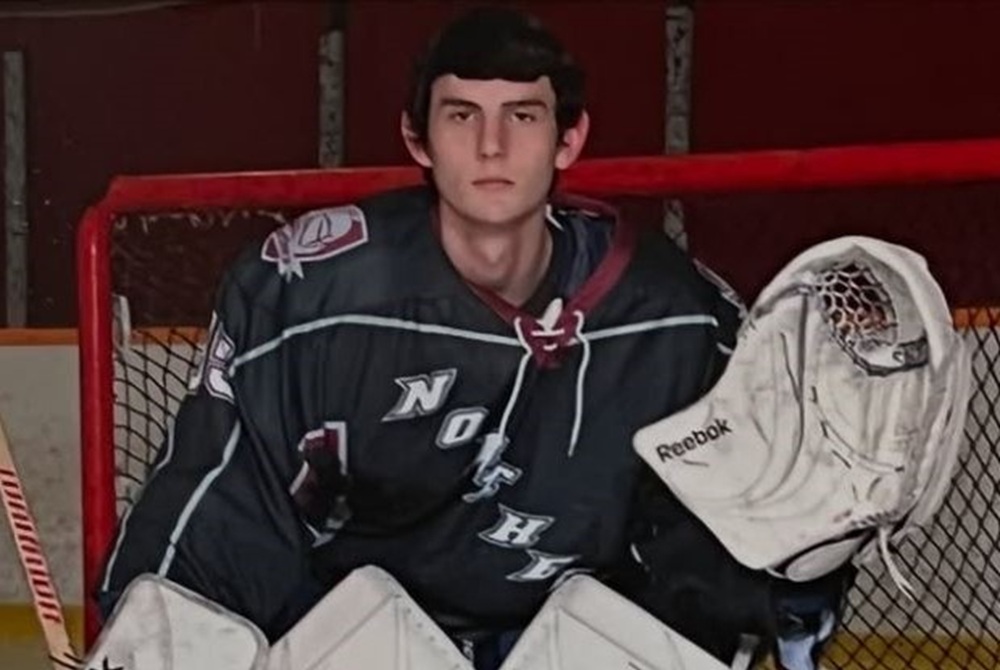
The Team USA men’s ice hockey team will be backstopped by Connor Hellebuyck, a three-time Vezina Award winner as the NHL’s top goalie after playing at Walled Lake Northern and graduating in 2011. Joining him on the ice will current Detroit Red Wing Dylan Larkin and Columbus Blue Jacket Zach Werenski. Larkin played soccer and golf at Waterford Mott before going to play hockey at the University of Michigan and in the NHL. Werenski played on the JV boys lacrosse team for one season at Grosse Pointe North.
 The women’s ice hockey team features 2014 North Farmington grad Megan Keller – who played softball and basketball while in high school, in addition to travel hockey.
Nick Baumgartner will be participating in his fourth Winter Olympiad. He qualified in snowboard cross in 2010, 2014 and won Olympic gold in 2022. The 2000 graduate of West Iron County High School played football, wrestled, and ran track.
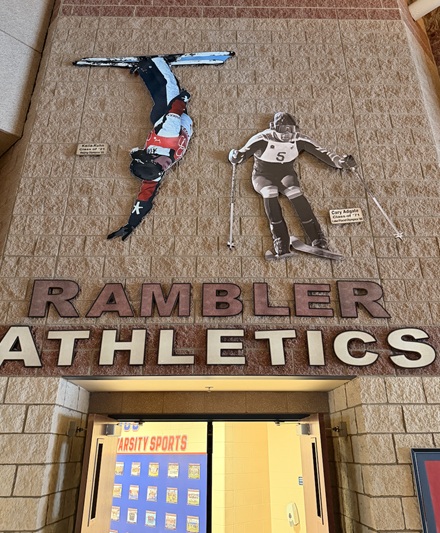
Boyne City graduate Kaila Kuhn (2021) is headed to her second Olympics. She finished eighth in freestyle ski aerials in Beijing in 2022 and is looking to improve on that this year. She ran track her senior year at Boyne City. Her father, Chris, coached the ski program at Boyne City from 2017-2025, and her older brother Quinton skied for the Ramblers.
Figure skater Emilea Zingas, a 2020 graduate of Grosse Pointe South, played JV girls lacrosse while participating on the varsity figure skating team.
And finally, while they didn’t participate in MHSAA-sponsored sports, figure skater Evan Bates (Ann Arbor Huron 2007) was on the figure skating team and snowboarder Jake Vedder (Pinckney 2016) was on the school-sponsored snowboarding team.
PHOTOS (Top) Connor Hellebuyck poses for a photo while playing at Walled Lake Northern. (Middle) This tribute at Boyne City High School celebrates Olympians Kaila Kuhn, class of 2021, and Cary Adgate, class of 1971. Adgate was a two-time Olympian in alpine skiing, competing in 1976 and 1980. (Photos courtesy of the respective schools.)
This Week In High School Sports: 2/14/20
February 14, 2020
This week’s show highlights Farmington United gymnast Elena Vargo, presents Game Balls to Mount Clemens basketball's Javaughn Hannah and Houghton basketball's Brad Simonsen, explains hoops' held ball rule and discusses the multi-sport background of a Super Bowl star.
The 5-minute program, powered by MI Student Aid, leads off each week with feature stories from around the state from the MHSAA’s Second Half or network affiliates. "Be The Referee," a 60-second look at the fine art of officiating, comes in the middle of the show and is followed by a closing MHSAA "Perspective."
Listen to this week's show by Clicking Here.
Past editions
Feb. 7: Trenton swimmer Michael Wolsek, need for women in leadership positions in athletics - Listen
Jan. 31: Utica Ford bowling's Kensington Holland, winter lessons on civility - Listen
Jan. 24 White Pigeon multi-sport standout Claycee West, 2020 Youth Football Forum - Listen
Jan. 17: Promoting and protecting youth football, amateurism in educational athletics - Listen
Jan. 10: Livonia Stevenson hockey's Seth Lause, multi-media and social media impacts - Listen
Dec. 27: Mona Shores "Sailor Nation" life-saving success - Listen
Dec. 20: Battle of the Fans IX, details on purchasing Finals broadcasts - Listen
Dec. 13: Port Huron United hockey, what matters most in high school sports - Listen
Dec. 6: Highlights from 2019 11-Player Football Finals, instant replay in review - Listen
Nov. 29: Highlights from 2019 8-Player Football, Girls Volleyball and Girls Swimming & Diving Finals - Listen
Nov. 22: Ida volleyball record-setter Taylor Wegener, new Football Finals video review - Listen
Nov. 15: Reading lineman Nick Affholter, coaches as leaders in sportsmanship - Listen
Nov. 8: Lower Peninsula Cross Country and Boys Soccer Finals highlights - Listen
Nov. 1: Muskegon Orchard View football, bolstered MHSAA broadcast schedule - Listen
Oct. 25: Grand Rapids NorthPointe Christian girls golf, MHSAA Football Playoff selection - Listen
Oct. 18: Mendon volleyball's title drive, recognition for longtime announcer Erik O. Furseth - Listen
Oct. 11: Negaunee cross country's Emily Paupore, MHSAA mental health awareness efforts - Listen
Oct. 4: South Lyon soccer's Josh Mason, improving youth football - Listen
Sept: 27: Utica Eisenhower golfer Ariel Chang, adult fan behavior - Listen
Sept: 20: Pinckney football inspiration, decisions made at the local level - Listen
Sept. 13: Muskegon's offensive line, soccer substitution rule change - Listen
Sept. 6: Jenison girls golf's inspiration, new football practice contact restrictions - Listen
Aug. 30: St. Johns quarterback-now-coach Andy Schmitt, benefits of a multi-sport experience - Listen