


Strategize for First Parent Meeting
February 25, 2015
 By Scott Westfall
MSU Institute for the Study of Youth Sports
Coaches often cite parents as one of the most uncontrollable and frustrating aspects of coaching.
Let’s face it, when this relationship goes south, there can be pent-up frustration and hard feelings between the two parties which can result in a negative experience for everyone involved – especially the player who is often caught in the middle.
Establishing positive relationships with parents should happen from the moment you stand in front of them at your annual parent meeting.
Throughout this meeting, parents will be asking themselves: “Can I trust this coach with my child?” “Will this coach be fair in his/her decisions?” and “Will this coach always have my child’s best intentions in mind?”
In order to put them at ease, you must do everything possible to establish yourself as a person of integrity who is altruistic and 100 percent trustworthy. Below is a coaching checklist that will help you establish trust and credibility with your team’s parents:
Transparency – Do things openly and share information as much as possible. If something bad happens on your team, be sure that you do not sweep it under the rug. Be open and consistent with your decisions, and always follow through on what you say you are going to do.
Demonstrate Respect – Be polite and sincere with parents and let your actions show that you care. Sometimes the little things you do will resonate louder than the big things.
List Expectations – Have high expectations for the conduct of both the players and parents in your program. List these expectations, distribute them, and then talk about them with the parents. Meanwhile, let them know what they can expect from you in return (proper dress attire, appropriate language, great sportsmanship, impeccable conduct, proper treatment of game officials, etc.).
Express Loyalty – As often as possible, be sure to praise your players, assistants, and the people associated with your program. Be sure that you never take credit for other people’s work, and remember to use the word “we” as often as possible.
Be Accountable – This means taking the blame for bad results– even when it wasn’t necessarily your mistake. Admitting when something goes wrong on your watch doesn’t mean that you are a bad coach or you’ve lost control of your program. True leaders are accountable for the mistakes that happen in their programs.
Deliver Results – This is not necessarily wins and losses. Instead, deliver results on the things that really matter, such as developing a respectable team, coaching players with all passing grades and having players who do not get into trouble or break the law.
No parent meeting would be complete without a healthy dose of paperwork. To make it easier for parents to keep these papers organized, try to color-coordinate the forms and go over them slowly one at a time.
Below are the basic documents you should supply at the parent meeting (Note: Try to also have these documents accessible on your team’s website):
Coaching Philosophy – Drafting a coaching philosophy will allow parents to better understand who you are and the reasons you coach. In this document, be sure to include your fundamental beliefs along with your personal approach to coaching. (Note: Be honest in this section – Do not advertise yourself as one type of coach, but then act like another). Include a lot of “I statements” such as, “I coach for the purpose of teaching life lessons,” “I believe that student comes before athlete,” and, “I am demanding but never demeaning.” Developing and drafting a coaching philosophy not only gives parents insight into you and your program, but it also gives you an opportunity to reflect upon why you do things the way you do.
Team Policies – This is perhaps the most important document you will distribute to your team’s parents. It should list all team rules pertaining to player conduct, grades, eligibility, attendance, discipline, communication, and of course playing time! Include statements such as, “Playing time is earned – not given,” “All decisions will be made based on what is best for the team,” and, “If you have a problem, please talk to the coach.” Inform parents that student-athletes will receive equal opportunities but not equal things. These opportunities include instruction, off-season strength and conditioning programs, and support for their classes. How well student-athletes take advantage of these opportunities (attendance, focus, effort, attitude, and self-discipline) often dictates their levels of success. (Note: Before distributing this document, make sure your school’s administration/athletic director supports your team policies 100 percent).
Student-Athlete Character Contract – While many schools have had an athletic code of conduct in place for years, teams today are including an additional written set of norms for players to follow. A character contract outlines how players agree to conduct themselves as a person, student, and athlete. If you want to create more buy-in, consider drafting this contract each season with your players!
Parent Pledge Form – This document establishes the expectations you have for the parents in your program. Be sure that you include expectations for their conduct at games, having a positive disposition around the team, the treatment of players on your team along with the treatment of your opponents, letting the coaches coach, and how to act toward game officials.
Team Calendar – Be sure to include detailed information on the times and locations of all practices, team events, games, and places that players need to be. If changes are made to the team calendar throughout the course of the season, be sure you inform parents through several forms of communication (a printed note sent home, an announcement on the team website, email list, social media, etc.).
Athletic Physicals – While most doctors’ offices have a copy of these blank forms on hand, it is convenient for parents to have access to them through your school.
Athletic Fees (if you are a “pay for play” district) – Some districts have a mandatory athletic participation fee, while other districts do not. Some districts have a waiver form for students who are on free/reduced lunch. In any of these cases, make sure you are on top of this information so you can properly inform your team’s parents at the meeting.
Conflict Resolution – The occasional conflict is almost inevitable while working in an emotionally charged environment such as athletics. However, conflicts can often be avoided or at least more easily resolved through proper forms of communication.
- Inform parents that you are always willing to listen to their concerns; let them know that you would prefer they address an issue with you, rather than taking their frustrations to the next game and venting to anybody in the bleachers who is willing to listen.
- In your team documents consider a statement such as, “The best tool we have in our relationship is an open line of communication. My door is always open and so is my mind.”
- Finally, be sure to let them know that if they are upset about something to not send it through email. Email is good for information, but not communication. Try to communicate and resolve conflicts in person as much as possible.
Once you have established trust and credibility with your team’s parents, you can start building the relationship. Caution: Building a relationship with your team’s parents is not developing close friendships with them. Becoming close friends with parents actually can lead to bigger problems as you open yourself to criticism of playing favorites. Instead, build working relationships, generated through mutual respect and understanding for each other’s position in the quest of helping the young individual become a successful student-athlete. These working relationships help parents understand their optimal level of involvement, such as where and how they can fit into your program. Below are some tips for building working relationships with parents:
- Learn their names and where they work.
- Learn what the family likes to do when they are outside of the school setting.
- Invite them to a team event such as a team picnic, fundraiser, or team trip.
- Ask parents for help with certain jobs. Many parents appreciate being asked to help with team functions as it gives them an opportunity to get to know other parents and makes them feel like they matter.
- Call them at least once per season to say hello, report on their child’s progress, and ask if there is anything you can do to be of assistance.
- Offer additional support for their child. Helping the student-athlete outside of coaching with things such as academics and typical teen issues shows you care.
- Offer support to the parents as well. If they are struggling to get a message across to their child, oftentimes a coach sending or reinforcing the same message makes all the difference. As a coach you hold a powerful platform with your student-athletes; use it to help with their development and maturity whenever possible.
Establishing yourself as a trustworthy and credible coach is the first step in getting parents to buy into your program. Meanwhile, providing parents with sufficient information will help them feel like you are keeping them informed and want them as a partner in your program.
Creating working relationships with parents takes time, but will be the cornerstone in establishing a positive experience for the years their children are involved with your program. While some parents may have a different background or mindset, listing your expectations will help them better understand your team’s culture and how they can fit in.
If done right, these positive working relationships should alleviate much of your coaching frustration and pay tremendous dividends in the future.
Scott Westfall has spent the last 10 years as a teacher, coach, and athletic director in Fort Collins, Colo. He currently is working on his Doctorate at Michigan State University, with an emphasis in Sport Psychology and Athletic Administration, and assisting the MHSAA with its student leadership programs. Westfall is a former athlete who participated in football, wrestling, tennis and cross country at the high school level, and rugby at the collegiate level. He can be reached at [email protected].
Nearly 25 Years After Leading Unexpected Run, Morton Directing Life-Changing Mission
By
Keith Dunlap
Special for MHSAA.com
August 11, 2026
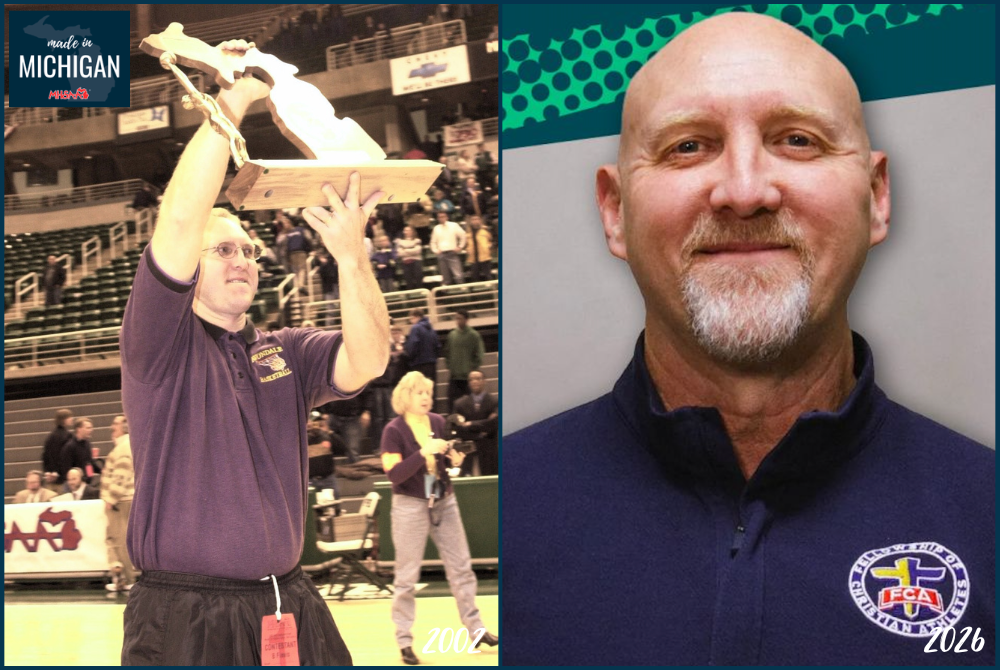
Nearly a quarter century after presiding over arguably one of the most improbable boys basketball state championships in Michigan history, the same fight and underdog mentality still exists for Tim Morton.
 Back in 2002, Morton was the head boys basketball head coach at Auburn Hills Avondale, which produced a Hollywood-type run during that season’s Class B tournament.
Unranked and without a future Division I college player in the lineup, a Yellow Jackets team headlined by seven seniors went on a quest that stunned many statewide observers.
Avondale avenged the disappointment of not getting out of the District round the previous year and then recorded a stunning upset of a highly-ranked Flint Southwestern team in their Regional Final, winning in double overtime. But after squeaking out a six-point win over a solid Williamston team in a Quarterfinal and earning an 11-point win over Comstock Park in the Semifinals, surely midnight was going to strike for Cinderella in the championship game. After all, Avondale was up against a powerful Grand Rapids South Christian team which had multiple future Division I college players on its roster.
It didn’t matter as Avondale, led by tough-as-nails captains Mike Lewis and Wes Whiteside, senior Dionte Miller and sophomore Dave Holston, completed its stunning run with a 70-65 win to capture what still stands as the program’s only Finals basketball championship.
Morton said he thought his team the previous year that couldn’t make it out of Districts was more talented, but there were intangibles the 2001-02 team possessed that couldn’t be matched.
“I think that nobody really thought that they’d have a shot,” Morton said of his team. “I think that is why we were unranked, because of what had left. But you’ve got to have something to fight for, and I think the reason was the year before. We were motivated. I think playing that underdog role, we just loved it. We won games in so many different ways and got on that roll.”
This past March, Morton and other alumni of the Avondale team certainly were thrilled to see this year’s squad advance to the Semifinals for the first time since their 2001-02 team did so. This time, the Yellow Jackets suffered a three-point Semifinal loss to eventual Class A champion Rockford.
Today, Morton is also heading another team that has an underdog mentality but is motivated to fight for each other and surrounding communities.
Morton is the multi-area director for the Southeast Michigan chapter of the Fellowship of Christian Athletes, which aims to serve kids, coaches and communities by promoting through activities faith, self-esteem, serving others and being the best version of yourself.
The organization has roughly 50 student-led “huddles” that meet at high schools or middle schools, where students can have a safe haven to talk about problems, promote successes, go over scripture and bond during a challenging time of life.
Through volunteers and other staff members, the organization also conducts camps throughout the state for coaches, athletes and others to learn from each other and grow as leaders.
The chapter will have its annual golf outing Sept. 28 at Oakland University’s Sharf Golf Course.
“We just want to be really good at cultivating those relationships, making sure that we’re following up with people, and sharing what the Lord is doing so people feel like they can be connected to something bigger than themselves.”
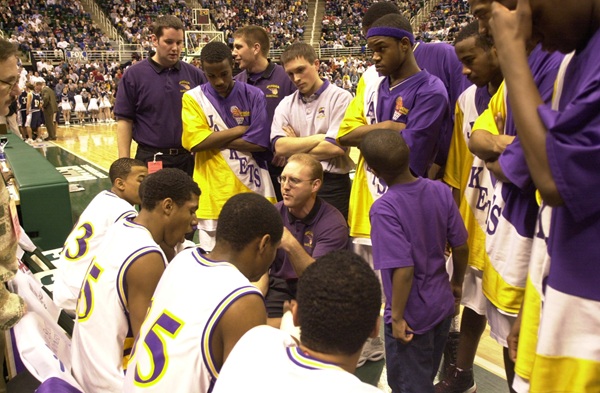 Playing for something bigger than themselves certainly worked for the 2002 team, and Morton said there is a 25th anniversary reunion in the works for next spring.
But while he nor anyone else in the Avondale community will forget that run in 2002, these days Morton is spearheading a team he said is playing for an even greater purpose, one he tried to describe to a group of youth football coaches in Flint during a recent gathering.
“I had only about 15 to 20 minutes to share with these guys,” Morton said. “I shared that we won a state title in 2002 and I was driven to be the best coach I could possibly be. A lot of great things happened, and the state championship happened. I’m on my way home from the state championship and we’re watching the video, and it’s crazy because this fear came over me. How are we going to do this again?
“Every coach that puts his or her full identity in the performance of the team, that’s scary and that’s not good. I got out six years later because of that fear. The most important relationships of my life were not good because I had to be validated by the performance of my team. That conversation kind of led into, “Why are you coaching? Why are you doing what you are doing? I wanted them to be motivated to be the best versions of themselves, for those kids, their wives and children. That’s why I’m in FCA. That’s my cause to fight for.”
2026 Made In Michigan
Aug. 7: Significance of Historic Run, Relationships Formed Live On for 1973 Unity Champs - Report
Aug. 4: Work Ethic Continues to Drive Van Dyk's Endeavors as Co-Owner of Family Farm - Report
July 24: Hackett Mentor's Care Sparked Lifetime in Hoops for BCAM President White - Report
July 24: Mackey Leaving Court with 500+ College Hoops Wins, Many More Lessons Shared - Report
July 16: Country Day Two-Time Champ Moore Building Perennial Winner at Harvard - Report
July 9: Multi-Sport Career at TC West Helps Gillis Thrive as Pro in Game She Once Left Behind - Report
July 2: Inspired by Home, Eager to Give Back, Spencer Hosts Hoop City Alumni Games - Report
PHOTOS At left, Tim Morton raises the Class B championship trophy in 2002. At right, Morton now a director for Fellowship of Christian Athletes. (Middle) Morton, kneeling, speaks to his team during the championship win at Breslin Center. (MHSAA archives)