

Airport Graduate Villarreal Hoping to Receive Call on WPBL Draft Day
By
Steve Vedder
Special for MHSAA.com
November 19, 2025
It hasn't always been the smoothest of paths for Bella Villarreal – but considering the trail-breaking nature of her quest, she refuses to second guess her choices.
Which is how it goes for someone trying to make the leap from a high school of fewer than 800 students to becoming the first Michigan native to play in the new Women's Professional Baseball League.
A graduate of Carleton Airport High School and presently a freshman at Eastern Michigan, Villarreal's journey includes overcoming her own doubts, ignoring skeptics, poking a hole in a sport universally reserved for males and traveling hundreds of miles to find suitable competition. It's a long and continuing fight she's hoping will culminate in her being among the players taken in the inaugural WPBL draft Thursday.
While Villarreal describes herself as a football fan and someone who could never get into softball, dabbled in basketball and pushed thoughts of playing volleyball to the back of her mind, her first love has always been baseball. It's been that way since before she stepped into her kindergarten classroom and peaked after shining in a WPBL tryout in Washington, D.C., in August.
"I've been drawn to baseball since I was a 4-year-old playing T-ball," Villarreal said. "I've always wanted to play baseball. It's inspirational to me and was always a goal for me to play. I never wanted to stop something that made me feel so good."
While she harbors a deep love of baseball, the sport, however, hasn't always returned that affection. After playing in local boys leagues growing up, Villarreal – a pitcher and second baseman – made the Detroit Bees boys travel team as a 9-year-old. From there she graduated to the Indians Baseball Club as an 11-year-old and then finally more travel ball with the Cubs club as a 15-year-old. She's played in three Baseball For All events, the largest girls baseball tournament in the country.
 Along the way Villarreal has encountered support, but also a prevalent attitude that girls who favor a sport with a bat and ball should be playing softball, not baseball. By the time she was 16, Villarreal, by then long committed to a future on the baseball diamond, was having to travel all over the Midwest to find baseball tournaments.
What she found was scattered acceptance among some male teammates, but also a frustration with traveling around a half-dozen states to play the sport she loved.
One of the turning points of Villarreal's fledging baseball career came at Airport High School. After her extensive inclusion in travel leagues, Villarreal made the school's junior varsity baseball team as a freshman and sophomore. While there were bumps along the way, the foremost lesson Villarreal took from that school's baseball program was that she could indeed succeed playing against the boys. She also honed fundamentals and learned the value of everyone pulling in the same direction.
According to the National Federation of State High Schools Association (NFHS), there are no states with girls baseball as a sanctioned sport – but the organization counted 1,372 girls who played baseball on high school boys teams this spring. While Major League Baseball estimates 46 percent of all baseball fans are women, only nine women played on NCAA men's baseball teams in 2024.
None of which has deterred Villarreal's love of the game.
"I worked hard and wanted to be part of the team. I learned that there is no "I" in team," Villarreal said of her time at Airport. "And I think it also confirmed my ability. I knew if I did well in high school, I could do it any place."
Armed with the confidence that she could carve a space in the sport, Villarreal, now 19, has tried to improve her game with twice-a-week hitting workouts and four days of work designed to improve her strength and speed.
 The work has paid off. She came away from the first WPBL tryout in Washington, D.C., with hopes of being taken in the draft. The tryout included players from 10 countries, including a dozen from Japan, which has the top-ranked women's team in the world by the World Baseball and Softball Federation. In all, the first day of tryouts included 600 players from across the country and as far away as Australia, Mexico, South Korea, the United Kingdom and France. Cuts were made after each of the four days, with Villarreal surviving all of them. That's a hopeful sign she will be taken in the draft by one of the league's four franchises.
Villarreal admits the tryouts, which concluded with inter-squad games, were high stress.
"Of course I was nervous," she said. "But I made some friends there who helped me stay motivated that I could get through it. It was serious, but everyone had fun, which was a big thing. There were jitters the first day, but then I was good at becoming myself. To make the second and third days, you knew you must be doing something right. I started becoming confident with the things I knew I could do."
Originally slated to include six teams, the league will start play in May with teams in New York, Boston, Los Angeles and San Francisco. Teams will have 15-player rosters which will play a seven-week regular season. It's not the first attempt at forming a professional women's baseball league. There have been four previous attempts beginning with the All-American Girls Professional Baseball League during World War II and the most recent with Ladies League Baseball in 1997-98.
Villarreal believes given time and enough resources, women's professional baseball can thrive. She would love to look back on her time as being among the trailblazers in that progress.
"Absolutely, there is interest," she said. "I know there have been attempts before, and some really haven't stuck. But I think we can build it up to a place where girls have more of an opportunity."
For those girls who would someday wish to join that quest, Villarreal has advice.
"You should know where you're supposed to be," she said. "Do what you love as a challenge, and just be who you are. It doesn't matter what sport you play – know that you are capable."
Editor's note: Villarreal was drafted in the fifth round of the WPBL Draft by Los Angeles, the 82nd pick overall of 120. She was selected as a second baseman, and was one of two Michigan players drafted. Jordan Eyster of Royal Oak, a 21-year-old outfielder, was selected in the fourth round by San Francisco.
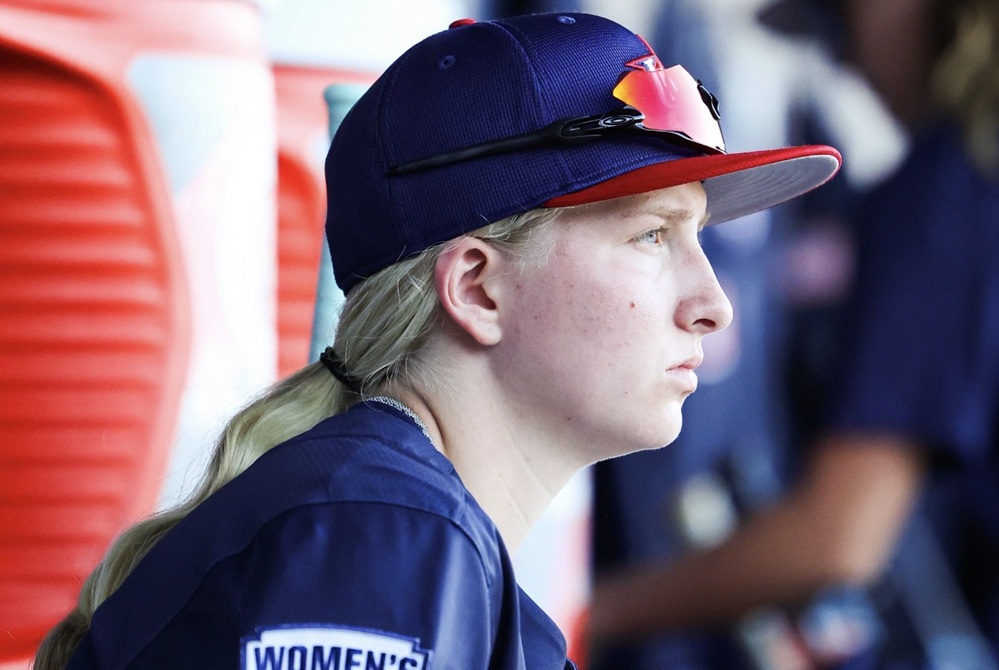
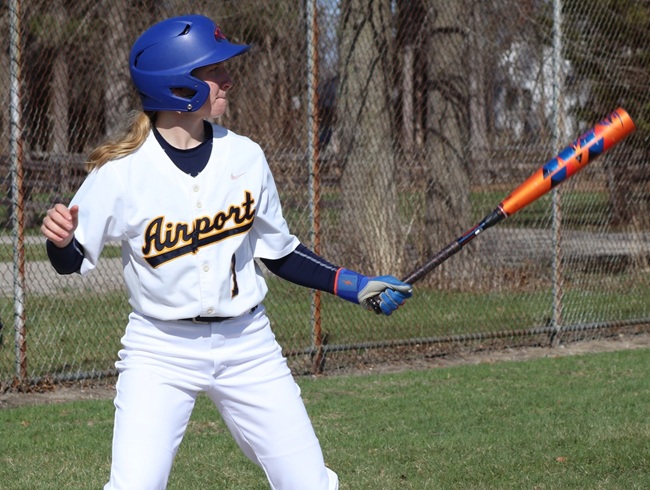
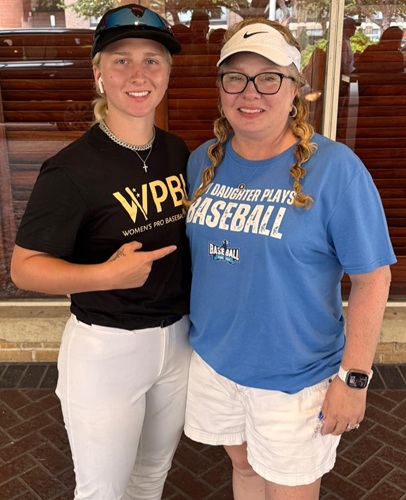
PHOTOS (Top) Airport grad Bella Villarreal watches from the dugout during a USA Baseball Development Program event. (Middle) Villarreal steps to the plate as a member of Carleton Airport’s junior varsity baseball team. (Below) Villarreal takes a photo while pointing toward her mother Tonya. (Photos provided by the Villarreal family.)
Be the Referee: Fair or Foul?
By
Paige Winne
MHSAA Director of Brand Management
May 6, 2026
Be The Referee is a series of short messages designed to help educate people on the rules of different sports, to help them better understand the art of officiating, and to recruit officials.
Below is this week's segment – Fair or Foul? - Listen
In baseball or softball, what makes a batted ball fair or foul? Seems pretty easy, right?
Let’s go through some scenarios.
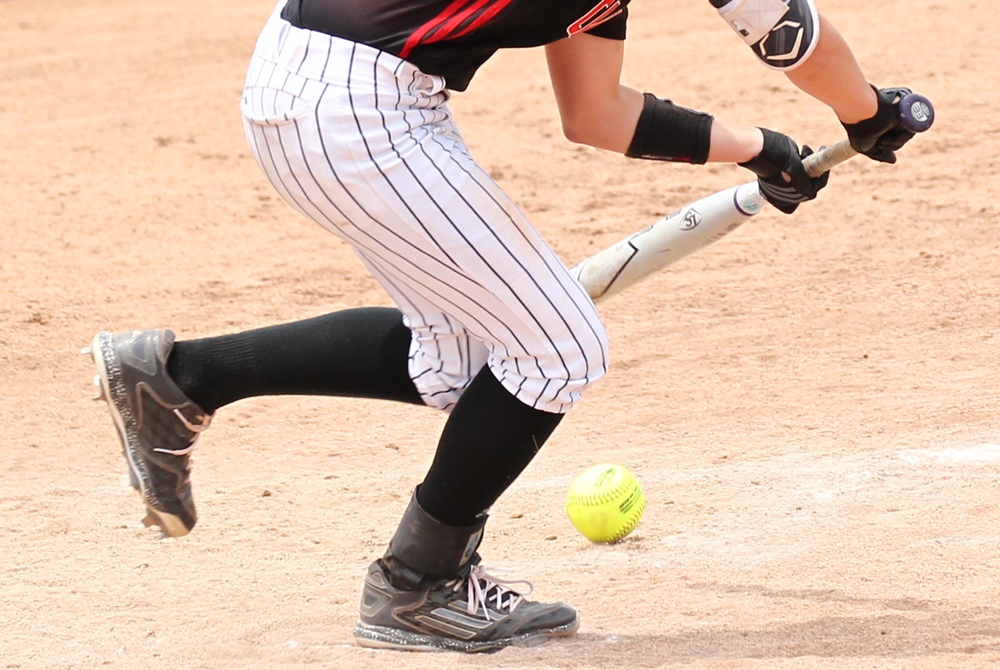
The white chalk line is considered fair territory. So are any foul poles. If a ball hits the foul pole – it’s a fair ball.
If a ball hits a base – it’s a fair ball.
If a ball that hits the ground in the infield, crosses over a base in fair territory before slicing into foul ground, it’s a fair ball because it crossed the base in fair territory.
A ball in the infield that is hit into foul territory that spins back into fair ground is fair. It doesn’t matter that it hit in foul territory first.
And a ball that rolls to a stop before getting to a base, that is sitting in foul territory but is hanging over the white chalk line, is fair.
Previous 2025-26 editions
April 28: Wrong Green - Listen
April 21: Injured Runner - Listen
April 14: Officiate Michigan Day - Listen
March 11: Basketball Replay - Listen
March 3: Over the Back - Listen
Feb. 24: Wrestling Out-of-Bounds - Listen
Feb. 17: Backwards Skiing - Listen
Feb. 10: Faking Being Fouled - Listen
Feb. 3: Bowling Pins - Listen
Jan. 27: Ski Gates - Listen
Jan. 20: Cheer Judges - Listen
Jan. 13: Basketball Over the Back - Listen
Jan. 6: Bowling Ball Bounces Out of Gutter - Listen
Dec. 9: Puck on Goal Netting - Listen
Dec. 2: Goaltending vs. Basket Interference - Listen
Nov. 25: Football Finals Instant Replay - Listen
Nov. 18: Volleyball Libero Uniforms - Listen
Nov. 11: Illegal Substitution/Participation - Listen
Nov. 4: Losing a Shoe - Listen
Oct. 28: Unusual Soccer Goals - Listen
Oct. 21: Field Hockey Penalty Stroke - Listen
Oct. 14: Tennis Double Hit - Listen
Oct. 7: Safety in Football - Listen
Sept. 30: Field Hockey Substitution - Listen
Sept 23: Multiple Contacts in Volleyball - Listen
Sept. 16: Soccer Penalty Kick - Listen
Sept. 9: Forward Fumble - Listen
Sept. 2: Field Hockey Basics - Listen
Aug. 26: Golf Ball Bounces Out - Listen