

Jenison Rolling Through Hot Streak, Rising in Rankings as Playoffs Approach
By
Dean Holzwarth
Special for MHSAA.com
May 21, 2025
JENISON – During the earliest beginnings of this season, Jenison baseball coach Chris Ter Vree noticed certain aspects of his team were lacking.
 Although overflowing with talent and buoyed by the return of five key seniors from last year’s 32-win team, improvements would be needed in order for the Wildcats to achieve their desired success.
“We've made some huge strides as a group,” Ter Vree said. “We knew this was going to be a very talented group, but once we got into the early part of the season we saw some areas that we had to get better at and we got a lot better at them.
“That has allowed us to be successful. It’s watching them interact like they do and it's watching them fight back down four runs to a very good Byron Center team (Monday night) and not give up.”
The Wildcats (24-5-1) have emerged as one of the hottest teams in the state, as evident by their winning 14 of their last 15 games and jumping up to No. 6 in the Division 1 rankings.
They clinched at least a share of the Ottawa-Kent Conference Green title Monday by defeating No. 16 Byron Center 4-0 in the first game of the doubleheader. The conference crown is Jenison’s first since winning the O-K Black seven years ago.
“It's just an exceptional group of guys who enjoy playing the game of baseball with each other,” Ter Vree said. “And just being a coach of a group of guys like this is so much fun and so enjoyable. Just to watch them enjoy the game.”
A superb pitching staff, led by senior Case Bosch, has helped the Wildcats keep opposing teams in check. The 6-foot-5 lefthander has committed to Coastal Carolina.
“He’s fun to watch on the mound, and I’ve coached him for four years so it’s sad to think this journey with him is almost done,” Ter Vree said. “His composure is fantastic, and you can’t rattle him. He throws so many pitches for strikes, and he is a smart guy. He calls his own pitches and we don’t allow a lot of people to do that. We are very fortunate to have, I think, the best pitcher in the state on our staff.”
 Junior hurler Ethan Lenzo has exceeded expectations and has been one of the “biggest surprises” on the team, according to Ter Vree. The pitching staff also includes seniors AJ Park, Ben Slagter and Braydon Hilaski, and juniors Parker Felgner and Kelson Swainston.
Junior Pierce Ginzer also has pitched and batted well since coming back from a hamstring injury.
“We have a lot of guys who have done a really good job of coming in and pounding the strike zone,” Ter Vree said. “We are very fortunate to have a very strong pitching group, and we’re thankful for that.
“We’ve also been really good at the plate. Up and down the lineup, we just have a really solid group of guys.”
Park, a Davenport commit who has delivered timely hitting, believed this year’s team could be special.
“We had our five seniors returning, and we had the expectation of being a winning program,” Park said. “We had a lot of juniors coming up who we knew had talent, and we hoped that they could carry it on and play the roles they had, and it’s been going well.
“Pitching has been strong for us, and I think over the last three weeks we’ve really picked it up and been playing some pretty good ball. We've been hitting the ball a lot more consistently up and down our lineup, and that has helped out a lot.”
The Wildcats have been especially dominant on the road, winning six in a row.
“We love playing at home, but it doesn’t faze our guys at all when we go on the road,” Ter Vree said. “We like to have the other crowd be a little loud, and we also like to show people what we are capable of. We like being challenged by that.”
Ter Vree said he had shied away from setting goals for this season, but would like nothing better than to win the conference outright.
A victory in either a resumed game against Byron Center on Thursday (currently tied 4-4 in the seventh inning after a late Jenison rally) or the following meeting will give the Wildcats the title outright.
 “One thing we’ve gone away from is setting up goals, just because sometimes it's good to do and sometimes not good to do,” Ter Vree said. “But Monday night winning that first game did give us the opportunity to check off one of those boxes that we talked about at the beginning of the year. We knew this was going to be a good conference to be a part of, and we knew Byron Center was probably going to be the team that was returning a lot of starters and coached extremely well.
“We knew it would come down to that last series and it was good to get that first one out of the way knowing that no matter what happens these next two games, we have a share of the O-K Green. We’re happy about that, but we don’t like sharing things so we're definitely looking to win one of the next two games so this can be ours because this group of guys definitely deserves it.”
Jenison begins the postseason next week against Holland West Ottawa. And while the team hopes to make a deep run, Ter Vree said the outcome won’t define the season.
“We want to win a District title and make a run, but it’s not going to make or break the season,” Ter Vree said. “We’re just trying to continue to have a great season, but it’s not going to write the story of this team. They’ve already written their story, and I’m just proud to be a part of it.”
The Wildcats suffered a disappointing 1-0 loss to Hudsonville in last year’s District Final, and a potential rematch against the Eagles is expected.
“I think we’re ready (for the playoffs),” Park said. “We know who we’re playing, and we’re looking to play them (Hudsonville) in the Finals. Last year we lost 1-0, but we’re coming back to see what we can do.”
 Dean Holzwarth has covered primarily high school sports for Grand Rapids-based WOOD-TV for five years after serving at the Grand Rapids Press and MLive for 16 years along with shorter stints at the Ionia Sentinel and WZZM. Contact him at [email protected] with story ideas for Allegan, Kent and Ottawa counties.
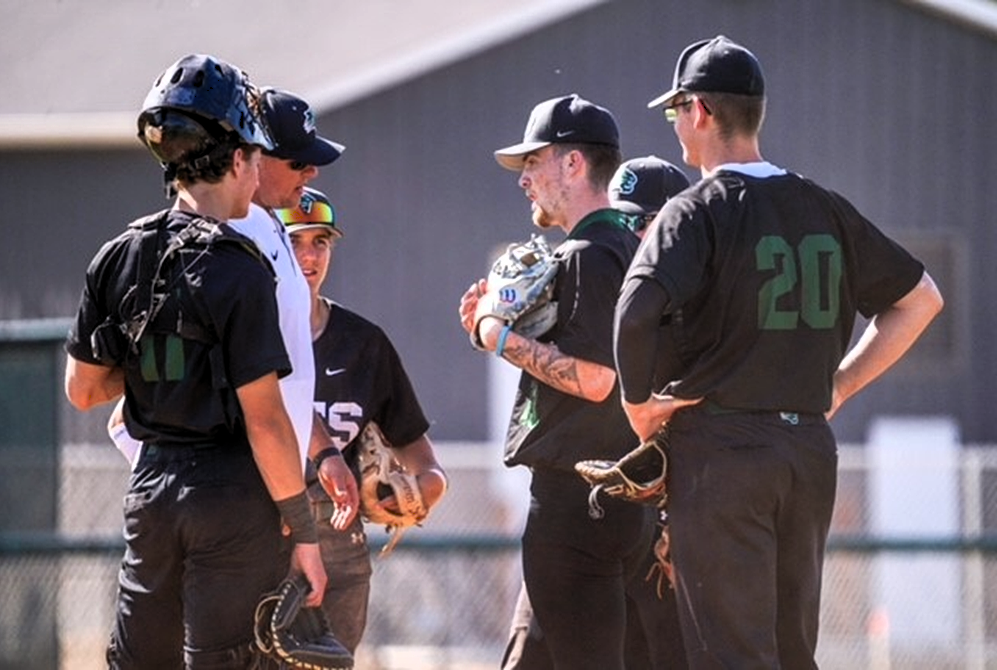
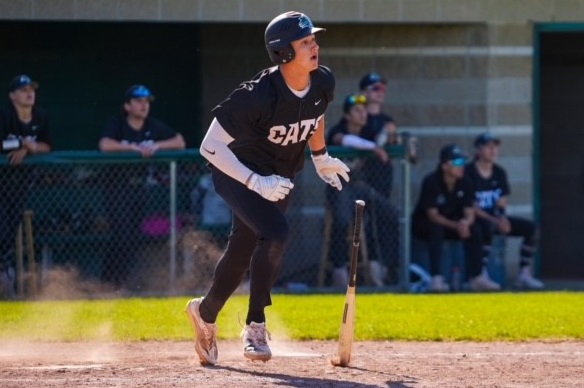
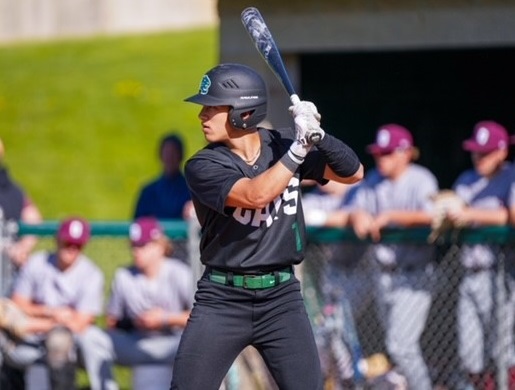
PHOTOS (Top) Jenison, including pitcher Brayden Hilaski, catcher Vince Fantin, coach Chris Ter Vree and Case Bosch (20), huddles on the pitching mound during a game this season. (Middle) AJ Park watches one of his drives as his teammates also follow the action from the dugout. (Below) Pierce Ginzer waits for the next pitch. (Photos courtesy of the Jenison baseball program.)
Still 'Loose' Swan Valley Loaded Again As Well
By
Paul Costanzo
Special for MHSAA.com
April 3, 2019
Mitch Jebb and his teammates on the Saginaw Swan Valley baseball team had plenty of fun a year ago as they made their run to the MHSAA Division 2 Final.
 The young Vikings surprised plenty of people with their runner-up finish, and a crucial part of that was how loose the team played. Even with a larger target now on their back, don’t expect them to tighten up.
“If you come to one of our games, we’re always loose,” said Jebb, a junior shortstop who earned all-state first-team honors as a sophomore. “We’re just out there having fun, and why would you play baseball if you’re not having fun? That’s how we look at things – play your game, but have fun doing it. This year, we’re probably more loose than we were last year.”
Swan Valley is still plenty young, with a roster comprised mostly of juniors and sophomores, but another deep postseason run wouldn’t come as a surprise to anyone. The Vikings were ranked No. 6 in Division 2 in the Michigan High School Baseball Coaches Association preseason rankings, and they opened the season Tuesday with a pair of mercy-rule victories (13-0 and 11-0, both in five innings) at Chesaning.
“I think we surprised quite a few people because we were so young and they had never heard of us before,” Swan Valley coach Craig Leddy said. “They were just playing and winning, and they were loose. That’s not going to happen this year. People have us on the radar.”
The runner-up finish is likely the biggest reason the Vikings are on the radar, but it also doesn’t hurt to have three players on the roster who have committed to Big Ten baseball programs – none of whom are seniors.
Jebb and classmate Brian Ross, a 6-foot-8 pitcher, have committed to Michigan State, while sophomore Avery Goldensoph, a 6-foot-2 pitcher, is committed to Michigan. Goldensoph, a first-team all-state selection as a freshman, opened the season by throwing a no-hitter against Chesaning.
“I knew the group coming, and we have some more kids coming next year as sophomores, so I’m excited about what we have,” said Leddy, who was a longtime assistant before taking over the Swan Valley program a year ago. “This is a special group that’s played a lot of travel ball, and that’s huge.”
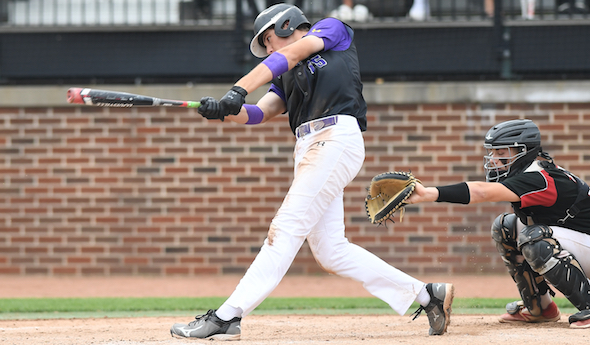
 There’s plenty of quality depth to go along with those stars, both in the lineup and the pitching rotation. Junior infielder Victor Mancini had 46 RBI through the team’s first 42 games a year ago, while junior catcher Easton Goldensoph had nine doubles and 26 RBI. Senior pitcher Conner Sika was the team leader in earned-run average, coming in at 0.51 while striking out 53 and allowing 26 hits and nine walks in 54 2/3 innings. He was superb on opening night, allowing just one hit in his shutout victory against Chesaning.
“I think we can do it this year,” Avery Goldensoph said of making another deep run. “We’ve got me, Brian and Conner Sika who pitched (in the opening series), he’s really good. Our lineup put up 13 runs and 11 runs, that’s a great start.”
With a tough Tri-Valley Conference Central schedule ahead, the games figure to get more difficult. But the Vikings view that challenge as a good way to prepare for the postseason, and invite the daily pressure playing in that league brings.
Because even as they try to avoid it, the pressure of greater expectations is a reality they have to face.
“I think we have a really good team, in my opinion,” Ross said. “Last year we were kind of going after everybody, and now we’re being looked at like they want us. So I would say it’s a little more pressure, but it’s nothing we can’t handle.”
The best way to handle any pressure that may seep in? By going back to what worked so well a year ago – staying loose. That starts with the coaching staff.
“We’re a little more relaxed; we’re not screaming and hollering,” Leddy said about his staff, which includes assistants Mark Jebb and David Finzel, as well as pitching coaches Chris and Nick Sarmiento. “I remember what it was like when I was a young kid; the last thing you wanted was a coach kicking you in the (behind) all the time. You want someone encouraging you to be a better person and a better ballplayer. I’m blessed to have some great coaches on staff that know a lot about baseball and care about the kids.”
The attitude of the coaches has certainly gotten through to the players.
“What happens, happens, right?” Mitch Jebb said. “If we win, we win. The goal is to win, but it’s not like Coach is saying, ‘You better win a state championship.’ We’re all playing the game we love, and it’s fun. It’s fun playing. If we can win, we want to win – you always want to win. But the overall picture is to go out there and play your game and have fun.”
 Paul Costanzo served as a sportswriter at The Port Huron Times Herald from 2006-15, including three years as lead sportswriter, and prior to that as sports editor at the Hillsdale Daily News from 2005-06. He can be reached at [email protected] with story ideas for Genesee, Lapeer, St. Clair, Sanilac, Huron, Tuscola, Saginaw, Bay, Arenac, Midland and Gladwin counties.
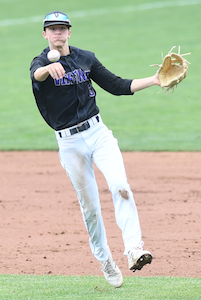
PHOTOS: (Top) Swan Valley’s Victor Mancini drives a pitch during last season’s Division 2 championship game against Stevensville Lakeshore. (Middle) Shortstop Mitch Jebb fires a throw to first.