

Nori Continuing Minor League Climb Boosted by World Baseball Classic Stardom
By
Steve Vedder
Special for MHSAA.com
April 20, 2026
It wasn't until Dante Nori stood star-struck in the outfield grass at Houston's rollicking Daikin Park that he fully grasped the massive leap he had just accomplished.
Less than two years after helping Northville to its first Division 1 baseball title before a crowd of hundreds at McLane Stadium, Nori last month found himself playing before a partisan crowd of 38,653 against arguably the best club the United States has fielded for the World Baseball Classic.
It's a leap that few other WBC players have made and not only humbled Nori – a member of Italy's national team – but fulfilled a lifelong dream.
"You're sitting out there in left field and you look at your (defensive) shift card and you see names like Bobby Witt or Aaron Judge or Kyle Schwarber, and I was like a little kid," said Nori, who had turned 21 just five months before the start of the tournament. "You see those guys, the crowd is chanting 'USA, USA,' and it's so cool."
Nori's rapid progression from Michigan's Mr. Baseball Award honoree in 2024 to top Philadelphia Phillies prospect to the WBC could be the stuff of which movies are made. A MaxPreps All-American at Northville, Nori was the 27th overall player taken in the 2024 MLB draft. He promptly opened his professional career with 14 games at low Class A Clearwater to finish out the summer.
He began catching the eye of places like MLB.com, where he's ranked seventh among Phillies prospects, and Baseball America, where he's sixth, by sweeping across three levels of the minors in 2025 while hitting .261 with 18 doubles, 12 triples and 52 stolen bases in 62 attempts.
By the time the Phillies opted to send Nori to the prestigious Arizona Fall League last October, representatives from the Italy team scheduled to play in March's WBC were very much interested. Italy and then the Phillies okayed his participation and left the decision to Nori, who called it a no-brainer.
"Right away I said yes," he said. "I've always dreamed of that and when that dream finally comes true, it's great."
Whether it was spearheading Northville to a 2-1 win over Bloomfield Hills Brother Rice at the MHSAA Finals or helping Italy to one of the biggest upsets in WBC history – a stunning 8-6 win over Team USA – Nori said he long ago learned to deal with the pressure of the moment.
 "I've always been the kind that the more pressure there is, the more I calm down," he said. "It doesn't matter if you're playing Salem High School in 30-degree weather or whether it's the WBC, it's still baseball.
"But if you told me that I'd be playing in a high school state championship game and then would be in the WBC, I wouldn't have believed you. The WBC was just great. I enjoyed the heck out of it. It's so nice when a dream comes true."
Nori admits the only time he ever got a bit antsy on a ballfield was when he caught the eye of Northville teammate Joey Broughton, now in the Milwaukee Brewers chain, during the team's 9-2 win over Bay City Western in the 2024 Semifinals. The pair, who combined to score three runs and drive in six that day, were transfixed on what the team was on the verge of accomplishing.
"I remember it was the most I've ever been hyped up," he said, "but it still wasn't about nerves."
Help for Nori in navigating a pressure-filled WBC came from an unlikely source. Italy's roster featured two other former Michigan high school baseball stars in infielder Jon Berti and center fielder Jakob Marsee, who like Nori are both from the Metro Detroit area. Berti, from Troy High School, was a Mr. Baseball finalist and all-stater in 2008 when he batted .467 with a school record 66 hits and 66 stolen bases. Marsee earned 11 varsity letters in three sports before graduating from Allen Park High School in 2019. He was taken by San Diego in the sixth round of the 2022 draft before being traded to Miami.
Nori said the pair provided a steadying influence.
"I knew they were both from Michigan, but I had never met either one," he said. "But my mom and Jakob's mom are friends, so it was kind of cool to bond with him. I had never played left field before, and he helped me with directions in playing out there. It helped me get a feel for playing."
Italy wound up being one of the WBC's best stories, winning its bracket and making the semifinals before finishing 5-1. The team was a combination of veterans such as Royals first baseman Vinnie Pasquantino and Aaron Nola of the Phillies, but also top prospects like Nori and infielders Andrew Fischer and Sam Antonacci.
"If you look at the roster with the prospects and major leaguers, absolutely," he said of making the semifinals. "It was a blend of everything – experience and young talent who worked so well together. We all believed the same way – that we could be in the championship game. We played with a chip on our shoulder."
Nori not only enjoyed the WBC, he excelled. The 5-foot-9, 170-pound speedster wound up leading Italy in hitting with a .400 mark while adding a pair of homers, six RBIs and two stolen bases. His tournament included going 3-for-3 with two runs, two RBIs, a double and a homer against Brazil, a pair of hits and an RBI against Great Britain, a key sacrifice fly against USA and an RBI single against eventual champion Venezuela.
But maybe the biggest honor came after Nori returned home and received a late-night phone call from his father. Nori joined USA's Roman Anthony and Fernando Tatis Jr. of the Dominican Republic on the WBC all-tournament outfield.
"I was asleep about midnight, and I was kinda groggy and the phone goes off," he said. "It's my dad and he never calls that late unless it's important. I'm half asleep and confused and my dad says, "Did you see that?' It still hasn't hit me. You look (at the outfielders), and you see names like Tatis and you're the only minor leaguer on that team. That's something."
With this WBC now in the record books, Nori can now turn his attention to playing for Double-A Reading (Pa.) this summer. He's off to a solid start through the team's first eight games with a .310 batting average, seven extra-base hits and six RBIs.
As for the prospect of playing in the next WBC, Nori finds himself in a rare position. He already has Italy qualification, but since he was born in Canada he could play for that country's national team. Or if his career blossoms, he could one day play for the United States. Actually, Nori said there is little doubt what choice he'd make.
"I thought about that, playing for one of the three," he said. "But with Italy, we created such a relationship and bond that I'm locked in for Italy. There is no way I would leave that group."
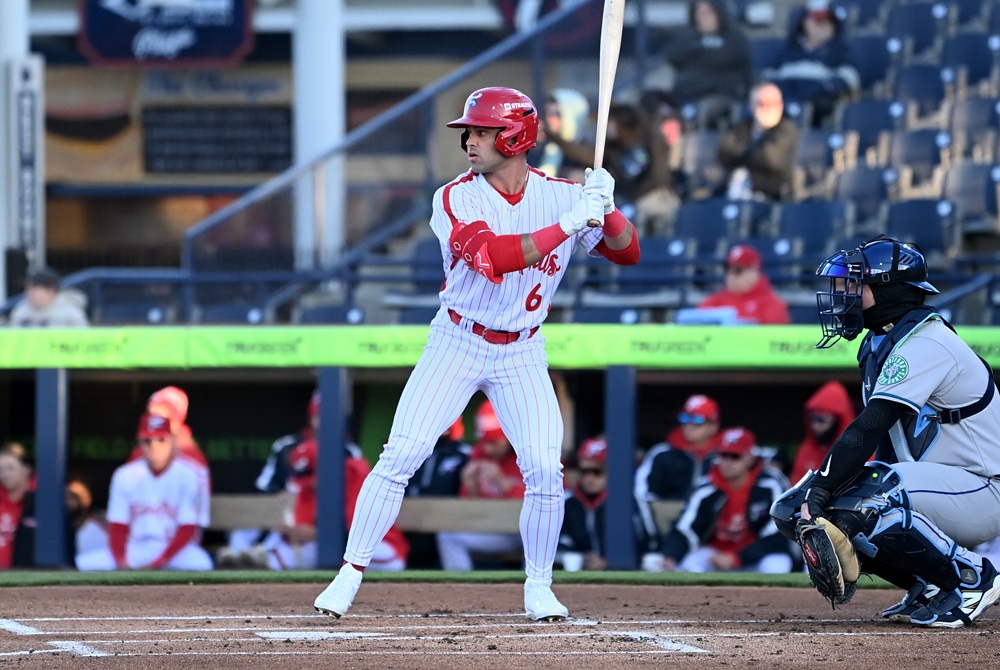
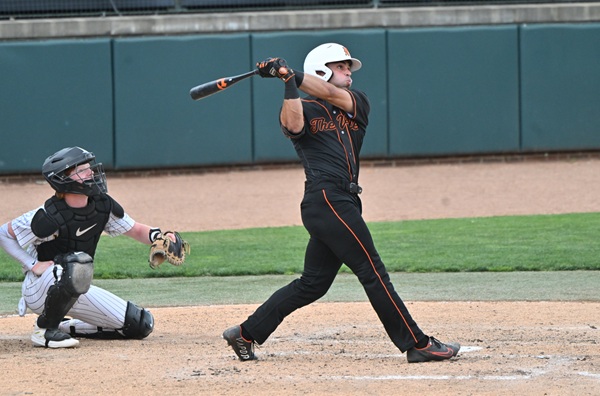
PHOTOS (Top) Dante Nori (6) stands in for the next pitch during an at bat for the Reading Fightin Phils this spring. (Middle) Nori watches the home run he’d just launched travel out of McLane Stadium during Northville’s 2024 Division 1 Semifinal win over Bay City Western. (Top photo courtesy of the Reading Fightin Phils.)
Northville Slugger Makes Memorable Marks on Way to Pro Baseball Stardom
By
Geoff Kimmerly
MHSAA.com senior editor
January 16, 2026
Dante’ Nori capped his high school baseball career in 2024 by leading Northville to the Division 1 championship – and cementing himself in the record book for a handful of individual accomplishments.
He finished his four seasons fourth all-time with 120 walks, fifth with 21 triples and 10th with 193 runs scored, plus is listed twice for single-season triples with a high of eight as a junior.
Nori was drafted in the first round of the 2024 Major League Baseball draft by the Philadelphia Phillies and reached Class AA last season.
See below for several recently-added listings to the baseball record book, and click the heading to see the record book in full. Several more applications have been received and are in the process of being confirmed.
Baseball
A pair of Montague standouts made the records during the 2023 season . Then-senior Nick Moss was added for hitting safely in 13 straight at bats from May 6-16, and classmate Kade Johnson made the single-season triples list with seven. Moss is slated to play next at Milligan in Tennessee.
Niles Brandywine basketball standout Jamier Palmer made the record book as a junior in 2023 with 55 stolen bases, stole 52 a year later, and finished his four-year career with 177 (tied for third-most) among four record book career listings – he also had 154 runs, 26 times hit by pitches and a .464 average over 109 games. He was joined by senior Owen Hulett, who is listed for a 1.13 career ERA over three seasons. Hulett played at Lake Michigan College, and Palmer played baseball and basketball at Kalamazoo Valley Community College.
White Cloud’s Alex Cruzan made getting hit by pitches a key way to get on base during his three-season varsity career that ended in 2023. He was twice added for the HBPs in a game as a senior and for 16 total that spring – plus 42 for his career, which ranks 12th all-time.
Alex Fenkell finished his Birmingham Groves career in 2022 on the career batting average list at .459 and also on the single-season triples list with eight as a junior. Those eight contributed to Groves making the team triples list with 20 that season, and they also stole 12 bases in a game that spring. Fenkell is continuing at Kalamazoo College.
Portage Northern was menacing on the basepaths during the 2023 season, stealing 182 bases over 32 games. That total tied for 11th-most for one season.
Thomas Fox had seven hits last season as a junior in 2023, but led Johannesburg-Lewiston with a .644 on-base percentage in part thanks to being hit by 35 pitches over 33 games. That set a single-season MHSAA record in the category, and he also was listed four times for three HBPs in one game – including in both halves of a doubleheader.
Farmington earned six total entries for stolen bases in 2024, led by then-senior Owen Matteson’s two for stealing six in one game and 56 total. Farmington also made the team record book with 16 stolen bases in a game twice and 170 for the season over 34 games. Matteson is continuing his career at Jackson College.
Algonac standout Josh Kasner finished his four-year varsity career in 2024 on the career wins list with a 33-5 record, on the career ERA list at 1.06 and on the career strikeouts list with 449 over 257 1/3 innings pitched. He appears on the single-season ERA list three times including with a career-best 0.59 as a senior, and was joined that season by teammate Bryce Simpson at 0.93. Teammate Cole Thaler also was added for being hit by three pitches in one game that spring. Kasner plays at Michigan, Simpson graduated in 2025 at plays at Wayne State and Thaler is a senior this school year. Algonac as a team also was added for a 37-4 record, 352 strikeouts and 1.47 ERA during the 2023 season.
Rudyard earned its first team record book entry on May 25, 2021, when the team stole 15 bases in a 7-4 win over Pickford. Seven players contributed to the total, which is tied for 15th all-time for a single game.
More than a half-century later, one of the most magnificent pitchers’ duels has taken its place in the record book. On June 6, 1969, Hamtramck St. Ladislaus defeated Detroit St. Hedwig 1-0 in 14 innings to decide a Catholic High School League championship at Tiger Stadium. Doug Konieczny struck out 28 for St. Ladislaus – that total ranking fourth all-time – and St. Hedwig’s Carey Wyler struck out 22. Wyler, a senior that season, also made the single-season ERA list with a 0.15 across 62 innings. Konieczny went on to play at St. Clair County Community College and was drafted by both the Detroit Tigers and Houston Astros, the latter with the third overall pick in the 1971. He played four seasons with Houston.
Conor Rentfrow earned Brooklyn Columbia Central’s second baseball record book listing with 19 doubles in 2024. He’s a senior and committed to Taylor (Indiana).
Holt’s Mitchell Dubois became his program’s latest to reach the record book, pitching to a 0.69 ERA in 2024 over 61 1/3 innings. He graduated last spring and is playing at Spring Arbor.
Kingsley’s Garrett Martz found an additional way to pump up his on-base percentage as a junior in 2024. In addition to hitting .326, Martz was hit by pitches 19 times, which is tied for 15th-most for a single-season.
East Jordan’s Korbyn Russell finished his three-season varsity career this spring with six record book listings including some of the highest strikeout-per-game averages of all time. He had a 0.34 ERA as a senior and 1.14 ERA for his career, striking out 15.6 batters per game both as a junior and senior. He totaled 392 strikeouts over his three seasons and finished with an average of 13.9 strikeouts per game for his career, which ranks third all-time. He’ll continue his career at Aquinas.
Paw Paw earned its second and third listings in 2024 for being hit by pitch, on the team list with 49 over 35 games and with senior Jacob Major on the individual list with 30 over four seasons. Teammate Jake Hindenach made the single-season triples list with eight. Major is continuing at Lake Michigan College, and Hindenach at Kellogg Community College.
Frankfort’s Rylan Lewis was added for eight triples over 32 games in 2024 as a sophomore.
Millington made the team record book lists two straight seasons for stolen bases, swiping 169 over 31 games in 2024 and 170 over 40 games in 2023. Then-junior Truk Terbush made the individual list with 50 steals in 2023 and is continuing at Delta College.
Onsted’s Alex Schmidt tied for the 10th-most times being hit by a pitch last season, with 21 over 34 games as a senior in 2024.
Powers North Central’s Adrian Mercier completed a four-year varsity career in 2024 among the leaders in career batting average at .522, which ranks ninth. His .619 hit during his junior season, which continues to rank 10th all-time. He’s playing at Lakeland in Wisconsin.
Daniel Robinson had 76 hits for Grosse Pointe North in 2015, at the time ranking fifth and still tied for ninth-most all-time. A senior that season, he went on to play at Central Michigan and two seasons with Los Angeles Dodgers minor-league affiliates.
Schoolcraft’s Jacob Taylor finished sophomore year in 2024 tying for the fifth-most times hit by pitch during a season – 24 over 39 games. Now a senior, he will continue at Aquinas.
Flint Powers Catholic won the Division 2 championship in 2024 in part on the arm of Grant Garman, who capped a four-year varsity career with nine record book listings. He was 14-0 as a senior to make the single-season wins list and finished tied for fourth on the career wins list with 45. His 0.71 career ERA ranks fifth, and his 446 strikeouts over 284 innings rank 16th. He played at Oakland and will continue at Hawaii.
Fran Love earned Ann Arbor Greenhills’ first record book listing in this sport with a 0.81 ERA during the 2024 season, when he finished 7-1. He graduated last spring and plays at Alma College.
Ryan Zweng capped his four-year varsity career at Union City in 2024 on four career lists, with 175 hits, 159 runs, 131 RBI and 27 times hit by pitch over 134 games. He made the Division 3 all-state first team in 2024, his school’s first first-team all-state selection since 2000.
Bridgman’s Alec MacMartin added 26 more hit-by-pitches as a senior in 2024 for this third single-season listing in that category – and finished with a record 83 over three varsity seasons.
Ottawa Lake Whiteford ranked 13th for strikeouts as a team during the 2024 season. The Bobcats fanned 314 over 36 games.
Watervliet recent run of success has included a lot of success running the base paths, as the team was added for 222 stolen bases during its Division 3 championship season in 2024 and 208 stolen bases in 2023, with Wyatt Epple (121) and Chase Tremblay (112) both added to the individual stolen base career list for their four-year runs ending that title-winning spring. Epple also was added for 183 career hits, 182 career runs, 48 career doubles and 12 career triples. Travis Bolin was added for 13 career triples and 106 career stolen bases from 2010-13, which also included Watervliet as a team making the stolen bases list again with 214 in 2012. Epple is playing at Davenport, and Bolin played there as well.
Three Rivers’ Gabe Young made the single-game stolen bases list with five against Coldwater last April 17. He’s currently a junior. Plainwell’s Andrew Hampton also made the single-game stolen bases list, with seven against Sturgis on April 29 to tie for third-most in one game. He’s a senior. Jadn’ McGowen made the single-game stolen bases list for Wyandotte Roosevelt with six against Plymouth Christian Academy on April 4. He was a senior and is continuing at Madonna. Haslett’s Ayden Smith also was added for five stolen bases in his team’s win over Jackson Northwest on May 15. Smith has committed to continue at Henry Ford College after this upcoming season.
Stockbridge’s Jayden Pilch tied for third on the single game hit-by-pitch list, getting hit by three against Reading on May 1. The then-senior also made the single-season list with 21 HBPs over 31 games.
Richland Gull Lake ranked fourth all-time last spring in being hit by pitches 82 times. The Blue Devils finished 31-7.
Bangor’s Jaret McCoy stole 62 bases in 63 attempts in 2025 to tie for 10th-most steals. He’s a junior this school year. Wyoming’s Donnie Petree also made the single-season steals list last spring with 49 to cap his career.
Kingston’s Isaiah Helton’s dominance on the mound resulted in some of the most impressive strikeout numbers in MHSAA history. He posted 456 strikeouts in 222 1/3 innings from 2021-24, making the career total strikeouts list but also the career strikeouts per game list at 14.4. He made the single-season strikeouts per game list as both a junior (15.95) and senior (16.15).
Napoleon’s Collin Bradley completed his four-year varsity career in 2019 all over the record book on the way to finishing with a 36-6 career pitching record. He had eight shutouts over his career, including three no-hitters as a senior, and made ERA lists at 0.23 as a senior and 1.59 for his career. He also totaled 20 strikeouts in a seven-inning game, 15.8 per game as a senior, and 364 for his career. He went on to play at Grand Rapids Community College and Grand Valley State. Younger brother Grant Bradley earned seven record book listings during his career from 2021-24, including for eight shutouts, five no-hitters, a career 1.61 ERA and 845 strikeouts over 226 2/3 innings pitched. Grant Bradley is continuing at Michigan.
Hudsonville batters were hit by pitches 99 times over 41 games last spring, the second-highest total in MHSAA baseball history. Braylon Miller made the individual list with 16; he’s a senior this school year.
Mount Pleasant Sacred Heart’s Grady Pieratt earned nine record book listings over his four seasons and 149 games ending last spring, including a few of the highest in their respective categories. He finished third in career runs with 238, sixth in career hits at 210, second in career stolen bases with 178, and tied for 11th with 17 career triples, including 11 (tying for sixth-most for a season) as a senior. His 60 stolen bases as a junior tied for 12th on that list. Teammate Connor Stempky was added for 158 career runs, 140 career RBI and 98 career walks from 2021-24, and Aidan Halliday was added for 141 career RBI also from 2021-24. Pieratt is playing at Alma College, and Halliday plays football at Northwood.
Benji Allen finished his Maple City Glen Lake career last spring with 11 record book listings including for a .500 career average, 150 career runs scored, 48 times hit by pitch (ranking seventh) and a career ERA of 1.63. He was joined by teammate Cooper Bufalini, who was added for 44 times hit by pitch and a 1.10 career ERA; both played from 2022-25. Peter Gelsinger was added for being hit by pitches 33 times during the same career tenure, while Isaac Hlavka was added for a 0.99 ERA this past season. Glen Lake also was added several times for team record categories, and coach Kris Herman was added to the all-time wins list with a record of 504-242-8 since 2005. Allen is playing football at Grand Valley State.
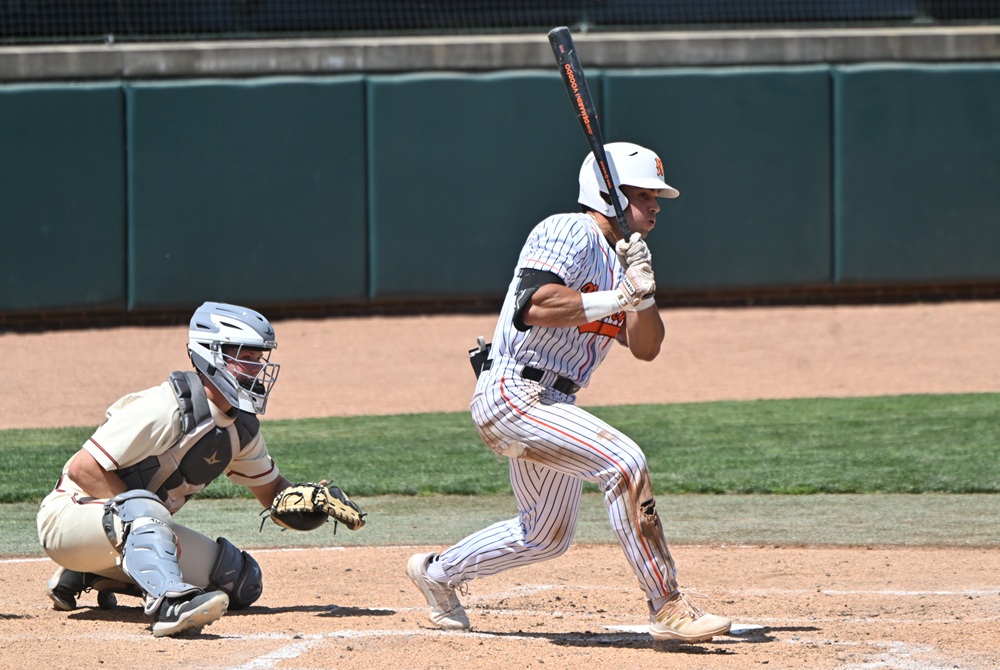
PHOTO Northville’s Dante Nori (6) turns on a pitch during his team’s 2024 Division 1 championship game win over Bloomfield Hills Brother Rice.