

Saugatuck's Dunn Makes MLB Debut, OLSM's Mooney Continues Impressive Climb
By
Steve Vedder
Special for MHSAA.com
August 5, 2024
Blake Dunn has realized his dream while Alex Mooney's chance may be right around the corner.
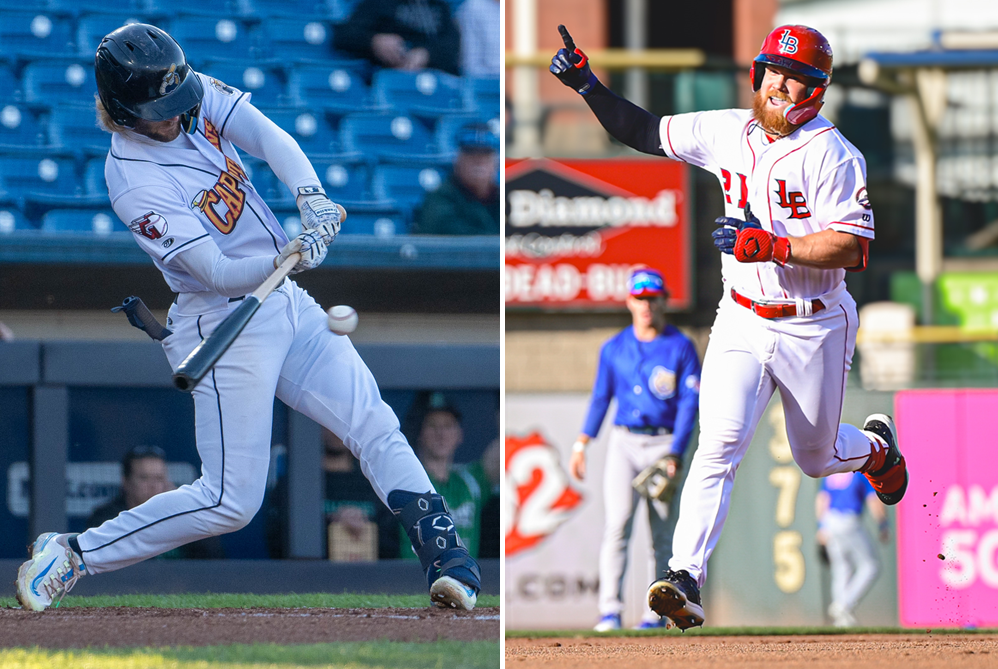
The careers of the two former Michigan high school baseball stars have taken major steps forward this summer, with Dunn, a Saugatuck graduate native, earning two stints with the Cincinnati Reds, and Mooney, from Orchard Lake St. Mary’s, tearing up the High-Class A Midwest League with Lake County, just northeast of Cleveland.
Both credit modest upbringings for their continuing baseball success. Dunn said his senior class included around 85 students.
"It was definitely hard because a lot of guys have played against a high level of competition from bigger schools," said Dunn, who earned 16 varsity letters across four high school sports at Saugatuck. "But a lot of good athletes come from smaller schools, and we have kind of a chip on our shoulders. That's no knock on smaller schools or their communities; we just work that much harder to make things happen.
"You can't just sit back and go with the flow. You work hard, set your mind on what you need to do and just go for it. I definitely take pride in where I come from and represent Saugatuck to the best of my ability or when I'm out in public."
Mooney, who was part of Orchard Lake St. Mary’s winning three MHSAA Finals titles over six years, said he traces much of his success to being part of an outstanding prep baseball program, regardless of the school's size. St. Mary's was an all-boys school during his time there, with just under 600 students.
 "Playing in the Catholic League was huge for me," he said. "It's the best league in the state, and playing there just made me better. I learned early how to win, and that's carried over (to the pros)."
Dunn was one of the great all-around athletes of his generation at Saugatuck. He had more than 1,500 career points in basketball, was a four-time hurdles Finals champion in track and a member of the Michigan High School Baseball Coaches Association Dream Team, and still finds himself all over the MHSAA football record book. His 113 career touchdowns are fourth all-time while his 2,748 rushing yards in 2015 are 12th best. Dunn's 827 points in 41 career games is second all-time to 924 points by East Grand Rapids' Kevin Grady in 51 games from 2001-04. Dunn's 6,954 rushing yards remains eighth all-time.
Dunn, who also had 26 consecutive 100-yard rushing games, said it seemed natural to him to play multiple sports in high school.
"I think it's the right thing for guys to test their ability to do a lot of things," he said. "It comes down to task management. You don't get a lot of free time because it's always go-go. So you need a good work ethic to stay on top of things."
Dunn and Mooney are in the midst of notable summers. Slowed by the injury bug dating all the way back to high school and then Western Michigan, Dunn developed into a bona fide prospect in the Reds system a year ago when he hit .312 with 23 homers and 79 RBIs at Double-A Chattanooga and Low-A Dayton.
Statistically, Dunn is batting .226 with six homers and 28 RBIs in Triple-A this season, but earned a 10-day stint with the Reds from June 4-13 and then again from July 3-10. He collected his first major league hit against the Cubs on June 7.
A shortstop, Mooney has hit wherever he's been. He batted .444 as a sophomore and .460 with nine homers and 57 RBIs as a senior at Orchard Lake St. Mary’s, then hit .305 with 113 runs, 30 doubles, 11 homers and 33 stolen bases (in 39 attempts) in 117 career games at Duke. With the Lake County Captains this season, Mooney is tops in the Midwest League in runs (65), third in stolen bases (34), tied for 14th in home runs (10) and tied for 16th in RBIs (46).
Mooney said hitting has always been his calling card.
"I feel like I've been able to hit since I was around 8 years old," he said. "My dad coached me when I was young, and I still talk to him about it when I go home. Hitting gets significantly harder, but your mindset is that you learn to flush a bad day. I learned at Orchard Lake St. Mary that you're still a good hitter if you go 0-for-4. You just get on with it."
Mooney, the state's Mr. Baseball Award winner in 2021 and two-time MHSBCA Dream Team member, was ranked among the top five shortstops nationally out of high school by Perfect Game and Under Armour. He went on to become all-Atlantic Coast Conference at Duke before being drafted in the seventh round by Cleveland in 2021.
 Among the lessons he's learned in the professional ranks is that baseball is a business.
"It's a job. A darn good one, but a job," he said. "But I also know that the worst day you could have in baseball is better than the best day in another field. Baseball is a grind, though."
Dunn has battled his share of the grind since becoming a 15th-round draft choice by the Reds in 2021. He hit .333 with 11 homers, 50 stolen bases and 78 RBIs in135 games at Western Michigan. Injuries plagued him as a Bronco, then limited him to just 48 games in his first two years in the Reds system. This year he missed time with facial lacerations after getting hit with a pitch.
No matter the difficulties, Dunn said he always believed he could become a major leaguer. The size of high schools and subsequent level of competition was never a consideration.
"I've never considered myself an underachiever, and in my mind it doesn't matter where I've been,” he said. "I know I have talent, and I've worked hard. I feel like I have a lot of years left in baseball."
Dunn and Mooney are just two of several former Michigan high school ballplayers making a mark in the minor leagues, including two members of arguably the best-ever MHSBCA Dream Team pitching staff in 2016. Tommy Henry (Portage Northern) and Karl Kauffman (Brother Rice) have combined to pitch in 46 MLB games with Arizona and Colorado, respectively, the last two seasons. Henry is 2-3 in nine games with the Diamondbacks this season. The other members of the 2016 Dream Team pitchers were Jack Weisenburger (Rockford) and Mike Mokma (Holland Christian), both of whom pitched professionally, and John Baker (Hartland), who went on to become a two-time all-Mid-American Conference pitcher at Ball State and a 29th-round pick of the Marlins in 2019.
Baker outdueled Henry in the 2016 Division 1 Final.
Another former Michigan high school baseball star has been a godsend to a depleted Atlanta Braves pitching staff. Spencer Schwellenbach (Saginaw Heritage), has gone 4-5 with a 4.04 ERA in 11 starts with the Braves. He was the 2018 Michigan Gatorade Player of the Year who went 18-6 with a 0.73 ERA at Nebraska before being taken by the Braves in the second round of the 2021 draft.
Among the other former prep stars busy in the minors are Sam Weatherly (Howell) and Brock Porter (Orchard Lake St. Mary). Weatherly is 3-1 with a 2.85 ERA in 30 games with the High-A Fresno Grizzlies. He was a 27th-round pick by the Rockies in 2020 after going 4-0 with 106 strikeouts over 72 innings in three years at Clemson.
Porter, the state's Mr. Baseball in 2022, is 0-4 with a 6.98 ERA in 19 1/3 combined innings in Rookie League and High-A. A fourth-round pick by the Rangers in 2022, Porter started 21 games with 95 strikeouts in 69 1/3 innings during his first pro season a year ago at the Rookie League level.
Other Michigan natives in the minors include Luke Russo (Howell), who is 5-3 with a 4.81 ERA at High-A Jersey Shore, and Andrew Taylor (Caledonia), who is 1-1 with a 5.27 ERA at High-A Asheville.
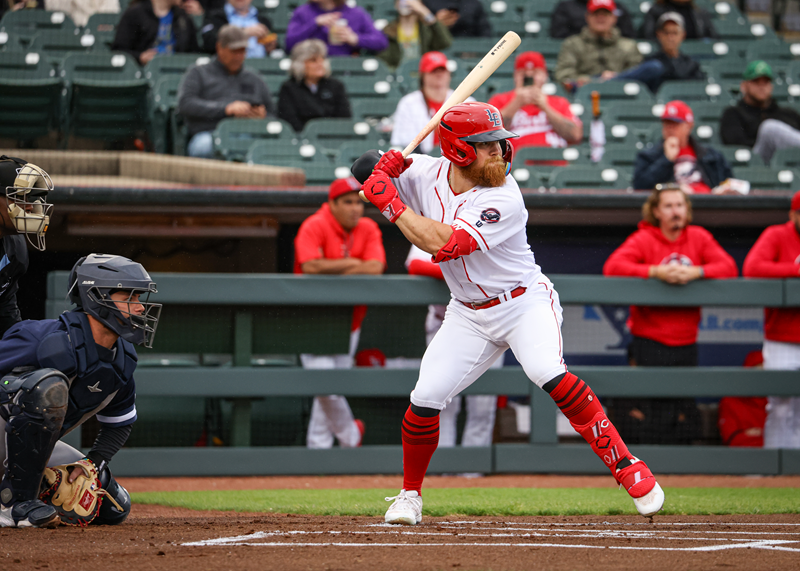
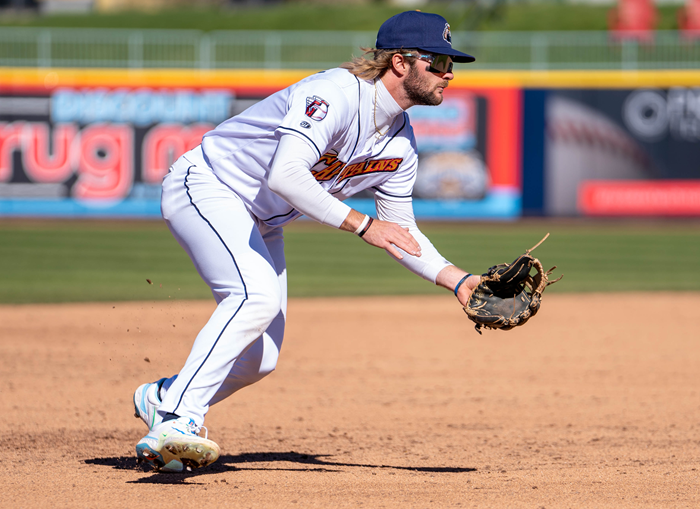
PHOTOS (Top) From left, former Orchard Lake St. Mary’s star Alex Mooney and Saugatuck standout Blake Dunn are succeeding in minor league baseball as they pursue Major League careers. (Middle) Dunn stands in for a pitch playing for the Louisville Bats this season. (Below) Mooney prepares to field a grounder for the Lake County Captains. (Photos courtesy of the Lake County Captains and Louisville Bats; top Dunn photo by Cam Anderson and middle by Anna Rouch.)
Senior-Powered Spring Lake Answering Anticipation, Pursuing High Expectations
By
Dean Holzwarth
Special for MHSAA.com
April 29, 2026
SPRING LAKE – The time is now for the Spring Lake baseball team.
 With the return of 11 veteran seniors, the Lakers entered this spring with lofty expectations and an eye on an extended postseason run.
Anticipation has come to fruition in the form of a state ranking and a nearly perfect start.
“Our motto is we are going to worry about next year next year, and we are going to do all we can this year,” Lakers fourth-year coach Bill Core said. “We knew we were going to have a big experienced group coming back, and that's just how the roster folded out. We have a lot of experience, a lot of returners and pretty high expectations.”
Spring Lake, which finished as Division 2 runner-up in 2024 and won a conference title last year for the first time since 2014, is off to an impressive 13-1 start (9-0 in the Ottawa-Kent Conference Black) and has climbed to No. 7 in the latest coaches poll.
Core said the vast number of returners, which includes five players who will play in college next year, has paid early dividends.
“I think that’s been a big difference,” he said. “We’ve played some younger teams that were breaking in sophomores or juniors or new kids, and our guys were ready to go right from the start. It’s been an advantage early on.”
Senior starting pitchers Oliver Smies and Maddux Kipling believe the strong bond among the senior class has been a major factor in the torrid start.
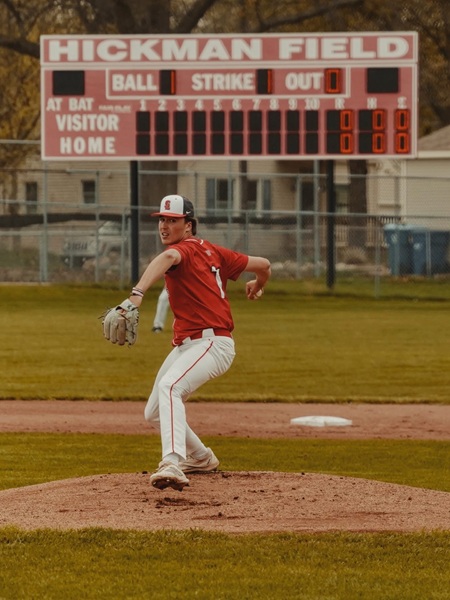 “I think something that’s really important about this team is our team chemistry and the amount of seniors we have on the team,” Smies said. “That alone allows us to have a ton of experience, and I think that's a big reason why we are off to such a hot start. We have been playing good team baseball and complementary baseball with good defense and good offense.”
Added Kipling: “We genuinely like being around each other, and every day we show up ready to get a little better. Our team has a real gritty and energetic identity, and I think that shows in how we compete and support each other.”
Kipling and Smies have been dominant on the mound this season. They haven’t allowed an earned run while combining for 80 strikeouts. Kipling earned a second-team all-state accolade as a junior and is headed to Michigan State next year. Smies will play at Calvin University.
“It starts with our pitching,” Core said. “Any time you are going to make a run, it starts with your pitching and we are pretty lucky, especially with our top two.”
Offensively, the Lakers possess a balanced lineup and boast a .330 batting average.
Senior Owen Smies, who will join his twin brother at Calvin, is hitting a team-best .432 with 13 RBIs. Seniors Alex Strauss (Adrian College) and Max Feltner (Muskegon Community College) are both batting .333 and have combined to score 25 runs.
As a team, Spring Lake has produced eight shutouts and nine wins by run differential.
“We got off to a good start, but we are going to play a lot better competition,” Core said. “This is a good week for us because we play Northview and state-ranked East Grand Rapids. We just picked them up, so we were excited to fill in the week with those two schools.”
Spring Lake is 62-6 over its last 68 games and trying to remain focused on each game as it attempts to erase the disappointment of last year’s early exit from the postseason.
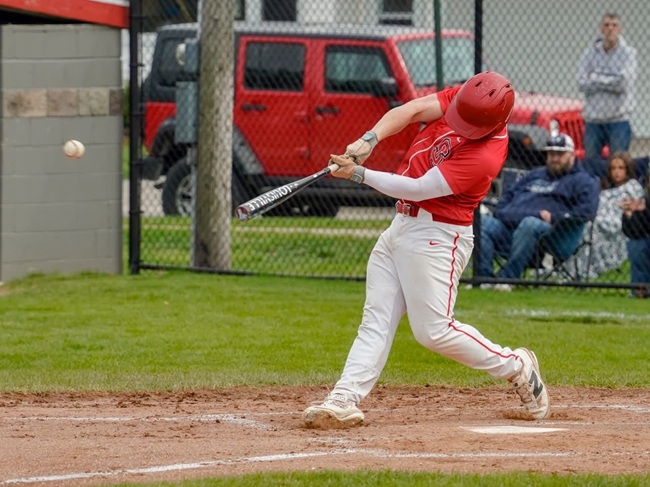 Despite winning 30 games, the Lakers suffered a 3-2 loss to Grand Rapids West Catholic in District play.
“I think there is some motivation there from that loss,” Oliver Smies said. “And I think that loss last year taught us that any team can beat any team, so you have to play your best baseball every single game no matter the opponent.”
Core said last year hasn’t been discussed, but believes it still sits in the back of his players’ minds.
“I think they think about that, but we've had quite a few mercies to start the season, and I said to them that when we get to the tournament it's going to be a one-run game and we are going to have to do the little things to make a difference because we are not going to win 14-0 all the time,” he explained. “We try to keep everyone in the moment.”
Kipling isn’t dwelling on the past – or looking too far ahead.
“As a group we’ve done a great job staying focused on the present and not getting caught up in the past or worrying too much about the future,” Kipling said. “My dad has always told me to focus on what you can control because putting energy into things you can’t control is a waste.
"That mindset has stuck with me, especially on the field. I try to live by ‘one pitch at a time,’ and because of that I haven’t really spent time thinking about last year’s loss. That’s behind us, and we’re just focused on what we can do right now.”
 Dean Holzwarth has covered primarily high school sports for Grand Rapids-based WOOD-TV for five years after serving at the Grand Rapids Press and MLive for 16 years along with shorter stints at the Ionia Sentinel and WZZM. Contact him at [email protected] with story ideas for Allegan, Kent and Ottawa counties.
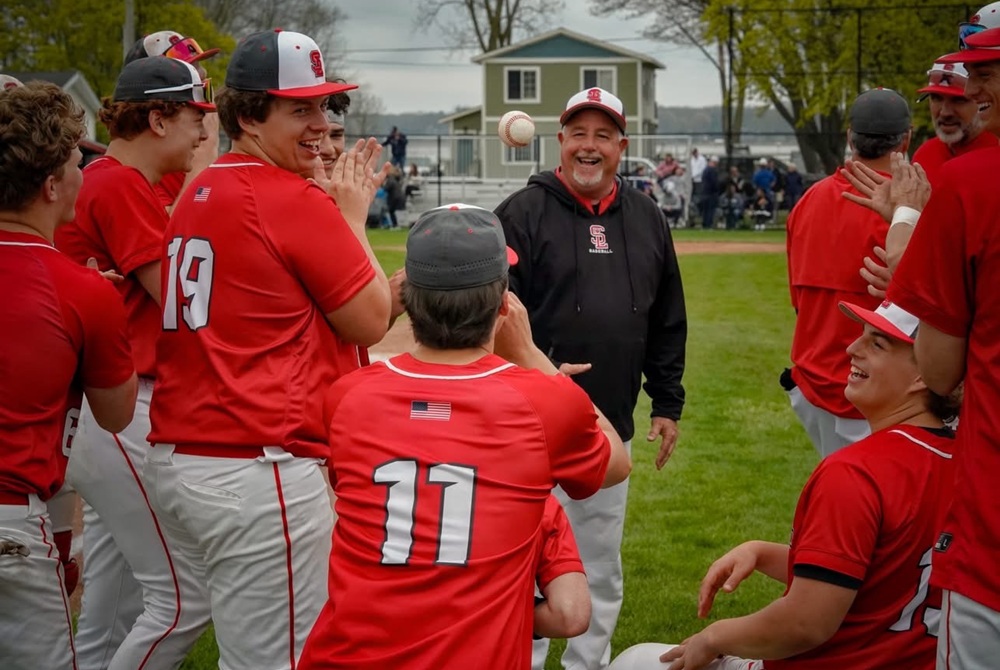
PHOTOS (Top) Spring Lake baseball coach Bill Core tosses Maddux Kipling his home run ball after a win over Fruitport. (Middle) Kipling pitching at Spring Lake's Hickman Field. (Below) Senior Oliver Smies connects with a pitch. (Photos by Trevor McCue/Grand Haven Tribune.)