

Senior-Powered Spring Lake Answering Anticipation, Pursuing High Expectations
By
Dean Holzwarth
Special for MHSAA.com
April 29, 2026
SPRING LAKE – The time is now for the Spring Lake baseball team.
 With the return of 11 veteran seniors, the Lakers entered this spring with lofty expectations and an eye on an extended postseason run.
Anticipation has come to fruition in the form of a state ranking and a nearly perfect start.
“Our motto is we are going to worry about next year next year, and we are going to do all we can this year,” Lakers fourth-year coach Bill Core said. “We knew we were going to have a big experienced group coming back, and that's just how the roster folded out. We have a lot of experience, a lot of returners and pretty high expectations.”
Spring Lake, which finished as Division 2 runner-up in 2024 and won a conference title last year for the first time since 2014, is off to an impressive 13-1 start (9-0 in the Ottawa-Kent Conference Black) and has climbed to No. 7 in the latest coaches poll.
Core said the vast number of returners, which includes five players who will play in college next year, has paid early dividends.
“I think that’s been a big difference,” he said. “We’ve played some younger teams that were breaking in sophomores or juniors or new kids, and our guys were ready to go right from the start. It’s been an advantage early on.”
Senior starting pitchers Oliver Smies and Maddux Kipling believe the strong bond among the senior class has been a major factor in the torrid start.
 “I think something that’s really important about this team is our team chemistry and the amount of seniors we have on the team,” Smies said. “That alone allows us to have a ton of experience, and I think that's a big reason why we are off to such a hot start. We have been playing good team baseball and complementary baseball with good defense and good offense.”
Added Kipling: “We genuinely like being around each other, and every day we show up ready to get a little better. Our team has a real gritty and energetic identity, and I think that shows in how we compete and support each other.”
Kipling and Smies have been dominant on the mound this season. They haven’t allowed an earned run while combining for 80 strikeouts. Kipling earned a second-team all-state accolade as a junior and is headed to Michigan State next year. Smies will play at Calvin University.
“It starts with our pitching,” Core said. “Any time you are going to make a run, it starts with your pitching and we are pretty lucky, especially with our top two.”
Offensively, the Lakers possess a balanced lineup and boast a .330 batting average.
Senior Owen Smies, who will join his twin brother at Calvin, is hitting a team-best .432 with 13 RBIs. Seniors Alex Strauss (Adrian College) and Max Feltner (Muskegon Community College) are both batting .333 and have combined to score 25 runs.
As a team, Spring Lake has produced eight shutouts and nine wins by run differential.
“We got off to a good start, but we are going to play a lot better competition,” Core said. “This is a good week for us because we play Northview and state-ranked East Grand Rapids. We just picked them up, so we were excited to fill in the week with those two schools.”
Spring Lake is 62-6 over its last 68 games and trying to remain focused on each game as it attempts to erase the disappointment of last year’s early exit from the postseason.
 Despite winning 30 games, the Lakers suffered a 3-2 loss to Grand Rapids West Catholic in District play.
“I think there is some motivation there from that loss,” Oliver Smies said. “And I think that loss last year taught us that any team can beat any team, so you have to play your best baseball every single game no matter the opponent.”
Core said last year hasn’t been discussed, but believes it still sits in the back of his players’ minds.
“I think they think about that, but we've had quite a few mercies to start the season, and I said to them that when we get to the tournament it's going to be a one-run game and we are going to have to do the little things to make a difference because we are not going to win 14-0 all the time,” he explained. “We try to keep everyone in the moment.”
Kipling isn’t dwelling on the past – or looking too far ahead.
“As a group we’ve done a great job staying focused on the present and not getting caught up in the past or worrying too much about the future,” Kipling said. “My dad has always told me to focus on what you can control because putting energy into things you can’t control is a waste.
"That mindset has stuck with me, especially on the field. I try to live by ‘one pitch at a time,’ and because of that I haven’t really spent time thinking about last year’s loss. That’s behind us, and we’re just focused on what we can do right now.”
 Dean Holzwarth has covered primarily high school sports for Grand Rapids-based WOOD-TV for five years after serving at the Grand Rapids Press and MLive for 16 years along with shorter stints at the Ionia Sentinel and WZZM. Contact him at [email protected] with story ideas for Allegan, Kent and Ottawa counties.
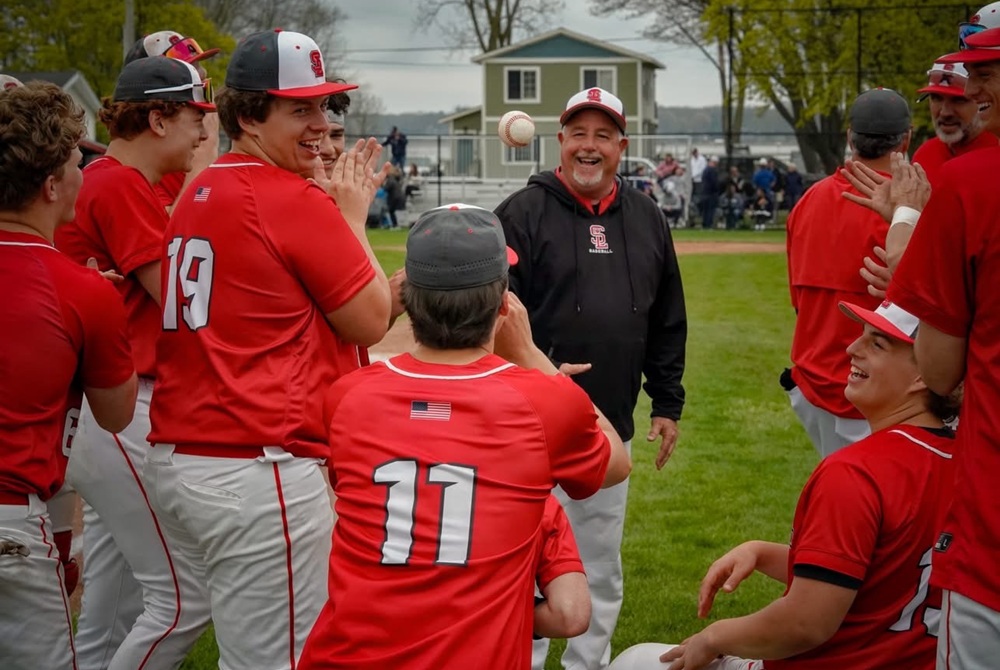
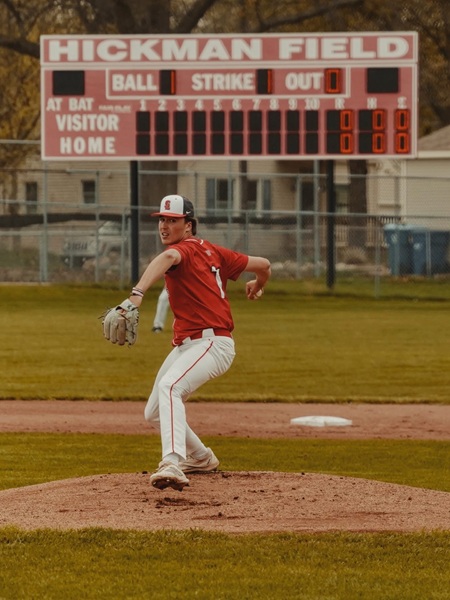
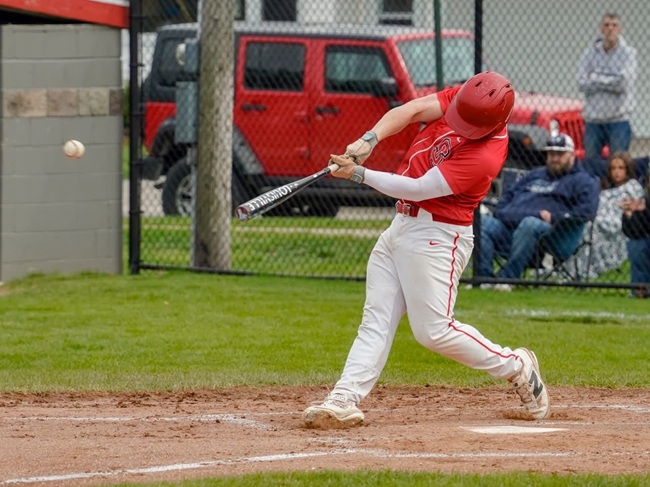
PHOTOS (Top) Spring Lake baseball coach Bill Core tosses Maddux Kipling his home run ball after a win over Fruitport. (Middle) Kipling pitching at Spring Lake's Hickman Field. (Below) Senior Oliver Smies connects with a pitch. (Photos by Trevor McCue/Grand Haven Tribune.)
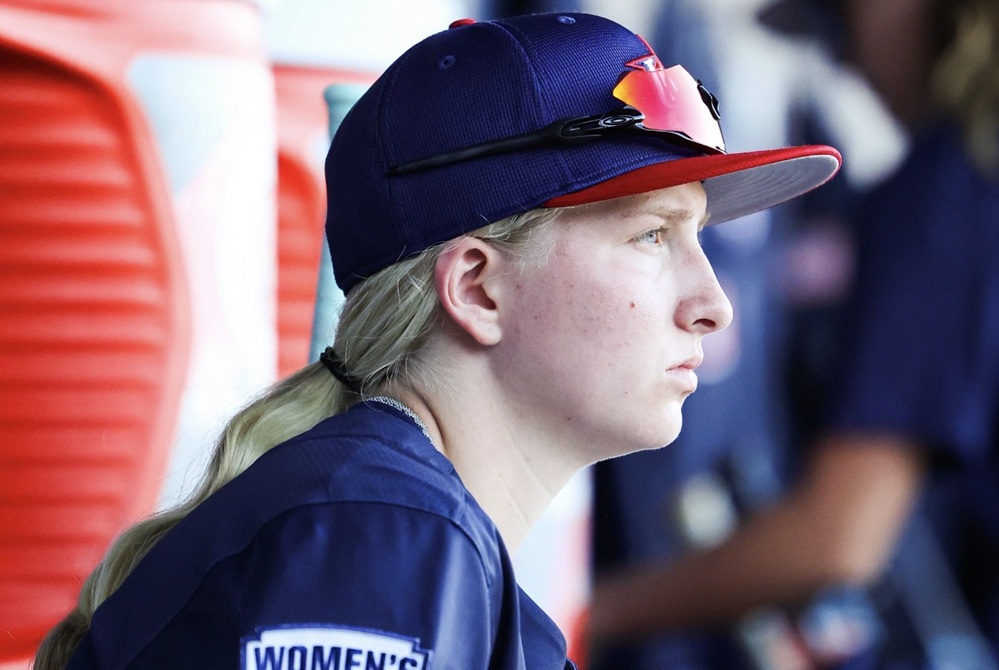
Airport Graduate Villarreal Hoping to Receive Call on WPBL Draft Day
By
Steve Vedder
Special for MHSAA.com
November 19, 2025
It hasn't always been the smoothest of paths for Bella Villarreal – but considering the trail-breaking nature of her quest, she refuses to second guess her choices.
Which is how it goes for someone trying to make the leap from a high school of fewer than 800 students to becoming the first Michigan native to play in the new Women's Professional Baseball League.
A graduate of Carleton Airport High School and presently a freshman at Eastern Michigan, Villarreal's journey includes overcoming her own doubts, ignoring skeptics, poking a hole in a sport universally reserved for males and traveling hundreds of miles to find suitable competition. It's a long and continuing fight she's hoping will culminate in her being among the players taken in the inaugural WPBL draft Thursday.
While Villarreal describes herself as a football fan and someone who could never get into softball, dabbled in basketball and pushed thoughts of playing volleyball to the back of her mind, her first love has always been baseball. It's been that way since before she stepped into her kindergarten classroom and peaked after shining in a WPBL tryout in Washington, D.C., in August.
"I've been drawn to baseball since I was a 4-year-old playing T-ball," Villarreal said. "I've always wanted to play baseball. It's inspirational to me and was always a goal for me to play. I never wanted to stop something that made me feel so good."
While she harbors a deep love of baseball, the sport, however, hasn't always returned that affection. After playing in local boys leagues growing up, Villarreal – a pitcher and second baseman – made the Detroit Bees boys travel team as a 9-year-old. From there she graduated to the Indians Baseball Club as an 11-year-old and then finally more travel ball with the Cubs club as a 15-year-old. She's played in three Baseball For All events, the largest girls baseball tournament in the country.
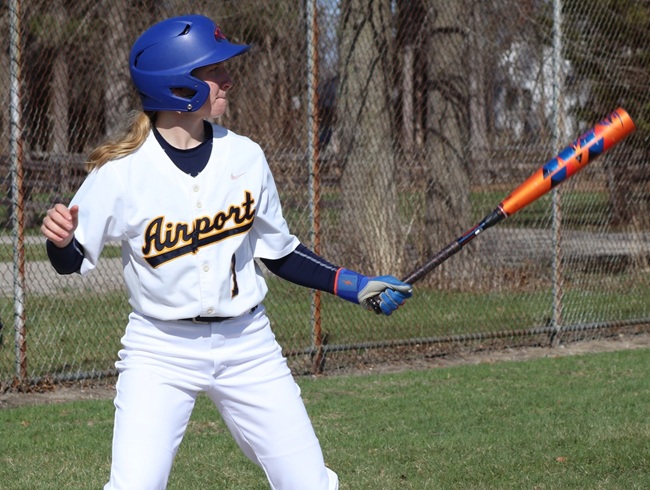 Along the way Villarreal has encountered support, but also a prevalent attitude that girls who favor a sport with a bat and ball should be playing softball, not baseball. By the time she was 16, Villarreal, by then long committed to a future on the baseball diamond, was having to travel all over the Midwest to find baseball tournaments.
What she found was scattered acceptance among some male teammates, but also a frustration with traveling around a half-dozen states to play the sport she loved.
One of the turning points of Villarreal's fledging baseball career came at Airport High School. After her extensive inclusion in travel leagues, Villarreal made the school's junior varsity baseball team as a freshman and sophomore. While there were bumps along the way, the foremost lesson Villarreal took from that school's baseball program was that she could indeed succeed playing against the boys. She also honed fundamentals and learned the value of everyone pulling in the same direction.
According to the National Federation of State High Schools Association (NFHS), there are no states with girls baseball as a sanctioned sport – but the organization counted 1,372 girls who played baseball on high school boys teams this spring. While Major League Baseball estimates 46 percent of all baseball fans are women, only nine women played on NCAA men's baseball teams in 2024.
None of which has deterred Villarreal's love of the game.
"I worked hard and wanted to be part of the team. I learned that there is no "I" in team," Villarreal said of her time at Airport. "And I think it also confirmed my ability. I knew if I did well in high school, I could do it any place."
Armed with the confidence that she could carve a space in the sport, Villarreal, now 19, has tried to improve her game with twice-a-week hitting workouts and four days of work designed to improve her strength and speed.
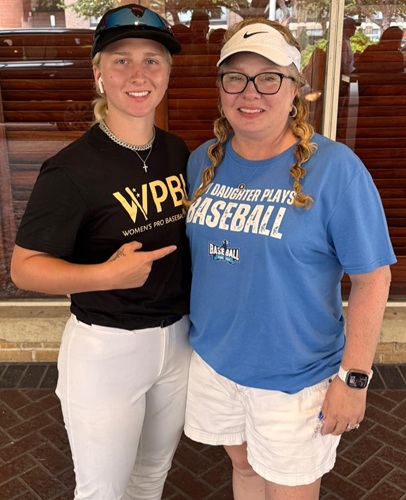 The work has paid off. She came away from the first WPBL tryout in Washington, D.C., with hopes of being taken in the draft. The tryout included players from 10 countries, including a dozen from Japan, which has the top-ranked women's team in the world by the World Baseball and Softball Federation. In all, the first day of tryouts included 600 players from across the country and as far away as Australia, Mexico, South Korea, the United Kingdom and France. Cuts were made after each of the four days, with Villarreal surviving all of them. That's a hopeful sign she will be taken in the draft by one of the league's four franchises.
Villarreal admits the tryouts, which concluded with inter-squad games, were high stress.
"Of course I was nervous," she said. "But I made some friends there who helped me stay motivated that I could get through it. It was serious, but everyone had fun, which was a big thing. There were jitters the first day, but then I was good at becoming myself. To make the second and third days, you knew you must be doing something right. I started becoming confident with the things I knew I could do."
Originally slated to include six teams, the league will start play in May with teams in New York, Boston, Los Angeles and San Francisco. Teams will have 15-player rosters which will play a seven-week regular season. It's not the first attempt at forming a professional women's baseball league. There have been four previous attempts beginning with the All-American Girls Professional Baseball League during World War II and the most recent with Ladies League Baseball in 1997-98.
Villarreal believes given time and enough resources, women's professional baseball can thrive. She would love to look back on her time as being among the trailblazers in that progress.
"Absolutely, there is interest," she said. "I know there have been attempts before, and some really haven't stuck. But I think we can build it up to a place where girls have more of an opportunity."
For those girls who would someday wish to join that quest, Villarreal has advice.
"You should know where you're supposed to be," she said. "Do what you love as a challenge, and just be who you are. It doesn't matter what sport you play – know that you are capable."
Editor's note: Villarreal was drafted in the fifth round of the WPBL Draft by Los Angeles, the 82nd pick overall of 120. She was selected as a second baseman, and was one of two Michigan players drafted. Jordan Eyster of Royal Oak, a 21-year-old outfielder, was selected in the fourth round by San Francisco.
PHOTOS (Top) Airport grad Bella Villarreal watches from the dugout during a USA Baseball Development Program event. (Middle) Villarreal steps to the plate as a member of Carleton Airport’s junior varsity baseball team. (Below) Villarreal takes a photo while pointing toward her mother Tonya. (Photos provided by the Villarreal family.)