

West Rides Hot Start after Record Finish
April 21, 2017
By Dennis Chase
Special for Second Half
TRAVERSE CITY – Traverse City West has the blueprint.
 Now the Titans are hoping to build off their success from last spring when they won a school-record 41 games and reached the MHSAA Division 1 Baseball Semifinals.
So far, so good. The Titans are off to a 6-1 start.
“We always keep the same goals, the same expectations,” coach Matt Bocian said. “Winning the conference, winning the District, those are the expectations. And then you set your goals a little higher (after that). Once you get a little taste of something (like a Semifinal appearance), maybe you want a little more. We try to keep them hungry.”
West returns just two everyday starters from a year ago – centerfielder Gavin Garmhausen and pitcher-third baseman Ryan Hayes – but several other underclassmen saw significant action.
“We feel good with the team we have – and where we’re at,” senior catcher-first baseman Carson Rosa said. “We have good talent. We just have to come to practice every day wanting to get better. Without that attitude, we’re going to flat line and we’re not going to be as good as we want to be.”
Rosa provided the biggest hit in the first couple weeks when he singled in Garmhausen in the bottom of the seventh inning to beat Flushing 4-3 in the opener of a doubleheader Monday at Central Michigan University. West won the nightcap 14-1.
Earlier, the Titans beat Coldwater 4-2, Hamilton 7-1, White Cloud 12-2 and Morley-Stanwood 12-1. The lone loss came in the Coldwater tournament to Fremont, Ind., 9-6.
“We’re not where we need to be, but we’re going to get better and better,” Hayes said.
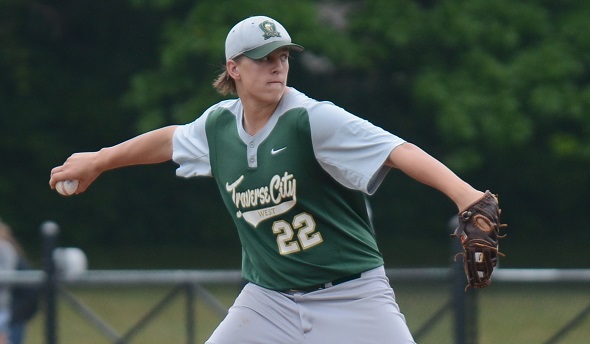
Hayes was one of the standouts last season. He was 10-1 with a 0.90 ERA on the mound. At the plate, Hayes hit .418, one of four players to bat over .400.
As a team, the Titans scored 427 runs in 44 games, which is 10th on the MHSAA’s all-time runs list. West also pounded out 431 hits, also 10th all-time. The 41 wins rank sixth in MHSAA history.
“It was crazy,” Garmhausen said of last season’s offensive fireworks.
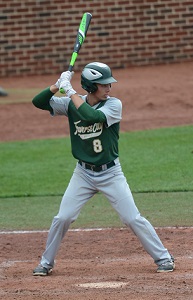
The centerfielder did his part, hitting .368 with 41 RBI, 44 hits and 47 runs.
The run to the Semifinals, where the Titans lost to eventual champion Warren DeLaSalle 3-1, was the longest in school history.
“We came from behind in every (tournament) game,” Garmhausen said. “It proved to us that we could do big things up here.”
Garmhausen has picked up where he left off. He’s currently hitting near .500.
Hayes, meanwhile, has pitched in two games. He went five innings, allowing no earned runs, three hits and striking out 10 in the win over Hamilton. He also went the first six innings in Monday’s triumph over Flushing, surrendering two earned runs and striking out nine.
Sophomore Brendan Pierce earned the win in the nightcap to improve to 2-0. Mike Laracey, Dan Ayling and Colin Campbell are all 1-0.
“I always tell my teams pitching and defense will win you games,” Bocian said. “Then you see if you can scrape across a few runs. That was our motto last year. It just so happened we had some kids (explode at the plate), and others followed.”
Garmhausen, Hayes, Laracey, Rosa, Ayling, A.J. Ruskowski, Sam DeKuiper and Tristan Reeves have wielded the hots bats this season.
Three of those players – Garmhausen, Hayes and Rosa – have particularly interesting backstories.
Garmhausen’s father, Brad, was a three-sport star at Frankfort in the early 1980s, earning all-state recognition in football, basketball and baseball. He coached Gavin in Little League.
His advice to his son?
“Keep working, keep a positive attitude and things will go your way,” Gavin said.
Gavin, 18, plays two sports. He was on the West varsity hockey team four years and was named to the Traverse City Record-Eagle Dream Team for his play this past winter.
Garmhausen is in his third year on the varsity baseball team. He bats leadoff and plays centerfield.
He describes himself as “a hard worker, a leader, a guy that wants to win, a guy that wants to set an example for his teammates.”
His coach agrees with that assessment.
“He loves the sport,” Bocian said. “He wants to succeed as much as anybody. He has a lot of tools. He’s put a lot of time into getting where he’s at – and it shows.”
Garmhausen plans to play baseball at Bradenton Inspiration Academy in Florida next school year before enrolling in college.
Hayes, a 6-foot-7 junior, is a bona fide three-sport star. He’s one of the state’s top football recruits in the 2018 class. Hayes holds 11 scholarship offers, including from University of Michigan, Michigan State and Notre Dame. A tight end-defensive end for the Titans, Hayes is being recruited as an offensive tackle.
The junior was the most valuable player in the Big North Conference in basketball. He led the Titans to the Class A Regional Finals – the best boys basketball tournament run in school history.
He also comes from an athletic family. His older brother Connor, also a lineman, signed with University of Pittsburgh out of high school. His father, Mike, was an offensive lineman at Central Michigan University. His mother Sue (Nissen) Arthur starred in basketball at CMU. She’s the school’s second all-time leading scorer and was a freshman All-American and a three-time first-team Mid-American Conference honoree. Arthur was inducted into CMU’s Hall of Fame in 2001.
 (Incidentally, at CMU, Arthur played with Traverse City’s Suzy Merchant, Molly (Piche’) Russell and Wendy (Merriman) Sherwin and Gaylord St. Mary’s Lori (McCluskey) Phillips. While Merchant is now the women’s basketball coach at MSU, Arthur, Sherwin and Phillips all reside in Traverse City and their children have gone on to success at three different schools.
Sherwin’s three sons – Ben, Sam and Jack – were linemen on Traverse City Central’s 9-2 football team last fall that won a second consecutive Big North Conference title. Their offensive line position coach? Their father, Greg, a former lineman at CMU. Ben, a senior, signed with Ferris State.
Phillips’ son, Noah, plays basketball at Grand Valley State. The 6-8 Phillips averaged 19.8 points and 7.2 rebounds his senior season at St. Francis. Juliana, a current senior at St. Francis, just earned all-state laurels in basketball, to go with similar honors in volleyball. She’ll attend St. Louis University on a volleyball scholarship in the fall.)
In another year, Ryan Hayes will be gearing up for college. He planned to make a decision where – and notify college football coaches – late this summer, but that timetable has been moved up.
For now, he’s enjoying baseball. And when asked if there’s a sport he doesn’t like, he laughs.
“Not really,” he said. “I like them all.”
Hayes has a fastball that’s been clocked at 89 miles per hour, he said, although he hasn’t thrown that hard in this cold, spring weather. Still, he has 19 strikeouts in 11 innings.,
“Ryan came in last year as a sophomore, not projected to be our No. 2 starter, and he ended up 10-1,” Bocian said. “When you look at his athleticism, and the opportunities he has as a player in all three of his sports, it’s mindboggling.”
Like Ben Sherwin, Carson Rosa signed to play football at Ferris State.
It’s where Rosa’s father, Mark, played baseball after a standout career at Clare High School. Mark Rosa was inducted into the Clare Hall of Fame in 2013.
Carson Rosa’s senior football season was interrupted by injury. The 6-5, 220-pound senior quarterback had led the Titans to impressive wins over Midland and Grand Haven to start what looked like a promising season. Then, in a week three showdown with Traverse City Central, he dislocated his right ankle and broke his fibula when he was hit attempting a pass and his cleat caught in the artificial turf.
Incredibly, he returned after six weeks to start West’s playoff game, also against Central.
“My doctor, Dr. (Tom) O’Hagan, planted the seed in my mind that it was going to be at least a six-week recovery,” Rosa said. “That meant I was going to strive for that six weeks. All I was focused on was school and rehab.”
Rosa wondered if college coaches would back off. Not all did.
“I got a couple texts,” he said. “They were like, ‘Sorry to hear about your injury. We’d still like to have you as part of our team in the future.’ That was nice to know because I wasn’t going to get a senior year to prove (myself).”
Ferris was one of the schools that kept in touch.
“They see me as an athlete who has the potential to play multiple positions, not just quarterback,” Rosa said. “I could be an H-back.”
Rosa also played three sports until this season. He gave up basketball since his ankle was still sore.
“I wanted to be 100 percent ready for baseball,” he said. “I love baseball. It was my sport until I started playing football in eighth grade. But I still love it and I did not want to sacrifice the season that we’re going to have because I knew we were returning some good talent – and I was going to get to play with my best friends.”
Rosa is off to a hot start. He belted a two-run homer in the Morley Stanwood tournament.
“He’s got all the tools to be successful,” Bocian said. “He’s a gamer. When it’s game time, that’s when Carson is at his best.”
Now, if the weather would just improve. West might still be a couple weeks away from hosting its first twinbill. In the meantime, the Titans are hitting the road. Their travels will take them to Grand Rapids Forest Hills Northern on Saturday.
 Dennis Chase worked 32 years as a sportswriter at the Traverse City Record-Eagle, including as sports editor from 2000-14. He can be reached at [email protected] with story ideas for Manistee, Wexford, Missaukee, Roscommon, Ogemaw, Iosco, Alcona, Oscoda, Crawford, Kalkaska, Grand Traverse, Benzie, Leelanau, Antrim, Otsego, Montmorency, Alpena, Presque Isle, Cheboygan, Charlevoix and Emmet counties.
PHOTOS: (Top) Traverse City West pitcher Ryan Hayes works on a hitter during last season’s Division 1 Semifinal loss to Warren DeLaSalle. (Middle) Gavin Garmhausen, also here against DeLaSalle, joins Hayes among returning starters this spring.
Senior-Powered Spring Lake Answering Anticipation, Pursuing High Expectations
By
Dean Holzwarth
Special for MHSAA.com
April 29, 2026
SPRING LAKE – The time is now for the Spring Lake baseball team.
 With the return of 11 veteran seniors, the Lakers entered this spring with lofty expectations and an eye on an extended postseason run.
Anticipation has come to fruition in the form of a state ranking and a nearly perfect start.
“Our motto is we are going to worry about next year next year, and we are going to do all we can this year,” Lakers fourth-year coach Bill Core said. “We knew we were going to have a big experienced group coming back, and that's just how the roster folded out. We have a lot of experience, a lot of returners and pretty high expectations.”
Spring Lake, which finished as Division 2 runner-up in 2024 and won a conference title last year for the first time since 2014, is off to an impressive 13-1 start (9-0 in the Ottawa-Kent Conference Black) and has climbed to No. 7 in the latest coaches poll.
Core said the vast number of returners, which includes five players who will play in college next year, has paid early dividends.
“I think that’s been a big difference,” he said. “We’ve played some younger teams that were breaking in sophomores or juniors or new kids, and our guys were ready to go right from the start. It’s been an advantage early on.”
Senior starting pitchers Oliver Smies and Maddux Kipling believe the strong bond among the senior class has been a major factor in the torrid start.
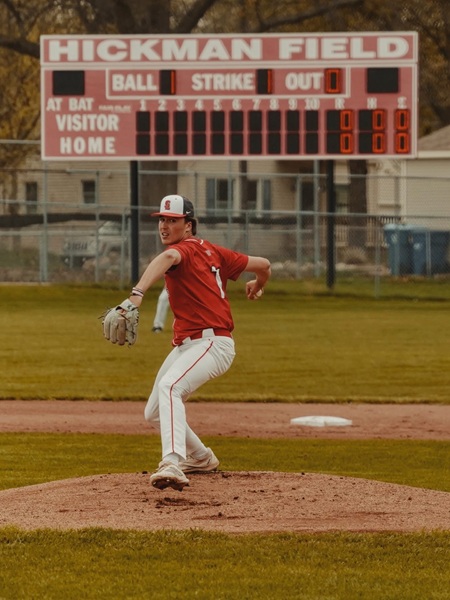 “I think something that’s really important about this team is our team chemistry and the amount of seniors we have on the team,” Smies said. “That alone allows us to have a ton of experience, and I think that's a big reason why we are off to such a hot start. We have been playing good team baseball and complementary baseball with good defense and good offense.”
Added Kipling: “We genuinely like being around each other, and every day we show up ready to get a little better. Our team has a real gritty and energetic identity, and I think that shows in how we compete and support each other.”
Kipling and Smies have been dominant on the mound this season. They haven’t allowed an earned run while combining for 80 strikeouts. Kipling earned a second-team all-state accolade as a junior and is headed to Michigan State next year. Smies will play at Calvin University.
“It starts with our pitching,” Core said. “Any time you are going to make a run, it starts with your pitching and we are pretty lucky, especially with our top two.”
Offensively, the Lakers possess a balanced lineup and boast a .330 batting average.
Senior Owen Smies, who will join his twin brother at Calvin, is hitting a team-best .432 with 13 RBIs. Seniors Alex Strauss (Adrian College) and Max Feltner (Muskegon Community College) are both batting .333 and have combined to score 25 runs.
As a team, Spring Lake has produced eight shutouts and nine wins by run differential.
“We got off to a good start, but we are going to play a lot better competition,” Core said. “This is a good week for us because we play Northview and state-ranked East Grand Rapids. We just picked them up, so we were excited to fill in the week with those two schools.”
Spring Lake is 62-6 over its last 68 games and trying to remain focused on each game as it attempts to erase the disappointment of last year’s early exit from the postseason.
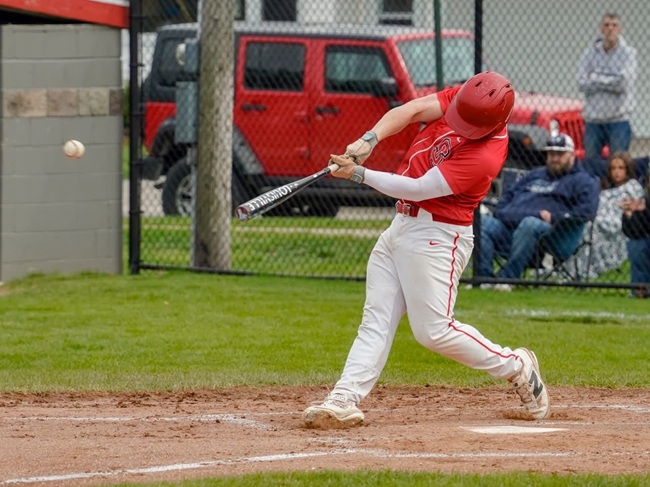 Despite winning 30 games, the Lakers suffered a 3-2 loss to Grand Rapids West Catholic in District play.
“I think there is some motivation there from that loss,” Oliver Smies said. “And I think that loss last year taught us that any team can beat any team, so you have to play your best baseball every single game no matter the opponent.”
Core said last year hasn’t been discussed, but believes it still sits in the back of his players’ minds.
“I think they think about that, but we've had quite a few mercies to start the season, and I said to them that when we get to the tournament it's going to be a one-run game and we are going to have to do the little things to make a difference because we are not going to win 14-0 all the time,” he explained. “We try to keep everyone in the moment.”
Kipling isn’t dwelling on the past – or looking too far ahead.
“As a group we’ve done a great job staying focused on the present and not getting caught up in the past or worrying too much about the future,” Kipling said. “My dad has always told me to focus on what you can control because putting energy into things you can’t control is a waste.
"That mindset has stuck with me, especially on the field. I try to live by ‘one pitch at a time,’ and because of that I haven’t really spent time thinking about last year’s loss. That’s behind us, and we’re just focused on what we can do right now.”
 Dean Holzwarth has covered primarily high school sports for Grand Rapids-based WOOD-TV for five years after serving at the Grand Rapids Press and MLive for 16 years along with shorter stints at the Ionia Sentinel and WZZM. Contact him at [email protected] with story ideas for Allegan, Kent and Ottawa counties.
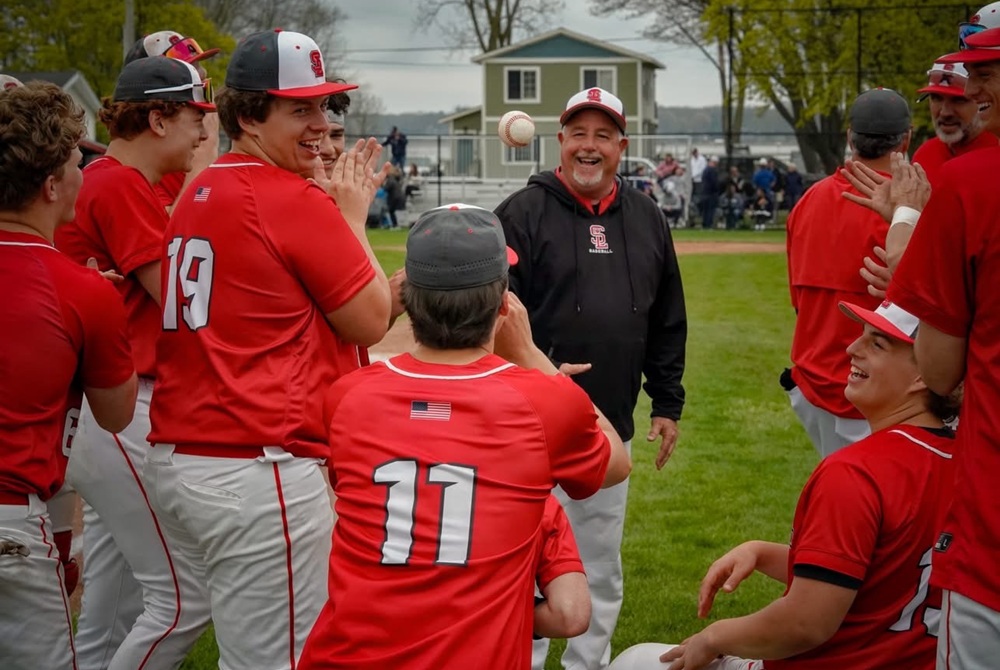
PHOTOS (Top) Spring Lake baseball coach Bill Core tosses Maddux Kipling his home run ball after a win over Fruitport. (Middle) Kipling pitching at Spring Lake's Hickman Field. (Below) Senior Oliver Smies connects with a pitch. (Photos by Trevor McCue/Grand Haven Tribune.)