

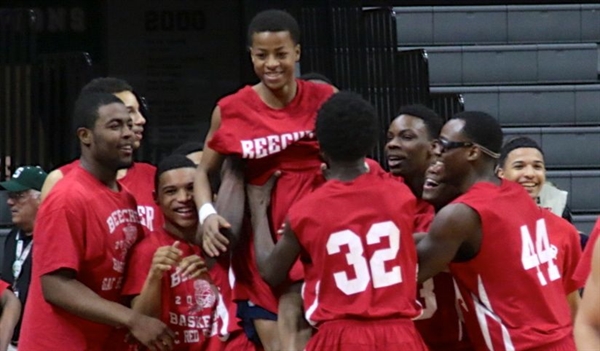
Beecher Back in Breslin Center Form
March 26, 2015
By Geoff Kimmerly
Second Half editor
EAST LANSING – Few high school teams have made a home of Michigan State University’s Breslin Center like Flint Beecher over the last decade.
That’s what made last season’s just-miss of MHSAA Finals weekend so unsettling. And Beecher seemed to take out all of its disappointment on Hanover-Horton during the first half of Thursday’s Class C Semifinal.
Back at Breslin for the sixth time in eight seasons, Beecher scored the first 11 points to pull away almost immediately on the way to defeating the Comets 71-43.
The Buccaneers’ 2013-14 season ended with a one-point Quarterfinal loss to eventual runner-up Pewamo-Westphalia. In its return to the semis, Beecher led by 20 at the end of the first quarter and 31 by halftime.
“I just wanted to get off to a quick start, start the team off fast. We wanted this bad,” Beecher senior guard Samuel Toins said. “Last year we suffered a heartbreak, and we didn’t want to feel that pain like we felt last year.”
Top-ranked Beecher (25-1) will seek its sixth MHSAA title at 4 p.m. Saturday against Grand Rapids NorthPointe Christian. A title would be the Bucs’ third in four seasons – they won back-to-back in Class C in 2012 and 2013.
They’ve had similar hot starts to Thursday, Toins said, “but this is the most important.”
He had 11 points, with three 3-pointers, and all five starters scored as Beecher built a 23-3 advantage by the end of the first quarter.
Bucs coach Mike Williams said his only worry coming into Thursday was that his players might be distracted by their return. But again, they seemed right at home making 51 percent of their shots from the Breslin floor – including 56 percent of their tries from 3-point range.
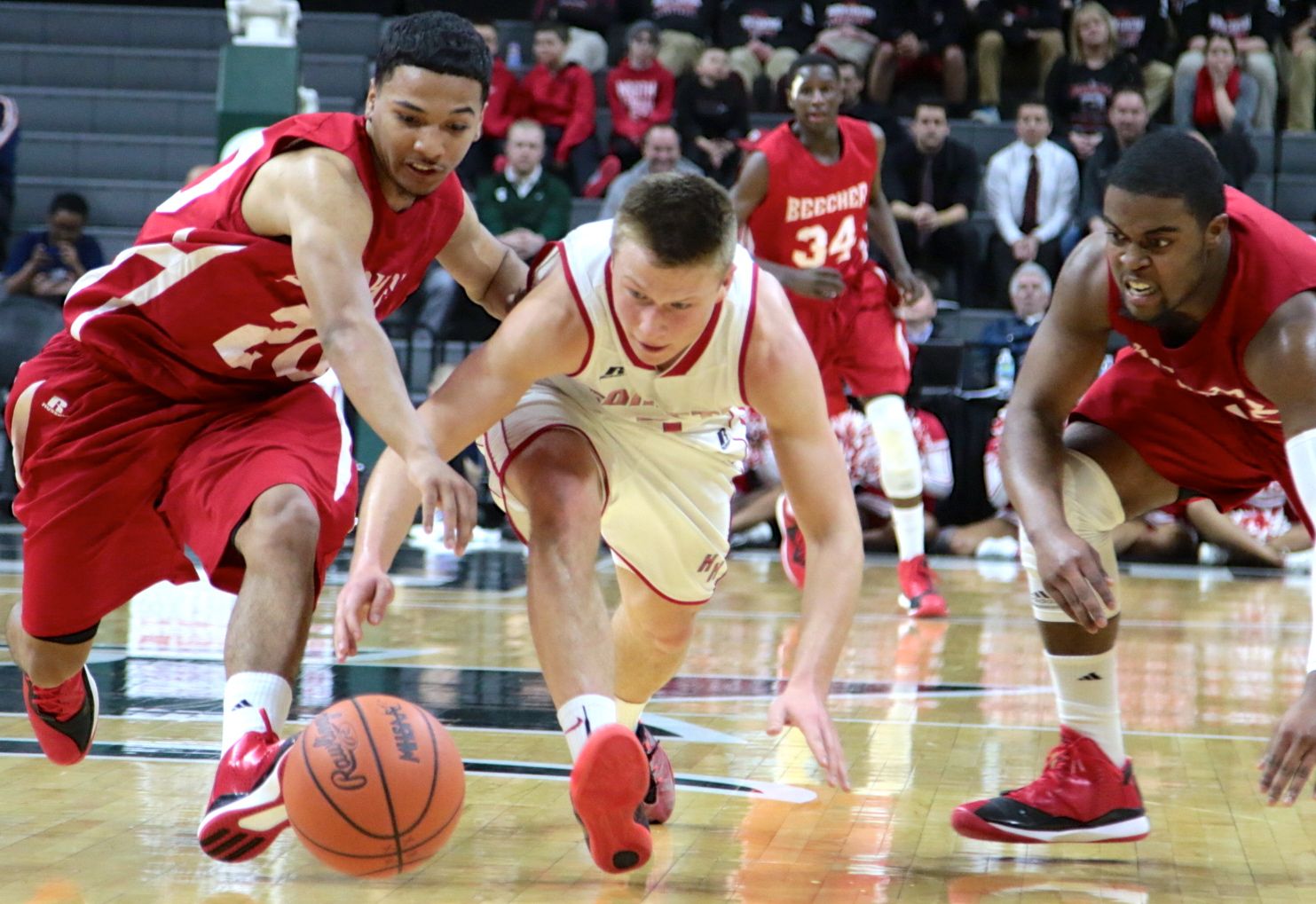 Beecher scored 27 points off turnovers and outscored Hanover-Horton on the break 11-0, taking advantage of 21 turnovers brought on in part by the defensive press.
That all has been part of the plan for getting back to Breslin – Williams puts his players through practices where they run to exhaustion first, and then scrimmage, to prepare for championship-caliber pace.
The Bucs set it Thursday.
“There have been some days when … these guys wanted to strangle me,” Williams said. “But to get to this point, I told them if they can’t handle me in practice, when the pressure is on in games, they won’t be able to handle it. … I like to think that’s what got these kids over the top.”
Senior guard Cedric Moten added 18 points for Beecher, and sophomore forward Levane Blake had 11 and eight rebounds.
Junior forward Preston Laketa had 17 points and 10 rebounds for Hanover-Horton (24-2), which did outscore Beecher 30-27 during the second half.
The Semifinal was the Comets’ first since 2003, and Beecher was the fourth ranked opponent they’d faced this tournament. Hanover-Horton, No. 8, beat No. 4 Hillsdale, No. 6 Jackson Lumen Christi and No. 9 Monroe St. Mary Catholic Central during the run.
“(The first half) was probably the worst half of basketball we’ve played, and I know they had a lot to do with it,” Hanover-Horton coach Chad Mortimer said. “We started off with turnovers, didn’t take a shot for a few minutes. … It was over quick.
“We ran into some really good teams along the way in the tournament, but we ran into a buzz saw today that was on top of their game, and we weren’t.”
Click for the full box score and video from the postgame press conference.
PHOTOS: (Top) Beecher players celebrate their victory over Hanover-Horton and return to the Class C Final. (Middle) Beecher and Hanover-Horton players scramble for a loose ball Thursday.
Breslin Bound: Boys Regional Preview
March 13, 2017
By Geoff Kimmerly
Second Half editor
Only 128 teams remain in the MHSAA Boys Basketball Tournament – and seven have yet to taste defeat this season.
 That’s guaranteed to change beginning with tonight’s Regional Semifinals, where Class A and C will enjoy matchups of teams that have achieved perfection to this point this winter. Our Breslin Bound report – powered my MI Student Aid – looks more closely at those sections of the bracket as we glance at three Regionals in each class that jump off the screen most this week.
Click to check out all Regional brackets for every class: Class A | Class B | Class C | Class D
Week in Review
The countdown of last week’s five most intriguing results:
1. Manton 54, McBain 48 – McBain was undefeated and arguably the favorite to win all of Class C, and had beaten Manton by 16 on Feb. 22.
2. Frankenmuth 58, Bridgeport 49 – The “tie-breaker” between Tri-Valley Conference East co-champions went to the Eagles in this Class B District Final.
3. Detroit Cass Tech 45, Detroit Martin Luther King 43 – This rematch of the Detroit Public School League championship game again went Cass Tech’s way in Class A.
4. Flushing 39, Flint Carman-Ainsworth 36 – The Raiders went on to win the Class A District after opening with this victory over the Cavaliers, who had beaten Flushing by three a week earlier.
5. Onsted 52, Hillsdale 45 – Onsted went on to fall to Chelsea 57-45 in their Class B District Final, but on the way handed Hillsdale its first and only loss after falling to the Hornets in overtime and by two during the regular season.
Regionals at a Glance
These could be among our most competitive brackets. Host sites are in bold:
CLASS A
Dearborn Fordson
Dearborn Fordson (11-12), Detroit Cass Tech (18-4), Detroit U-D Jesuit (18-3), Westland John Glenn (20-3).
There’s a chance for a meeting of champions of the Detroit area’s two most prestigious leagues; Cass Tech opens against Fordson, while Catholic League A-B winner and reigning Class A champion U-D Jesuit faces John Glenn in the other Semifinal. John Glenn just missed being a champion as well, finishing second in its division of the Kensington Lakes Activities Conference and runner-up in the Kensington Conference tournament. Fordson is the potential spoiler and has won seven of its last nine. Jesuit did beat Cass Tech 65-53 in an Operation Friendship game just two weeks ago.
Grand Haven
Grand Rapids Christian (23-0), Grand Rapids Forest Hills Northern (16-7), Holland West Ottawa (22-1), Muskegon (23-0).
Tonight’s second Semifinal pits the undefeated Eagles and Big Reds, arguably the most highly-anticipated matchup in Michigan this week. And that very well could work to the advantage of the teams on the other side of the bracket; Holland West Ottawa’s only loss this season was by eight to Grand Rapids Christian on Dec. 28, and Forest Hills Northern is riding high after a one-point upset last week of rival Grand Rapids Forest Hills Central, which won their Ottawa-Kent Conference White.
Richland Gull Lake
Battle Creek Central (19-3), East Lansing (23-0), Holt (19-4), Kalamazoo Central (19-3).
East Lansing got past last season’s nemesis, Lansing Everett, with a five-point win in the District Final, but the living won’t be easy this week. Two of Battle Creek Central’s losses were to rival Kalamazoo Central, and the Bearcats have won 13 of their last 14 games. The Maroon Giants came within a basket of downing undefeated Grand Rapids Christian in their regular-season finale two weeks ago and feature Mr. Basketball Award finalist Isaiah Livers. But Holt won’t be an easy out – especially with motivation to see East Lansing again after falling to the Trojans by only four and five in league play this winter.
CLASS B
Allegan
Battle Creek Harper Creek (15-8), Benton Harbor (19-3), Three Rivers (15-7), Wayland (20-3).
The Tigers closed the regular season with two losses over three games, but by a combined three points after suffering their only other defeat in overtime. (And all three of those losses were to Class A teams.) Harper Creek, tonight’s opponent, beat one of those three that downed Benton Harbor – Sturgis, by eight – and has won 11 of its last 12 after starting the streak against Three Rivers. Three Rivers happens to be on the other side of this bracket, the Wolverine Conference South champion which advanced with two four-point wins in its District. Wayland might be the contender getting talked about least, so keep an eye out; its three losses were twice to Grand Rapids Christian and once, by only two, to one-loss Wyoming Godwin Heights.
Corunna
Alma (17-6), Frankenmuth (20-2), Freeland (20-2), Lake Fenton (17-6).
Both sides of this bracket pit a 20-2 team vs. a 17-6 opponent tonight. Of the 17-6 pair, Alma finished second to Freeland in the Tri-Valley Conference Central but has won nine of its last 10 since an overtime defeat to the Falcons. Lake Fenton similarly has won 10 straight and tied for second in the Genesee Area Conference Red behind Class C power Flint Beecher. Freeland has won 11 straight since dropping back-to-back games in late January. And Frankenmuth has won 20 of its last 21, including by 19 over Alma midseason.
North Branch
Almont (20-3), Flint Northwestern (11-11), New Haven (22-1), Pontiac Notre Dame Prep (14-9).
New Haven has seemed rather unstoppable and is pursuing a third straight Regional title. But tonight’s opponent Flint Northwestern is playing with major motivation as this could be the final run for the longtime hoops power – the Wildcats won their District games by three and then in overtime, respectively. On the other side of the bracket, Almont is a great story coming from 6-15 last season to win the Blue Water Area Conference title and 12 straight games heading into this week. Notre Dame Prep got hot at the right time, winning its District after dropping three of four to close the regular season.
CLASS C
Bangor
Cassopolis (18-4), Kalamazoo Christian (16-7), Quincy (19-4), Schoolcraft (22-1).
Cassopolis, Quincy and Schoolcraft all won league titles this season, and Christian finished third in Schoolcraft’s league, the Southwestern Athletic Conference Valley. Those two face off again tonight, with Schoolcraft winning the previous two meetings first by 26 but then only two on Feb. 17. Quincy shared the Big 8 Conference title with 14 wins over its last 15 games since dropping its only defeat in the league. Cassopolis, the Berrien-Cass-St. Joseph Red winner, has won 10 of its last 11 and is battle-tested after needing double overtime twice last week to advance.
Houghton Lake
Boyne City (16-7), Manton (18-4), Maple City Glen Lake (18-4), Whittemore-Prescott (15-6).
Manton finished second in the Highland Conference, but might be the favorite to win its first Regional since 1998 after handing league champion and previously-undefeated McBain its first and only loss in the District Final. Glen Lake similarly finished runner-up to an undefeated team (Buckley) in the Northwest Conference and has won 13 of its last 15. Boyne City won its third straight District title and has found its stride again after opening this season 8-1 but running into a tough stretch midway through. Whittemore-Prescott is 8-1 over its last nine and has now improved from six to 11 to 15 victories over the last three seasons.
Hudson
Adrian Madison (15-8), Ann Arbor Greenhills (15-7), Michigan Center (23-0), Monroe St. Mary Catholic Central (22-0).
Tonight’s first Semifinal pits the undefeated teams. Michigan Center is continuing a run that hasn’t seen any opponent get closer than 11 points this season despite playing 19 and 16-game winners during last week's District. St. Mary has had only one single-digit game, an overtime win over Class B Notre Dame Prep on Jan. 6, and is playing for its fourth Regional title in six seasons. The only Regional championship between Madison and Greenhills ever was won by Greenhills in 1996, no doubt adding to the excitement of this week for both. Madison avenged two earlier losses by beating previously-undefeated Sand Creek to open its District title run, while Greenhills has won nine of its last 12 games and claimed all three of its District games by at least 14 points.
CLASS D
Big Rapids Crossroads Academy
Baldwin (20-1), Mount Pleasant Sacred Heart (14-9), Muskegon Catholic Central (10-12), Wyoming Tri-unity Christian (14-8).
It’s hard to believe Baldwin hasn’t won a Regional title since 1984, but that could change this week as the team’s only loss this season was by two to West Michigan D League co-runner-up Crossroads on Jan. 12. Only two other opponents got within single digits of the Panthers this winter. MCC’s record is a little deceiving because it plays in a Lakes 8 Conference with all Class B and C teams and lost seven of eight games to close the regular season before dominating its District. As noted last week, Tri-unity made the Class D Semifinals last season and its record also is deceiving with more than half of its games against larger opponents. Same with Sacred Heart, which won all of its District games by double digits and has 11 wins over its last 14 after a rough first two months.
St. Ignace
Cedarville (16-6), Engadine (12-10), Hillman (22-1), Pellston (16-6).
Hillman didn’t appear too stung last week after suffering its only loss by three two weeks ago to Lincoln Alcona. But next up is opening-night opponent Cedarville, which Hillman beat by 17 all the way back on Dec. 6; the Trojans went on to finish second in the Eastern Upper Peninsula Athletic Conference and then downed league champion Pickford by 24 in their District Final. Pellston also was a league runner-up, to Bellaire in the Ski Valley Conference, quite a jump after finishing 6-16 a season ago. Engadine’s comeback has been arguably more substantial; the Eagles are still alive after going just 2-19 last winter.
Traverse City
Bellaire (22-1), Buckley (22-0), Hale (17-6), Suttons Bay (13-10).
While this would seem to line up a Buckley/Bellaire matchup in the championship game, it’s not that easy. Yes, Bellaire hasn’t lost since opening night (by three to Harbor Springs). But Suttons Bay stunned Frankfort in their District Final and could be capable of giving the Eagles a close game as well. Buckley hasn’t lost since last season’s Regional Final against Bellaire, but Hale has won 10 of 12 and also is a league champion having won the North Star League Little Dipper title – after going just 7-12 last season.
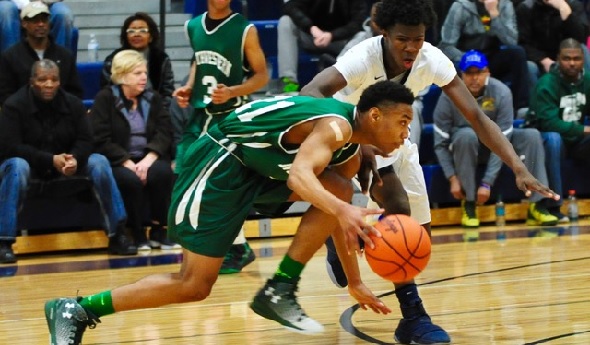
PHOTO: Flint Northwestern got past Goodrich 76-70 in overtime Friday to win their Class B District. (Photo by Terry Lyons.)