

Cass Tech Continuing Rise to Hoops Elite
By
Tom Markowski
Special for Second Half
January 4, 2018
DETROIT – When you think of Detroit Cass Tech, one would probably think of its football program.
 Why not? The program coach Thomas Wilcher has built there has been arguably the best in the state the past dozen years.
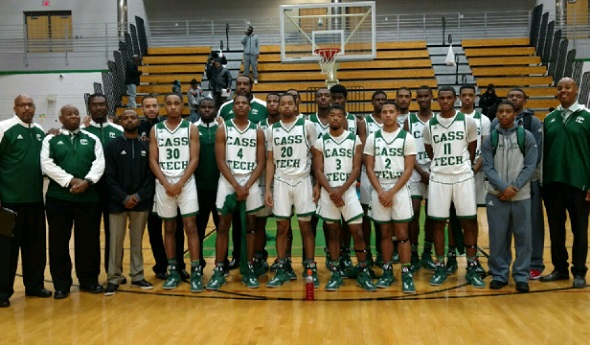
That fact doesn’t bother Steve Hall, the head coach of the Technicians’ boys basketball team. On the contrary, Hall, a 1988 Cass Tech graduate and co-athletic director (along with Wilcher), takes pride in it.
It also serves as motivation.
Hall is in his third season at Cass Tech, and when the next rankings are released his Technicians will be ranked No. 1 in Class A by at least one news service, State Champs Network, and likely others.
Cass Tech is 7-0 overall and 2-0 in the Detroit Public School League. The Technicians are currently on winter break and scheduled to play next against Detroit Henry Ford on Jan. 12.
That a PSL team is ranked No. 1 is common. Teams like Detroit Cooley, Detroit Pershing, Detroit Renaissance, Detroit Southwestern and, most recently, Detroit Western, all have been ranked No. 1 over the past many years.
But for Cass Tech, it is unusual. In fact, it is believed that a top ranking for a Cass Tech boys basketball team would be the program’s first.
Hall is careful not to boast or gloat. After all, it’s early in the season and nobody awards MHSAA championship trophies in January.
“It’s hard to feel great about being No. 1,” Hall said. “The last thing you want to do is exhale.”
The program has achieved success in the past but, truthfully, it’s been awhile. Before Hall took over, Cass Tech most recently had won two PSL titles under coach Robert Shannon, the last coming in 1998. During the late 1980s, when Hall was one of the state’s top players, Cass Tech reached the 1988 Class A Quarterfinals before losing to the eventual champion, Cooley. Cass Tech had defeated Cooley that season in the PSL quarterfinals. The 1993 team that won the PSL title made it all the way to a Class A Semifinals.
During the 1950s Cass Tech was a powerhouse in the city winning three PSL titles over the decade. As one might surmise, Cass Tech has never won a state title. And just once has it reached an MHSAA Final, as the Technicians lost to Birmingham Brother Rice, 60-56 in overtime, in the 1974 Class A championship game.
Since 1998, Cass Tech had reached a PSL final just once (2013). That is, before Hall came aboard.
Last season Cass Tech defeated Detroit Martin Luther King, 59-47, to capture the school’s eighth PSL title. The Technicians won a District title for the first time since 2014 and finished 20-5, a vast improvement from the 11-10 record they posted in Hall’s first season.
As good as last season was for the program, it was just one step forward. Hall has set loftier goals.
His three-year plan included becoming regarded at the state level and nationally. That plan is on schedule.
“There were some dynamics that first year,” Hall said. “I was hired late and I didn’t have the kids during the summer. We beat (Detroit) Western, Benton Harbor and Orchard Lake St. Mary’s that season. It’s a tough league. The stable programs had upperclassmen leading them. It was a year of growth. I wouldn’t have the same appreciation (for the success) if we had won that first year. ”
 Though Hall is in just his third season at Cass Tech, he’s built a strong resume as a coach, within the PSL and at the collegiate level. High school basketball fans will remember the great Detroit Rogers teams in the early 2000s that won three consecutive Class D titles (2003-05) with Hall as head coach. When that school closed in 2005, Hall went to Detroit Northwestern and guided the Colts to the PSL title in 2008, Northwestern’s first league championship in 30 years. That season Northwestern reached a Class A Regional Final before losing to Pershing.
Hall then left Michigan and became an assistant coach at Duquesne University in Pennsylvania. He stayed there four seasons before he was hired by Youngstown State in Ohio as an assistant. Hall remained there for four seasons before returning to Detroit.
This team has talent, but is void of any one superstar. None of the four seniors are Division I recruits. Hall returned six players who started at least one game last season and the top senior is Randy Gilbert, a 6-foot-6 forward who signed with Ferris State.
There are Division I recruits coming up, however, including 6-3 sophomore Tyson Acuff and 6-5 juniors Kalil Whitehead and Tyland Tate.
Gilbert, who alternates between forward and center, is in his fourth season as a starter. He may not have made the varsity so early or with such an immediate impact playing at one of the city’s established basketball powers.
“Even going into my sophomore year people started to say things like I should transfer somewhere else,” Gilbert said. “I didn’t think about that at all. I thought we had potential.
“Coach Hall has been great to us players. He’s opened up a lot of doors. He takes us to a lot of team camps during the summer to different level of schools like Division I, Division II and NAIA so everybody gets a shot and to see where they can play (in college).
“I don’t look at Cass Tech being a football school now. We changed that.”
In the long run, that’s been one of Hall’s goals. Hall is a basketball coach, but he’s also a fan of all sports, in particular those at Cass Tech. He wants to see all of the athletic programs enjoy success, not just his team.
“When you’re a coach, it’s a way of life,” Hall said. “When I went to Cass our girls (basketball team) won the Class A title. I’ve been to Ford Field to watch the football team. I’ve been to their practices. I grew up around the school. My father (Ferd Hall) was an assistant principal here when I was growing up in the mid-70s. Cass Tech has always meant so much to me.”
 Tom Markowski is a columnist and directs website coverage for the State Champs! Sports Network. He previously covered primarily high school sports for the The Detroit News from 1984-2014, focusing on the Detroit area and contributing to statewide coverage of football and basketball. Contact him at [email protected] with story ideas for Oakland, Macomb and Wayne counties.
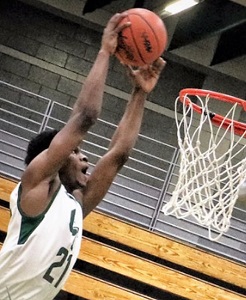
PHOTOS: (Top) The Cass Tech boys basketball team including head coach Steve Hall (far right) stands together at a game this season. (Middle) Randy Gilbert prepares to throw down a dunk. (Photos courtesy of the Cass Tech boys basketball program.
Breslin Bound: Boys Report Week 7
January 22, 2018
By Geoff Kimmerly
Second Half editor
Last week was unkind to many who had enjoyed perfect runs through most of the first half of this boys basketball season.
 We started last Monday with 34 unbeaten teams – and ended with only 22, as five of 10 in Class D and three of seven in Class A were among those to suffer first defeats.
Of course, the best teams rarely make it through an entire season unscathed – and often that’s a good thing. Five of eight teams on this week’s “Watch List” below have lost at least once and a couple have three defeats – but are still making major impressions as we roll along toward March.
Breslin Bound is powered by MI Student Aid and based on results and schedules posted for each school at MHSAA.com. To offer corrections or fill in scores we’re missing, email me at [email protected].
Week in Review
The countdown of last week’s five most intriguing results:
1. Detroit Renaissance 60, Detroit Cass Tech 57 – More on Renaissance’s surge below, but this one announced it as Cass Tech had been in the talk as the best in Class A.
2. Kalamazoo Central 55, Mattawan 47 – The Maroon Giants are quietly off to another strong first half, sitting alone in first in the Southwestern Michigan Athletic Conference East after handing Mattawan its first loss of the season.
3. Maple City Glen Lake 54, Frankfort 45 – The Lakers had quite a week, handing Frankfort its first loss to move into a three-way tie atop the Northwest Conference before defeating Lake Michigan Conference leader Traverse City St. Francis two days later.
4. Rochester 71, Berkley 55 – Rochester moved into first place alone in the Oakland Activities Association Blue while handing Berkley its first loss overall.
5. Buckley 62, Manton 60 – These teams went a combined 47-6 last season in both making it to the Breslin Center; they are a combined 13-6 with high aspirations again this winter.
Watch List
With an eye toward March, here are two teams in each class making sparks:
CLASS A
Detroit Renaissance (8-3) – The Phoenix finished 6-14 only a season ago, but the rise has been sharp and impressive over the last two months. Right after downing Cass Tech last week, Renaissance also defeated Class B contender Detroit Henry Ford – which beat the Phoenix by three Dec. 19. The three loses this season are by a combined nine points; Renaissance fell early by four to Flint Carman-Ainsworth and then by a basket to Ann Arbor Huron in overtime (those two are 15-3 combined).
Okemos (7-3) – Last week’s 60-55 win over East Lansing requires context; Trojans all-stater Brandon Johns was unable to play, reportedly resting a lingering knee injury. Regardless, the victory pushed the Chiefs into a first-place tie with Grand Ledge in the Capital Area Activities Conference Blue after Okemos finished fourth and 12-9 overall last season. The only losses this winter were to the Comets, DeWitt and Troy Athens (24-6 combined) in December; the Chiefs are 4-0 in 2018.
CLASS B
Coloma (9-0) – A 54-49 overtime win over nonleague foe Kalamazoo Hackett on Saturday didn’t enhance Coloma’s standing atop the Southwestern Athletic Conference Lakeshore, but did further the Comets’ standing as a team to watch statewide (Hackett fell to 9-2). Coloma improved from five wins two seasons ago to 13 and second in the Lakeshore last winter, and it has a one-game lead on Fennville heading into their second meeting this season Friday. The Comets won the first 71-64 on Dec. 8.
Fremont (7-2) – After two seasons winning only six games apiece, Fremont improved to 13-8 last winter and has continued to climb. The Packers have won five straight to rise to first place in the Central State Activities Association Gold despite suffering a loss to third-place Reed City during a 2-2 start. They are perfect this month and started the run with a 54-49 win over second-place Big Rapids.
CLASS C
Capac (9-0) – The Chiefs have nearly guaranteed their first winning season since 2010-11, and are set up to play for more. Coming off an 8-13 finish a year ago, Capac finds itself tied for first in the Blue Water Area Conference with Richmond, and they’ll meet for the first time next week. The Chiefs handed former co-leader Almont its first league loss Friday, 41-35, and have won six games by double digits.
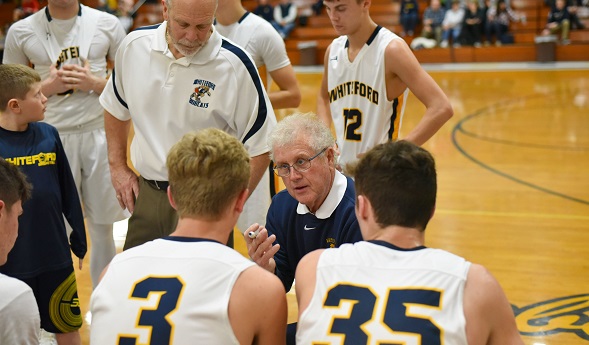
Ottawa Lake Whiteford (7-2) – The Bobcats’ Division 8 championship football success seems to be following into the winter, as they moved into first place alone in the Tri-County Conference with a 63-42 win over Sand Creek on Thursday. Next up is second-place Petersburg-Summerfield, and a victory would be coach John Rice’s 500th. Whiteford’s only losses this winter are to Class A Temperance Bedford and also much larger Toledo Waite.
CLASS D
Ashley (9-1) – The Bears have run off nine straight victories to move into first place in the Mid-State Activities Conference with a matchup against second-place Carson City-Crystal coming up this week. Ashley won nine games total a year ago – and had 19 victories over the last five seasons combined entering this winter. The lone loss was by only three to Portland St. Patrick in its opener.
Bellevue (8-0) – Last season’s 23-2 run – an improvement of five wins from the solid season before – might have been just another step as the Broncos are surging again. The most impressive win may have come Thursday, 45-39 over Camden-Frontier which sent the Redskins to 9-3. The Broncos also beat Class C Carson City-Crystal and Lakeview to win the Central Montcalm Holiday Hoops Tournament, and have a two-win lead in the Southern Central Athletic Association West.
Can't-Miss Contests
Be on the lookout for results of these games coming up:
Tuesday – Grand Rapids Christian (6-2) at East Grand Rapids (9-1) – These two sit together at the top of the Ottawa-Kent Conference Gold after Christian was first and EGR only fifth last season.
Tuesday – Warren DeLaSalle (7-2) at Detroit U-D Jesuit (8-2) – This will be the first of two meetings (at least) between the current co-leaders of the Detroit Catholic League Central.
Tuesday – Grandville Calvin Christian (7-1) at Grand Rapids Covenant Christian (10-2) – Both should be in the Class C statewide mix again after Covenant was runner-up last season and Calvin was runner-up in 2016.
Tuesday – Coloma (9-0) at Kalamazoo Christian (9-0) – The leaders of the SAC Lakeshore and Valley, respectively, have made similar big moves in their divisions with a similar opportunity to gain a little more statewide acclaim.
Thursday – West Bloomfield (5-4) at Clarkston (10-1) – The overall records don’t look close, but West Bloomfield trails the Wolves by just a win in the OAA Red after both made the Class A semifinals last season (and Clarkston won it all).
PHOTO: Ottawa Lake Whiteford coach John Rice provides some pointers for his 7-2 Bobcats. (Photo by Cari Hayes.)