

Class A: Ram Nation Books Return
March 23, 2012
EAST LANSING – The final buzzer sounded before Romulus’ last-gasp 3-point shot reached the rim Friday at the Breslin Center.
As Rockford’s Mark Pearson watched the ball complete its arc, he figured good or not, it wouldn’t take away from the incredible run his unranked Rams made this postseason.
“We’ve worked so hard this year, and to just see that shot go up … all our practices, all our summer stuff we’ve done, and all through the year, it’s all been worth it,” Pearson said. “If it would’ve gone in, we wouldn’t have been satisfied. But by the same token, it (would’ve been) a good year.
“But we’ve got one more now.”
When that final shot caromed off the rim, the Rams celebrated a 62-61 victory and their first championship game berth since winning the Class A title in 2003.
Rockford will face top-ranked Saginaw in the Final at 4 p.m. Saturday. The Eagles, ranked No. 2 at the start of the tournament, finished 22-4.
The Rams (22-5) split the O-K Red title with both Hudsonville and East Kentwood this season, and needed to make some key plays to get to Breslin – especially after trailing Okemos by 10 in Tuesday’s Quarterfinal.
Rockford gave up its most points Friday since opening night – but also scored its second-most this season.
“Maybe people were underestimating them. We were being a little bit too laid back on defense,” Romulus senior Ray Lee said.
And the Rams showed plenty of guts again when it counted in the Semifinal.
After the teams come out of halftime tied, Romulus began breaking away in the third quarter and went up 49-44 with a period to play. The Eagles’ lead stood at six with 5:50 to play. It seemed their time to secure a Finals bid had come.
Not so.
Rockford went on an 11-0 run that included all four of standout junior guard Chad Carlson’s points, plus five of junior Chase Fairfield’s game-high 17. With 1:43 to play, Romulus suddenly found itself down five, 59-54.
“You hope and you wish and you pray, but making those expectations is tough,” Rockford coach Nick Allen said. “We hoped and wished, and maybe prayed a little bit too.”
Seniors Mitch Caywood and Ivy Johnson would provide a few more answers.
Johnson hit two free throws to give the Rams a 61-57 lead with 1:16 to play, but Romulus knotted the score again with 31 seconds left. Johnson, a 6-foot-6 sub, was fouled again with 7.6 seconds to play.
His first free throws went off the back of the rim. He second fell to give Rockford a 62-61 lead. But Romulus still had hope – until Caywood dashed it a bit by stealing the inbounds pass.
Rockford did miss two more free throws after that. But with only 3.4 seconds left, the Eagles couldn’t set up much more than the final 3-point try.
Johnson and Caywood both finished with 11 points, while senior guard Scott Nikodemski had 12. Junioe Elbert Matthews and senior Aveon Simmons led Romulus with 15 apiece, and Lee added 13.
The Eagles have now made at least the Semifinals in four of the last eight seasons – but Friday’s loss was the latest in a frustrating run. Romulus lost by one point in its 2009 Semifinal and by two in overtime in 2008. The Eagles made the Class A Final in 2005, but lost by three.
“It’s hard to do. I can say that, because we were ranked No. 1 in the state the last two years and didn’t make it here,” Romulus coach Nate Oats said. “So I’m happy we got here this year, but it’s not real satisfying anymore to get here. … I’m a little bit tired of getting here and not getting it done.”
Click for box score or to watch the game and press conferences at MHSAA.tv.
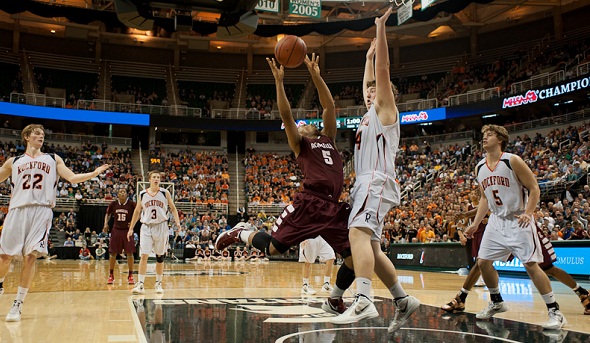
PHOTO: Rockford center Ivy Johnson (44) blocks the path of Romulus senior Aveon Simmons (5) during Friday's Semifinal. (Photo courtesy of Terry McNamara Photography.)
Breslin Bound: Boys Report Week 7
January 22, 2018
By Geoff Kimmerly
Second Half editor
Last week was unkind to many who had enjoyed perfect runs through most of the first half of this boys basketball season.
 We started last Monday with 34 unbeaten teams – and ended with only 22, as five of 10 in Class D and three of seven in Class A were among those to suffer first defeats.
Of course, the best teams rarely make it through an entire season unscathed – and often that’s a good thing. Five of eight teams on this week’s “Watch List” below have lost at least once and a couple have three defeats – but are still making major impressions as we roll along toward March.
Breslin Bound is powered by MI Student Aid and based on results and schedules posted for each school at MHSAA.com. To offer corrections or fill in scores we’re missing, email me at [email protected].
Week in Review
The countdown of last week’s five most intriguing results:
1. Detroit Renaissance 60, Detroit Cass Tech 57 – More on Renaissance’s surge below, but this one announced it as Cass Tech had been in the talk as the best in Class A.
2. Kalamazoo Central 55, Mattawan 47 – The Maroon Giants are quietly off to another strong first half, sitting alone in first in the Southwestern Michigan Athletic Conference East after handing Mattawan its first loss of the season.
3. Maple City Glen Lake 54, Frankfort 45 – The Lakers had quite a week, handing Frankfort its first loss to move into a three-way tie atop the Northwest Conference before defeating Lake Michigan Conference leader Traverse City St. Francis two days later.
4. Rochester 71, Berkley 55 – Rochester moved into first place alone in the Oakland Activities Association Blue while handing Berkley its first loss overall.
5. Buckley 62, Manton 60 – These teams went a combined 47-6 last season in both making it to the Breslin Center; they are a combined 13-6 with high aspirations again this winter.
Watch List
With an eye toward March, here are two teams in each class making sparks:
CLASS A
Detroit Renaissance (8-3) – The Phoenix finished 6-14 only a season ago, but the rise has been sharp and impressive over the last two months. Right after downing Cass Tech last week, Renaissance also defeated Class B contender Detroit Henry Ford – which beat the Phoenix by three Dec. 19. The three loses this season are by a combined nine points; Renaissance fell early by four to Flint Carman-Ainsworth and then by a basket to Ann Arbor Huron in overtime (those two are 15-3 combined).
Okemos (7-3) – Last week’s 60-55 win over East Lansing requires context; Trojans all-stater Brandon Johns was unable to play, reportedly resting a lingering knee injury. Regardless, the victory pushed the Chiefs into a first-place tie with Grand Ledge in the Capital Area Activities Conference Blue after Okemos finished fourth and 12-9 overall last season. The only losses this winter were to the Comets, DeWitt and Troy Athens (24-6 combined) in December; the Chiefs are 4-0 in 2018.
CLASS B
Coloma (9-0) – A 54-49 overtime win over nonleague foe Kalamazoo Hackett on Saturday didn’t enhance Coloma’s standing atop the Southwestern Athletic Conference Lakeshore, but did further the Comets’ standing as a team to watch statewide (Hackett fell to 9-2). Coloma improved from five wins two seasons ago to 13 and second in the Lakeshore last winter, and it has a one-game lead on Fennville heading into their second meeting this season Friday. The Comets won the first 71-64 on Dec. 8.
Fremont (7-2) – After two seasons winning only six games apiece, Fremont improved to 13-8 last winter and has continued to climb. The Packers have won five straight to rise to first place in the Central State Activities Association Gold despite suffering a loss to third-place Reed City during a 2-2 start. They are perfect this month and started the run with a 54-49 win over second-place Big Rapids.
CLASS C
Capac (9-0) – The Chiefs have nearly guaranteed their first winning season since 2010-11, and are set up to play for more. Coming off an 8-13 finish a year ago, Capac finds itself tied for first in the Blue Water Area Conference with Richmond, and they’ll meet for the first time next week. The Chiefs handed former co-leader Almont its first league loss Friday, 41-35, and have won six games by double digits.
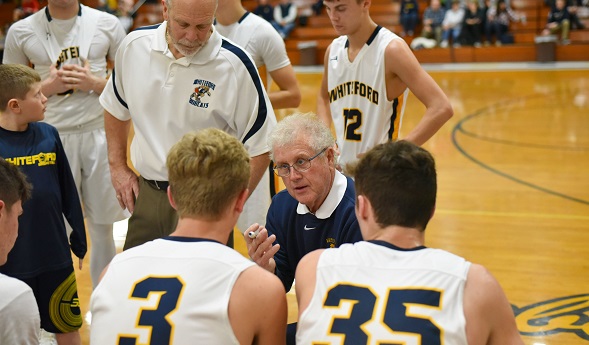
Ottawa Lake Whiteford (7-2) – The Bobcats’ Division 8 championship football success seems to be following into the winter, as they moved into first place alone in the Tri-County Conference with a 63-42 win over Sand Creek on Thursday. Next up is second-place Petersburg-Summerfield, and a victory would be coach John Rice’s 500th. Whiteford’s only losses this winter are to Class A Temperance Bedford and also much larger Toledo Waite.
CLASS D
Ashley (9-1) – The Bears have run off nine straight victories to move into first place in the Mid-State Activities Conference with a matchup against second-place Carson City-Crystal coming up this week. Ashley won nine games total a year ago – and had 19 victories over the last five seasons combined entering this winter. The lone loss was by only three to Portland St. Patrick in its opener.
Bellevue (8-0) – Last season’s 23-2 run – an improvement of five wins from the solid season before – might have been just another step as the Broncos are surging again. The most impressive win may have come Thursday, 45-39 over Camden-Frontier which sent the Redskins to 9-3. The Broncos also beat Class C Carson City-Crystal and Lakeview to win the Central Montcalm Holiday Hoops Tournament, and have a two-win lead in the Southern Central Athletic Association West.
Can't-Miss Contests
Be on the lookout for results of these games coming up:
Tuesday – Grand Rapids Christian (6-2) at East Grand Rapids (9-1) – These two sit together at the top of the Ottawa-Kent Conference Gold after Christian was first and EGR only fifth last season.
Tuesday – Warren DeLaSalle (7-2) at Detroit U-D Jesuit (8-2) – This will be the first of two meetings (at least) between the current co-leaders of the Detroit Catholic League Central.
Tuesday – Grandville Calvin Christian (7-1) at Grand Rapids Covenant Christian (10-2) – Both should be in the Class C statewide mix again after Covenant was runner-up last season and Calvin was runner-up in 2016.
Tuesday – Coloma (9-0) at Kalamazoo Christian (9-0) – The leaders of the SAC Lakeshore and Valley, respectively, have made similar big moves in their divisions with a similar opportunity to gain a little more statewide acclaim.
Thursday – West Bloomfield (5-4) at Clarkston (10-1) – The overall records don’t look close, but West Bloomfield trails the Wolves by just a win in the OAA Red after both made the Class A semifinals last season (and Clarkston won it all).
PHOTO: Ottawa Lake Whiteford coach John Rice provides some pointers for his 7-2 Bobcats. (Photo by Cari Hayes.)