

As Jets Pursue, Chassell Star Recalls Record
January 19, 2017
By Dennis Grall
Special for Second Half
ESCANABA – Dwight D. Eisenhower was president of the United States when Chassell High School established a record that has spanned 10 presidencies.
 Now another Upper Peninsula school, Powers North Central, is poised to surpass that cherished standard, just a week into the term of a new president, Donald Trump.
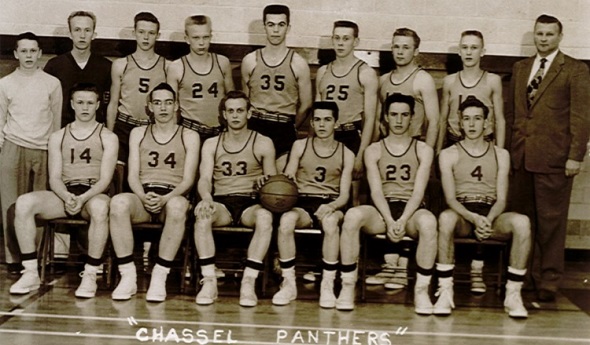
Chassell reeled off 65 straight victories from Feb. 1, 1956, to Nov. 23, 1958. North Central (9-0) has 64 consecutive wins, a streak that began Dec. 8, 2014. The Jets will try to equal the record Tuesday when they host Rock Mid Peninsula, then the record-setter would come Friday when they host neighboring Bark River-Harris (9-1) in a game that will be broadcast live on MHSAA.tv.
Flint Northwestern is the only school to challenge Chassell’s hallowed mark, winning 60 in a row before losing Feb. 10, 1986. Chassell eclipsed the state record of another U.P. school, 59 straight by Mass-Greenland from Dec. 12, 1946, to Jan. 28, 1949.
Chassell was the first U.P. school to bring an MHSAA championship trophy across the Mackinac Bridge, in 1958, shortly after it opened to traffic.
North Central is located in northern Menominee County, just six miles north of Carney-Nadeau High School, which owns the state girls basketball consecutive win record of 78 games (1989-91).
North Central coach Adam Mercier said the Jets first looked at the Chassell record after winning a second straight Class D title March 26, 2016. “We wondered if we would be able to do it,” Mercier said a day before making Big Bay de Noc victim No. 64. “It is rewarding to be named coach of such an historic team. I feel privileged to have coached these kids.”
The basketball team’s success has been shared by the school’s football team, which has won two consecutive 8-player MHSAA championships with 27 straight victories overall. With several students on both teams, that means those boys have won 91 straight games during the fall and winter seasons.
Mercier said the Jets have not spent a lot of time talking about Chassell’s record. “The last week or two we’ve talked about the distraction part of it,” he said, indicating people have been talking about it and the coaches wanted the players to respond appropriately.
Former Jets’ skipper Bob Whitens, who coached the team to the 1984 Class D title, spoke to the players recently. Mercier said his message was when you go to practice an athlete does one of two things: Get better or get worse. “He asked the players to think about that on a daily basis,” Mercier said of emphasizing daily improvement.
“It is something historic. You don’t want to diminish its historic value by not talking about it,” said Mercier, adding “we have always been week-to-week about our goals.”
Their first goal is winning a third straight Class D championship, but the postseason does not begin until March 6. So the immediate focus can now turn to Chassell’s record. “We are trying mentally and physically to prepare for that moment. This week was the first time we tried to prepare for that night. We are ramping it up as District week, treating the next three games as the next three games in the District.”
North Central has not really been challenged this season, with a 70-59 victory at Class B Menominee the closest game. Menominee also provided the biggest challenge last season, falling 64-60 at home when Jason Whitens snapped a 60-60 tie with a layup and free throw with seven seconds left for the Jets’ 40th straight win.
Chassell also had a few escapes during its record run, none bigger than in the 1956 Class D championship game when the Panthers trailed by 15 points with 3:20 left. With a stifling full-court press, Chassell scored the final 18 points to beat Portland St. Patrick 71-68. (U.P. schools Stephenson and Crystal Falls also won MHSAA titles that day).
 “They didn’t get the ball past half-court,” recalled Don Mattson of Ishpeming, one of three surviving members of that first title team. “Jenison Field House was going nuts.”
Mattson said coach Ed Helakoski picked up the diamond press from coach John Gaffney of Houghton, who used it to help the Gremlins win the 1955 Class C title. “We played a man-to-man zone. They call it a match-up zone now,” said Mattson. “We practiced it every day. Everyone knew their assignments.”
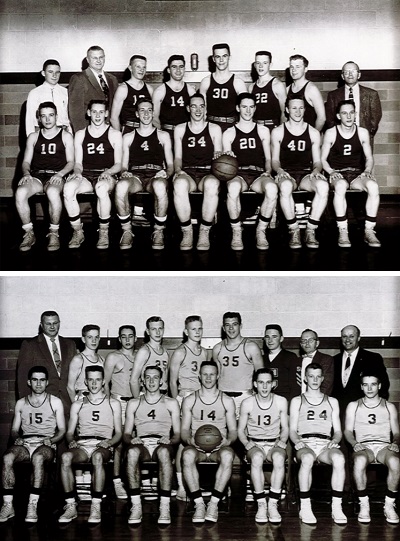
The Panthers repeated as champs in 1957 and managed to extend their win streak by edging L’Anse 64-63 and erasing an 18-2 deficit to upend Negaunee St. Paul.
“The 1957 team was our best team,” said Mattson, the only player to start all 65 games during the streak. “We had size and experience. We were good.”
In 1958, the escape act came against Doelle High School, in a game moved from Tapiola to Houghton High School to accommodate the large crowd. “Doelle was our big rival,” Mattson said. “We were two points down when the horn went off. Bobby Belhumer, the fastest kid in school, was fouled (at mid-court) when a Doelle player reached in as the horn goes off. He never made two free throws in his life and he had a 1-and-1.
“We all thought we were done. The first shot was real flat, herky-jerky (shooting) motion. It hit the front of the rim, skidded across and hit the back of the rim, bounced up and hit the top of the backboard and fell right through the hole. The basketball gods were smiling on us. The second one he just nailed, we got to overtime (60-60) and we won 72-66.”
Mattson said the 1958 champions “were not as good as 1957 but we knew how to win. Ed just kept coaching us.”
Chassell beat Stevensville 58-50 in 1957 Final and Owosso St. Paul 66-61 in the 1958 title game. Chassell’s winning streak ended in the 1958-59 season opener with a one-point loss to Ewen.
“Fifty-nine years ago. Guys always throw that at me,” Mattson said. “It doesn’t bother me one bit. We must have done something good. It was a number. That is all it was. That is pretty much the way I’ve looked at it for 59 years.”
Unlike the NFL’s Miami Dolphins, who share a toast once the season’s last unbeaten team loses, Mattson is cheering for the Jets.
“I just hope the Jets can break the record. I’m glad to see a U.P. team go break it,” he said. “Let’s keep it on this side of the (Mackinac) bridge. It is just a matter of the right time, the right place, the conditions and the players. Records are just a number.”
The only other survivors from those teams are Belhumer, who lives near Milwaukee, and Paul Makela, who lives in California. The trio joined the U.S. Navy together, after Mattson spent a year playing at Northern Michigan University.
The players were not aware they set a state record, with Mattson recalling that Helakoski told them not to read the paper or believe what was written and that he would save the papers and distribute them after the season.
 They followed the same approach used by the Jets, playing one game at a time, going day-by-day. “I give Helakoski credit for keeping us on a low keel,” said Mattson. “We never thought we were better than anybody. We just kept level-headed. We didn’t realize what we did until we were out of school.”
Mattson, whose son Troy is the women’s basketball coach at NMU, said the game has changed drastically since he was a two-time all-state selection.
“We had small gyms; there was no roll-dribble. The hand was on top of the ball or else it was (called) a carry. Our game was passing, put the ball on the floor a couple of times, go up and shoot or pass the ball,” he said.
He has seen the Jets play but doesn’t plan to attend the potential record-breaker. “I’ll see them in the Regional (at Negaunee),” he said. “Another thought crossed my mind. North Central is going to win another state championship. I’m confident of that. If they do, they will have about 80 wins in a row.”
The Jets have tried to keep the record chase low key, but Mercier said that approach is changing as the record bid approaches.
“Our players, now they see it is there within reach. They really want it,” he said, noting they appreciate the importance of U.P. basketball. “We don’t want to downplay it by any means. As we get closer they are expecting to reach that goal, and they know the hard work it has taken to reach it.”
He doesn’t believe the players are feeling the pressure of maintaining or extending the streak. “The players are doing a great job of deflecting the pressure, and that allows us to be a little looser with our approach,” Mercier added. “They don’t seem frazzled by the pressure because they have prepared for the moment.”
 Denny Grall retired in 2012 after 39 years at the Escanaba Daily Press and four at the Green Bay Press-Gazette, plus 15 months for WLST radio in Escanaba; he served as the Daily Press sports editor from 1970-80 and again from 1984-2012. Grall was inducted into the Upper Peninsula Sports Hall of Fame in 2002 and serves as its executive secretary. E-mail him at [email protected] with story ideas for the Upper Peninsula.
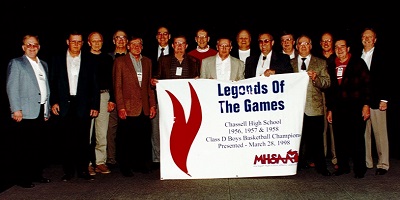
PHOTOS: (Top) Chassell's 1955-56 team started its record 65-game winning streak. (Middle) The 1956-57 (top) and 1957-58 teams also won MHSAA championships. (Below) Former players met for an MHSAA "Legends" celebration during the 1998 Boys Basketball Finals.
'Retro' Award Rewards 1st Hoops Legends
January 4, 2017
By Ron Pesch
Special for Second Half
Before the start of the MHSAA’s 2009 Boys Basketball finals, Basketball Coaches Association of Michigan director Tom Hursey stopped by my seat at Michigan State University’s Breslin Center to say hello.
Our chat would alter a decade of my Michigan winters.
Somewhere between hello and goodbye, our chat included conversation on one of my favorite BCAM ventures. In 1981, the Michigan High School Basketball Coaches Association, as BCAM was once known, named its first “Mr. Basketball.” I was two years out of high school when Lansing Eastern’s Sam Vincent edged Eric Turner of Flint Central for that first award. Designed to honor the state’s top senior, the award was named in honor of Detroit Free Press writer Hal Schram. “The Swami,” as he was nicknamed, Schram began covering high school sports for the newspaper in 1945.
The 2009 selection was 6-foot-9 Derrick Nix of Detroit Pershing. I mentioned my affinity for the Mr. Basketball program to Tom, but stated that I always thought it a crime that the award didn’t start years earlier, at least when Michigan hoop fans became infatuated with a kid nicknamed “Magic.”
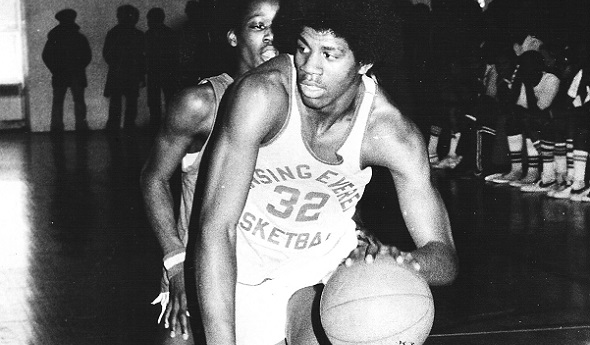
Earvin Johnson prepped at Lansing Everett and was the talk of the state in basketball circles before becoming a household name during his time at Michigan State and with the Los Angeles Lakers. Earlier this year, ESPN named Johnson the greatest point guard to ever play the game. Tom noted that “Magic” was really the inspiration for the “Mr. Basketball” award.
Then I posed a question to Tom.
What about creating a “new” award, designed to honor those greats from the past?
As my hobby of researching the history of high school sports in Michigan and beyond had grown over the years, I’d found the Great Lakes state had always produced shining stars on the basketball court. The crime was that the “Mr. Basketball” award hadn’t been launched many years before.
Harry Kipke, was perhaps the state’s first true basketball star. He won 12 varsity letters at Lansing Central and guided the basketball team to the semifinal round of the state tournament in 1920 as a senior, before heading to the University of Michigan where he earned letters in football, basketball and baseball. After stops at the University of Missouri and Michigan State, Kipke would serve as Michigan’s football coach, guiding the Wolverines to two national gridiron championships.
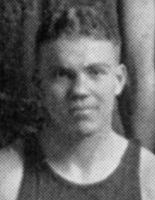 As a junior, the basketball antics of Grand Rapids Union’s Royal “Red” Cherry captured the state’s attention when he led Union to the state basketball championship. Considered the best all-around player of the tournament, Cherry led the team to a second consecutive title as a senior. He, too, attended Michigan, earning laurels on the basketball court and the baseball diamond.
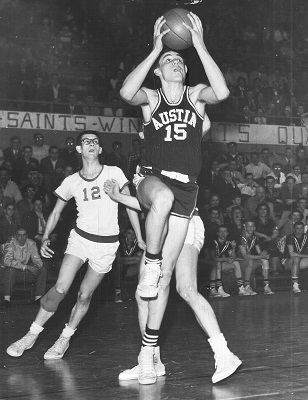
Many other legends of the hardcourt populated Michigan’s past: Saginaw’s Ernie Thompson; the Burton brothers, M.C. and Ed, of Muskegon Heights; Detroit Pershing’s Ralph Simpson and Spencer Haywood; Dave DeBusschere of Detroit Austin Catholic; Willie Betts and Blanche Martin of River Rouge; Ron Kramer of East Detroit; Benton Harbor’s Chet Walker and L.C. Bowen.
After a few weeks of research, discussion and thought, Tom agreed, and over the next several months the framework for the “Retro Mr. Basketball” project was developed
The idea was to try and mimic the current model. Only seniors, and their high school basketball careers, should be considered. While any “senior” player would be eligible, a ballot of the state’s elite would comprise the candidates for the award. Like their modern-day equivalents, where the events of life that would follow high school graduation had yet to occur, post-high school life would be disregarded as much as possible for “Retro” candidates.
Finally, the program would follow a 10-year arc, kicking off in the spring of 2010. This December marks my eighth year of research tied to the mission. Two more will follow.
Since the Schram “Mr. Basketball” award began in 1981, the “Retro” award would honor basketball players from the years 1920 through 1980. That first year, a ballot comprised of players from the years that ended in zero - 1920, 1930, 1940, 1950, 1960, 1970 and 1980 – was created. A senior for each year would be named the winner of the “Retro” award. That meant with the selection of “Mr. Basketball” and the six “Retro” winners for the years 1929, 1939, 1949, 1959, 1969 and 1979, scheduled for the spring of 2019, BCAM would be able to point to a combined list of Mr. Basketballs totaling 100 of the state’s finest.
To identify each year’s award winner, a committee of veteran BCAM members was formed to study a ballot of candidates and select a winner.
Technology, combined with scanning old-fashioned reels of microfilm, has helped with research of potential candidates. In those very early years, personal statistics were rarely kept. Rather, an assessment of a player’s skills, tied to the position he played, often served as a means to identify an area’s top athletes. Tournament play was often the only time an athlete’s abilities were on display to a larger audience. Scouring newspaper articles for all-tournament teams and yearbooks for additional details and years of study helped uncover the state’s top senior players. Understanding the game and its evolution was important. The center jump after each basket emphasized the importance of a tall, skilled center in those games played before the winter of 1938-39.
Beginning in 1935, all-state teams began to appear in state newspapers. Eventually, the Detroit Free Press, the Detroit Times, the Detroit News, The Associated Press and even United Press International became involved in identifying the state’s top basketball players and naming all-state squads. Much work is involved in parsing the 15,811 names (not including honorable mentions) found in those lists. When duplicates are removed, the names of 8,430 prep players remain spread over the 61 years that mark the “Retro” field of possible candidates.
Research to identify seniors, players named by multiple media outlets, and mini biographies are compiled for the top players. The field of candidates is then narrowed to 10 or fewer. Over state championship weekend, the ballots are brought to the BCAM committee for discussion, and finalists are named for each year. Finally, one player is named for each eligible season.
Like the modern day award, the selection may create some controversy. Some amazing ballplayers have landed on the finalist list, but were denied the Hal Schram Mr. Basketball award: Traverse City’s Dan Majerle, Roy Marble of Flint Beecher, Detroit Southwestern’s Jalen Rose, Detroit Northern’s Derrick Coleman and Draymond Green of Saginaw are among a few.
 The same applies to the “Retro” list. Fennville’s Richie Jordan, Robert “Bubbles” Hawkins from Detroit Pershing, Dennis Bankey of Detroit St. Thomas, Bill Chmielewski of Detroit Redeemer, Highland Park’s Terry Duerod and Detroit Kettering’s Lindsay Hairston all have been honored on the finalist lists, but fell short of the top prize.
In many cases, Michigan was loaded with prep talent – it’s tough to name Roy Marble Mr. Basketball when Flint Northwestern’s Glen Rice was on the same ballot, or Rose the state’s best when Country Day’s Chris Webber was another candidate. While the “Fennville Flash” amazed the state with his eye-popping statistics in 1965, Bowen led Benton Harbor to back-to-back Class A titles. Named an all-state basketball player as a junior, Hairston grew an inch and improved his game as a senior, but Pontiac Central’s “Campy” Russell dominated headlines that season, and was the “Retro” Mr. Basketball selection for 1971.
In some cases, it’s a challenge to look at the final balloting results without judging selections based on future basketball success. That certainly is the case with 2008. That season, Michigan’s Mr. Basketball award went to 6-foot guard Brad Redford, who posted incredible back-to-back high school seasons at Frankenmuth. Runner-up to the award that year was Saginaw’s Green. Considering Green’s success in the NBA, that’s hard for many to believe.
While the debates may never be settled, the beauty of Schram and “Retro” Mr. Basketball balloting can be found in the argument. With those disputes, people recall, research and learn about Michigan’s incredible prep basketball past.
The remaining three years of the “Retro” project will include many more legends of Michigan High School basketball, including, among others, DeBusschere, Walker, Haywood and Simpson.
This season, that “Magic” kid will be one of the names among the mix. Forty years after high school graduation, will he earn the honor that eluded him in high school, only because the honor didn’t yet exist?
 Ron Pesch has taken an active role in researching the history of MHSAA events since 1985 and began writing for MHSAA Finals programs in 1986, adding additional features and "flashbacks" in 1992. He inherited the title of MHSAA historian from the late Dick Kishpaugh following the 1993-94 school year, and resides in Muskegon. Contact him at [email protected] with ideas for historical articles.
PHOTOS: (Top) Lansing Everett’s Earvin Johnson drives around a defender during his celebrated high school career. (Middle) Grand Rapids Union’s Royal “Red” Cherry. (Below) Detroit Austin Catholic’s Dave DeBusschere drives to the hoop as an opponent gets in position to rebound. (Photos from MHSAA and Ron Pesch historical files.)