

Longtime Coach Researches Photos to Tell Story of Grand Rapids Sports' Past
By
Steve Vedder
Special for MHSAA.com
September 16, 2022
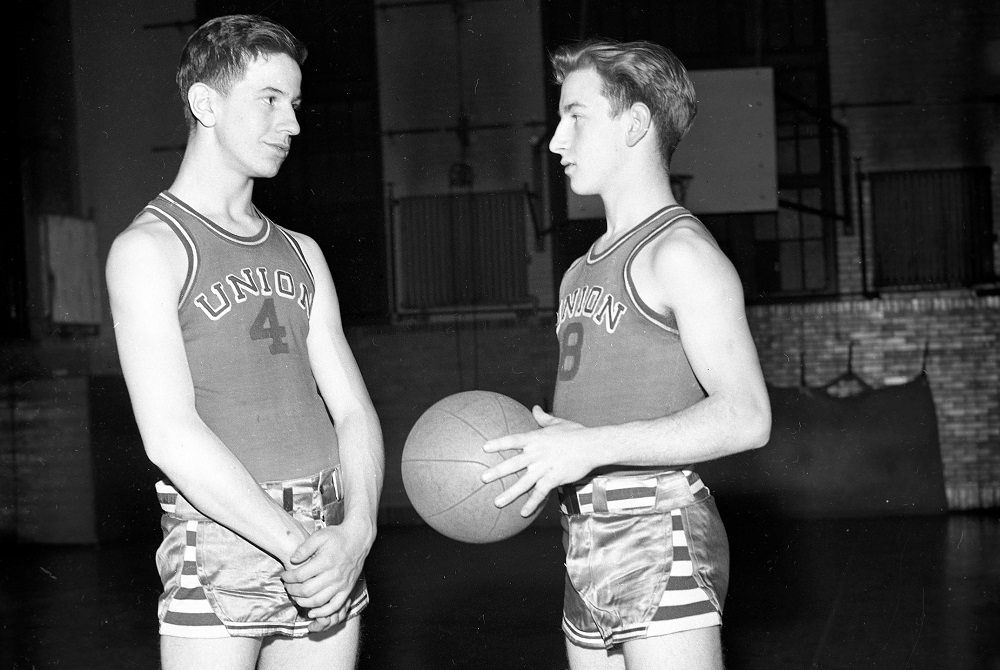
GRAND RAPIDS – Bob Schichtel always pauses when he comes across the ancient black and white photo long enough to ponder whatever became of the two youngsters adorned in Grand Rapids Union basketball uniforms.
The posed shot shows two players facing each other in a local gymnasium in a photo apparently taken four days after the Japanese surprise attack on Pearl Harbor in 1941 that launched the country into World War II. Only a handful of fans today would recognize the players' striped, ultra-short shots and simple sleeveless shirts with "Union" emblazed across the front as recognizable basketball uniforms. One holds a battered-looking basketball, while the other looks on. The two players, whose uniform numbers are "4" and "9," aren't really smiling, but still seem as close as any teammates, whether 81 years ago or today.
In fact, it's the look the youngsters share that intrigues Schichtel, whose thankless, pro bono job it is to identify the two players.
"Once you start," said Schichtel, a former longtime Grand Rapids basketball coach, "it's like looking down a deep rabbit hole."
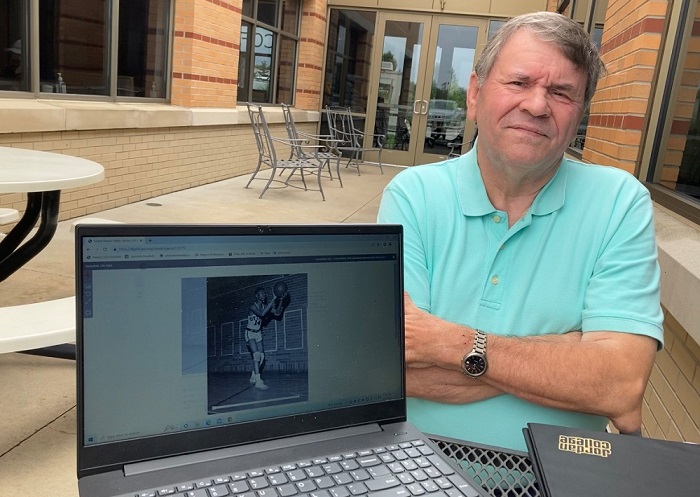 Schichtel works as a volunteer for the Grand Rapids Public Library trying to identify mostly former Grand Rapids City League basketball players from approximately 1938 through the early fifties. The online photos are mostly from the Robinson Photo Studio Collection taken in conjunction with the Grand Rapids Herald newspaper. The library says the unique collection spans some 950 basketball negatives from the entire Robinson/Herald collection that totals well over 900,000 Grand Rapids photos.
While the work – which amounts to a ton of patience combined with a detective ability – can be exhausting, it's still what Schichtel describes as a labor of love. For example, there's the shot of the two still-unidentified Union players. Schichtel looks at the photo and can't help but wonder whatever happened to the kids. Were they exceptional athletes? Did they leave their marks on Grand Rapids history, whether it was in education, politics, business, industry, the arts or another field? He doesn't even know, as in many photos from this era, whether the two entered the military and thus even survived World War II.
Schichtel has searched everywhere for the answers, but has come up short. Too many times, in fact.
Which isn't to say he'll quit looking or chalk up his research as inconsequential. Schichtel said the foremost reason he spends hours on the project is that many of the athletes he identifies deserve the recognition for achievements far beyond basketball. In many cases former City League basketball, football, baseball, track and tennis athletes became the foundation on which Grand Rapids was built. If Schichtel can uncover an old photo which depicts these youngsters during their high school careers, so much the better, he said.
"It's important to recognize Grand Rapids sports history, and I don't know if we've given enough attention to their past," Schichtel said. "They are what got us here, and I'm a firm believer they need to be recognized for it."
Figuring out that history, however, ranges from, at the least, extremely time consuming to – in too many frustrating cases – virtually impossible. The City League was formed in the late 1920s and featured original schools Grand Rapids Central, Creston, South, Union, Ottawa Hills, Catholic Central and Davis Tech. The league was eventually folded into the Ottawa-Kent Conference in 2008.
"It was a long, evolving league," Schichtel said.
 The identification tools available to Schichtel are actually more numerous than most would suspect. For starters, he's formed an impressive database of information by pouring through old City League yearbooks and programs, photos from other collections and microfilm of old newspapers, And then there's also the knowledge gathered by Schichtel himself, a 1968 Grand Rapids Catholic Central graduate. After playing in many old City League gymnasiums, Schichtel went on to compile a 389-197 record in 27 years as the Cougars girls basketball coach. He uses countless City League contacts as both a player and coach to identify athletes. In all, Schichtel taught in the Grand Rapids school system for 34 years.
He also uses the game itself to identify the photos. For instance, he can pinpoint some photos simply by the styles of the uniforms worn by players. He also figures out who is who by other clues such as what the players are doing in the photo. If a player is taking a set shot in the photo, it's likely pre-World War II. The beginnings of the jump shot, or what Schichtel calls "elevation while shooting," is probably mid-1940s. In addition, Schichtel can identify photos through pure basketball athleticism. Players can look a bit awkward in shots from the thirties as compared to players from the late 1940s who were beginning to play with a more obvious flare.
Put all the information together and Schichtel, who has uncovered more than two dozen personal connections to subjects in the photos, believes he has a reasonable shot at identifying them.
Since he signed on with the project, Schichtel figures he's identified about 10 percent of the photos he's viewed. Among the City League athletes he's found shots of Central's John Lavan, who was born in 1890 and played Major League Baseball during the Babe Ruth era and became a military hero who is buried in Arlington National Cemetery; Creston basketball player Roger Wilkins, an assistant United States attorney general during the Watergate hearings; Art Spoelstra of Godwin, a former NBA player and member of the Grand Rapids Hall of Fame; and Grand Rapids native Bill Cutler, who turned a chance post-World War II meeting with then-American League president Will Harridge into a position as commissioner of the Pacific Coast League,
Schichtel said gaining information through photos on the people who became the bedrock of Grand Rapids should be celebrated.
"I think it's a great approach for the community; they shouldn't be forgotten," Schichtel said. "Who else is going to do this? Why do I do it? I see a certain, for lack of a better word, a nobility. These kids played for the love of game, and they became the “Greatest Generation.” These kids did great things. It's not just, 'Well, there's No. 58,’ in a photo.
"You want to know more about them. That's the real intrigue for me."
 Tim Gloege of the Grand Rapids Public Library said the collection of photos – and their identification – is continually growing. As more people log onto the library's website, more people want to either add to the collection or have information that leads to an identification. The library estimates about 1,200 photos are searched monthly. But as time grows, many of the original photos are disintegrating. The library is in a constant state of preservation, Gloege said.
"It's a massive project, and we're working to get as many photos online as possible," he said. "The numbers (of photos) we have are rising pretty significantly as people post them on social media.
"When you think of the past and now, you need to realize these are people, kids who used to play basketball and did other things. The work is hard and very time-intensive, but it brings a whole new dimension to history."
Schichtel said he's "kind of picked the low-hanging fruit" on many of the easy photos to identify. But the work will continue.
"Yes, it can be frustrating," he said. "There are limitations if you want it to be accurate. Sometimes you look at a photo and you know it's not going to happen, and you move on. But this a chance to learn about people who made Grand Rapids what it is. That's important to me."
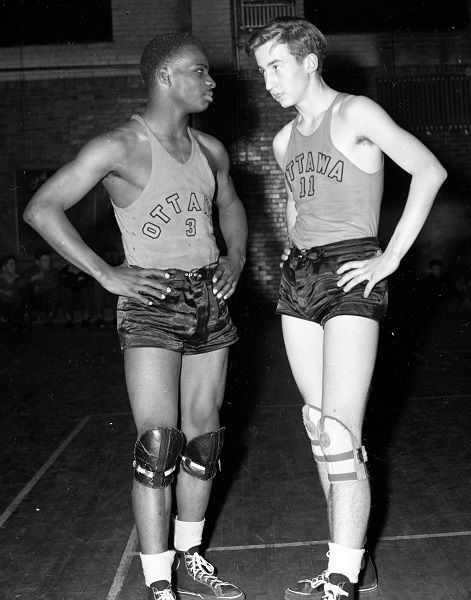
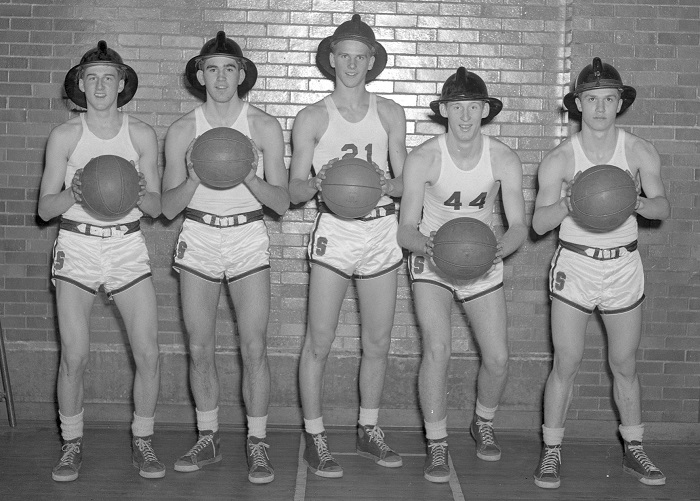
PHOTOS (Top) Two Grand Rapids Union basketball players stand for a photo taken Dec. 12, 1941. (2) Longtime area coach Bob Schichtel researches hundreds of photos that are part of the Grand Rapids Public Library archive. (3) Schichtel has identified these 1941 Grand Rapids Ottawa Hills basketball players as James Horn (left) and Chuch Reynier. (4) Schichtel identified Grand Rapids South High’s “Fireman Five” of, from left, Fred Esslair, Lee Morrow, Jack Carroll, Bob Youngberg and Bruce Bigford. (Historic photos courtesy of the Grand Rapids Public Library.)
Breslin Bound: 2025-26 Boys Report Week 10
By
Geoff Kimmerly
MHSAA.com senior editor
February 9, 2026
We’ve nearly reached the end of this boys basketball regular season, and District seedings and brackets will be released Sunday on this website.

But it’s never too late to make a move heading into the playoffs.
See two-time reigning Division 2 champion Warren Lincoln. The Abes are 5-15 but broke a 13-game losing streak Saturday with a 65-64 overtime win over Benton Harbor – one of the top teams in Division 2 this winter at 17-2.
Lincoln finds itself lined up as the second seed in its District if brackets were finalized today. Others have been racing up their respective Michigan Power Ratings (MPR) lists as well, and we’re tracking them all as a season’s worth of work goes into how teams are placed when playoffs begin.
“Breslin Bound” is powered by MI Student Aid and based on results and schedules posted for each school at MHSAA.com.
Week in Review
The countdown of last week’s five most intriguing results:
1. Grand Rapids Northview 63, East Lansing 46 Northview (13-4) put an end to reigning Division 1 champion East Lansing’s 40-game winning streak during the final game of the 2K26 Showcase.
2. Freeland 65, Hudsonville Unity Christian 60 A week that started with a loss to Alma for the Falcons (16-3) ended with a win over the Crusaders (14-3) in a matchup of the top two teams statewide in Division 2 MPR.
3. McBain 44, Beal City 40 The Aggies (15-1) entered undefeated and atop the Highland Conference thanks to a December win over McBain, but the Ramblers (15-1) are lined up now to at least share the league title.
4. Rockford 57, East Kentwood 55 For a few days, the Ottawa-Kent Conference Red had co-leaders as the Rams (14-3) avenged a one-point loss to the Falcons (15-2) from last month – but East Kentwood stands alone again after Hudsonville downed Rockford 62-55 on Friday.
5. Grand Rapids South Christian 50, Grand Rapids Northview 47 (OT) Although Northview’s week ended with a statewide rim-rocker, South Christian (15-2) started it by avenging a January overtime loss to the Wildcats to create a first-place tie in the O-K Gold.
Watch List
With an eye toward March, here are two teams in each division making sparks:
DIVISION 1
Ann Arbor Huron (17-2) A win over Dexter on Tuesday would set up a first-place showdown Thursday in the Southeastern Conference Red between Huron and Ann Arbor Pioneer, which won their first matchup 60-52 on Jan. 16. Huron’s only other loss this season came to SEC White contender Chelsea, by two points, and the River Rats closed last week with a 66-51 win over the leader of that division, Ypsilanti Lincoln – one of eight Huron victories over teams with at least 12 this winter. Huron has reached at least the Quarterfinals the last three seasons.
Kalamazoo Central (14-2) The Maroon Giants load up a tough schedule every season and are in the conversation among Division 1 teams to watch most winters. They made a loud statement with a 95-80 win over Muskegon on Jan. 31, and a 40-28 victory over Warren Fitzgerald at the 2K26 Showcase also complements well Kalamazoo Central’s lead in the Southwestern Michigan Athletic Conference. The Maroon Giants can clinch a share of the league title Tuesday at Mattawan, which would give them four straight. The lone losses this season were to Division 1 contenders Detroit Martin Luther King and Bloomfield Hills Brother Rice.
DIVISION 2
Kingsford (12-4) The Flivvers – Division 2 semifinalists a year ago – moved up seven spots to No. 7 in statewide Division 2 MPR this week thanks in part to a 51-49 win over Gladstone that has Kingsford a half-game back of the lead in the Great Northern Conference standings but controlling its destiny with home games against league leader Menominee and second-place Marquette next week. The Flivvers are the only team in the league to defeat Menominee, a statewide contender in Division 3, and they’ve put together seven straight wins after a midseason three-game losing streak that included a two-point defeat against Gladstone.
Michigan Center (17-1) The Cardinals have clinched the Cascades Conference East title after finishing second to Grass Lake a year ago, and they face Brooklyn Columbia Central on Saturday at Spring Arbor for the overall league championship. Michigan Center also is making for an intriguing team in the Division 2 race in its second year after previously playing in Division 3. The Cardinals’ only loss this season came to Marshall on Dec. 13, and they lead for the top seed in a District that includes Adrian and Columbia Central among six teams total and five with winning records.
DIVISION 3
New Haven (15-2) A 58-47 win over Warren Woods-Tower avenged a 41-39 loss from Jan. 20 and made those two tied atop the Macomb Area Conference Gold with one league game left for both. New Haven’s only other defeat this winter came against Adrian, a solid Division 2 opponent, and the Rockets already have their most wins in a season since 2022-23. Only three other opponents have come within single digits of catching New Haven, and tonight could see another test against MAC Silver co-leader Center Line; the Rockets defeated the other leader in that division, Eastpointe, by 10 in early December.
Ottawa Lake Whiteford (15-3) A 69-61 win over Adrian Lenawee Christian last week avenged a 61-60 loss from Jan. 9 and put Whiteford in position to at least share a first Tri-County Conference title since 2017-18. The Bobcats may need to win both of this week’s games against Britton Deerfield and Erie Mason, and total they have four games left before Districts begin – and need just one more win to tie last year’s victory total. Also among highlights this winter is a 55-48 overtime win over Huron League contender Monroe Jefferson that gave Whiteford its home New Year’s Tournament title.
DIVISION 4
Genesee Christian (14-3) The Soldiers have made a nice jump after going 10-15 last season but reaching the Regional Finals. They began this winter 0-2 but have lost only once more over the last two months, and all three defeats were to Division 1 or 2 teams. A 23-point win last week over International Academy of Flint (16-2) was among their best, and add victories over Dryden (10-7) Lenawee Christian (11-7), Maple City Glen Lake (12-3), Saginaw Michigan Lutheran Seminary (14-3) and Southfield Christian (13-5) to an impressive list.
Harbor Springs Harbor Light Christian (13-3) Harbor Light won 20 games two seasons and 19 last winter, and might be ready to make another jump after advancing to the Regional Finals last year as well. Two losses this time have come against Pickford and Traverse City Christian – both 17-0 – and the third came to Burt Lake Northern Michigan Christian (12-3), which Harbor Light should see again in a Northern Lakes Conference crossover. The Swordsmen have five wins over teams with at least 12, and a couple more big opportunities coming up starting with a rematch Thursday against Traverse City Christian.
Can’t-Miss Contests
Be on the lookout for results of these games coming up:
Tuesday – South Haven (13-1) at Gobles (14-0) – These are the leaders of the Southwestern Athletic Conference Lakeshore and Central, respectively.
Wednesday – Romulus Summit Academy North (19-1) vs. Arts & Technology Academy of Pontiac (12-2) at Ecorse – Although the Charter School Conference Tournament concludes Friday, this semifinal matchup pits last season’s Division 2 and 3 runners-up, respectively.
Friday – Auburn Hills Avondale (18-1) at Clarkston (15-3) – If Avondale also defeats Farmington on Tuesday, the Yellowjackets could be playing to clinch the Oakland Activities Association Red title – or Clarkston could be playing to tie or take over first place.
Saturday – Catholic High School League Central Final at Oakland – Bloomfield Hills Brother Rice (15-4), Detroit Catholic Central (13-5), Orchard Lake St. Mary’s (8-8) and Toledo St. John’s Jesuit remain in the mix with semifinals Wednesday.
Saturday – Grand Blanc (14-2) at Muskegon (14-1) – The Bobcats already have clinched the Saginaw Valley League South title, and Muskegon leads the O-K Green.
Sunday – Detroit Public School League Final at Wayne State – The final two contenders will face off for the city championship, with quarterfinals set for Tuesday and semifinals Friday.
MHSAA.com's weekly “Breslin Bound” reports are powered by MI Student Aid, a division within the Department of Lifelong Education, Advancement, and Potential (MiLEAP). MI Student Aid encourages students to pursue postsecondary education by providing access to student financial resources and information. MI Student Aid administers the state’s scholarship and grant programs that help make college Accessible, Affordable and Attainable for you. Click to connect with MI Student Aid and find more information on Facebook and X @mistudentaid.
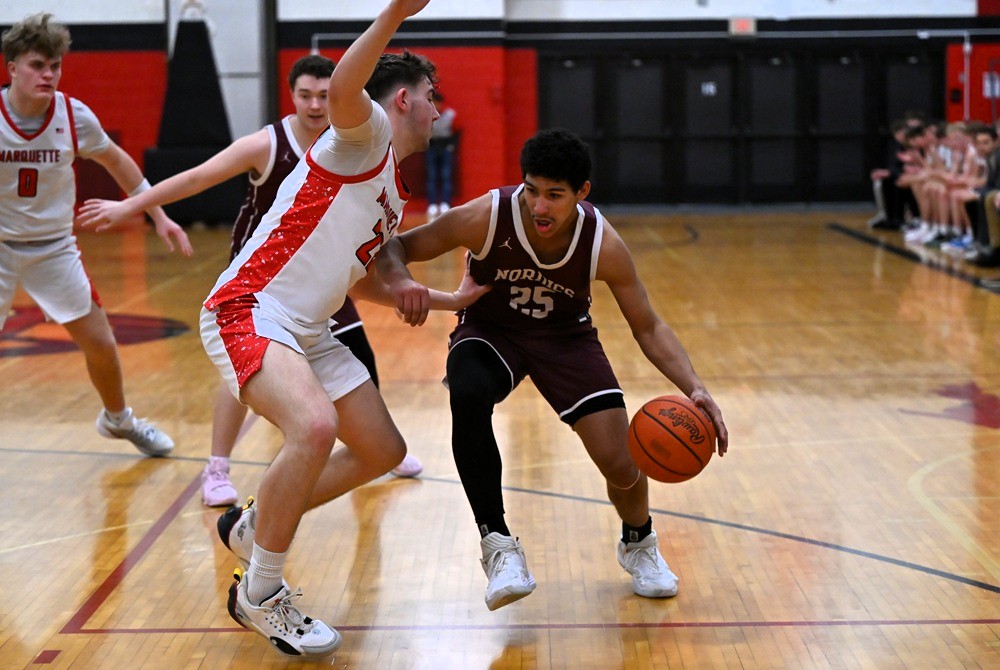
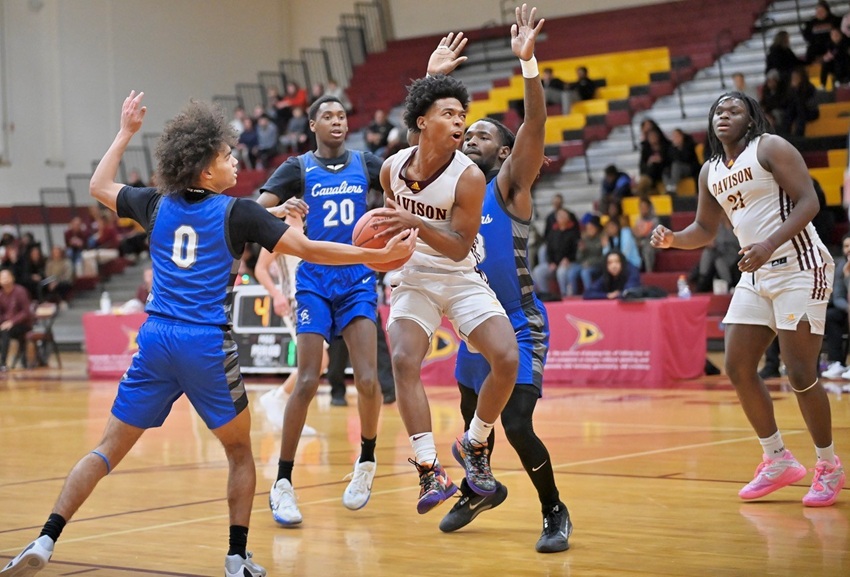
PHOTOS (Top) Felch North Dickson's Ty King is guarded closely by Marquette's Connor Fierstine during the Sentinels’ 68-34 victory Friday. (Middle) Flint Carman-Ainsworth defenders converge on a Davison player driving the lane during the Cavaliers’ 60-49 win Dec. 19. (North Dickinson/Marquette photo by Cara Kamps. Carman-Ainsworth/Davison photo by Terry Lyons.)