


MHSA(Q&)A: Historian Ron Pesch
April 16, 2012
 When we receive a question on the history of MHSAA athletics that we can't answer on the spot, Muskegon's Ron Pesch is the first person we seek out for help.
Pesch took the reins as Michigan's chief high school sports historian during the mid 1990s after the retirement of legendary MHSAA record book originator Dick Kishpaugh and has contributed to various efforts and publications across the state.
One of his latest projects is the awarding of "retro" Mr. Basketball Awards. The first Hal Schram Mr. Basketball Award was given by the Basketball Coaches Association of Michigan in 1981 to Lansing Eastern's Sam Vincent. Three seasons ago, BCAM -- with research work by Pesch -- began awarding retro winners for the previous decades beginning with the 1920s. This winter, BCAM honored retro winners from 1922, 1932, 1942, 1952, 1962 and 1972.
Click to read more about those winners and the finalists recognized last month. Also, click for links to the previous retro winners. The retro Mr. Basketball project will last seven more seasons. Pesch explains more below.
How did you come up with rewarding a “Retro” Mr. Basketball?
The project came out of a conversation I had with (BCAM executive director) Tom Hursey at the basketball finals back in '99. Together, we hatched an approach honoring the state's past basketball greats. He let me run with it, while he worked on getting a subcommittee launched to make the selection.
How do you dig up all of this nomination info?
Between votes, I work on digging out the details. My initial target list always begins with all-state teams - if, of course they exist. All-tournament teams for the early years also serve as a starting point -- if they exist. Best I can tell, the Detroit Times, the Free Press and the News have all named all-state squads, at various points, back to about 1935. The Associated Press and UPI came to the game much later - somewhere around the early to mid 1960s. I then work on creating a crosstab on the players selected, noting the "teams" on which they were named (Class A 1st team, Dream Team, Class C 3rd team), and try to find quotes detailing their games. The result is really a reflection of the times and the history of newspaper reporting.
In early years, we can struggle to uncover a player’s first name, let alone his class in school. And statistical coverage of a player's abilities was very limited. It's simply the way things were back then. Everyone in town knew King Lewis, or Red Cherry, or Young Jacks. And the final box score only contained points, fouls, substitutions, as they were all you really needed to know about the game. But by visiting the state library in Lansing, and looking at a cross-section of newspapers, you can usually dig out what you need.
Do you collect from other sources as well?
Another source is high school yearbooks. Some resources have started to emerge online. I also tap into the MHSAA site and make contact with ADs around the state, asking for their assistance on digging out details - especially class in school. Like the current program, only "seniors" are considered for the award. Mid-year graduates can create a challenge, but the rule currently in place is a player is considered a nominee in the year in which he was last eligible for the state tournament. In other words, if you graduated in January or February of 1943, you would be considered for the 1942 ballot. It appears that a similar approach was used in selecting all-state teams.
|
Year |
Player |
High School |
Age |
Height |
Weight |
Year |
DFP |
DN |
DT |
AP |
UPI |
Tourney |
|
1971 A-1 G. |
Frank Tanana, Jr. (C) |
Detroit Catholic Central |
17 |
6-3 |
170 |
Sr. |
A1 |
A1 |
A1 |
A1 |
||
|
1971 A-1 C |
Tom McGill |
Flint Northern |
17 |
6-3 |
190 |
Sr. |
A1 |
DM |
A1 |
A1 |
||
|
1971 A-1 F. |
Lindsay Hairston |
Detroit Kettering |
17 |
6-9 |
203 |
Sr. |
A1 |
DM |
A1 |
A1 |
||
|
1971 A-1 F. |
Campy Russell |
Pontiac Central |
18 |
6-7 |
190 |
Sr. |
A1 |
DM |
A1 |
A1 |
That cross-tab table will help establish a list of nominees. A consensus first-team pick is an obvious candidate. When only a single all-state team is available, I'll do what I can to look up all-conference teams or all-area teams from around the state to see who else might be considered. While life after high school is not a considered when trying to pick a winner, a player who emerges as a star in college or in the pros may emerge as a candidate when you see his details in a local paper.
Bios are assembled from the newspaper reports, detailing as much as we can find on high school player's career. I'll tap into a variety of resources including old team histories when available. When needed, I'll toss out request to reporters, old and new, around the state. Local librarians and historians are another wonderful resource.
How does voting work?
Between sessions of the Boys Finals, the committee assembles to hash out a final ballot, and to make a selection. I don't vote, but I may guide the conversation and provide any additional details when needed, reminding members that we're focusing on their high school careers. The process is certainly imperfect. But the committee approach prevents the process from becoming a popularity contest. These guys have the benefit of watching many of the players play. And, like the current Mr. Basketball program, they sometimes surprise. But that's what makes it fun. And, of course, stirs the pot. It gets people talking about the history of basketball in this state.
Is there a theme to MHSAA basketball that has remained constant over the years?
For me the greatest thing about the basketball tournament is that it assembles a wide range of folks who want to see players they've heard about in action. And the process, for the most part, hasn't change since the 1920s. While the style of the game has changed, winning a title is much the same as it was back when our great-grandfathers played: You gotta get through the tournament. And only four trophies are awarded.
These guys were the "Magic" of their day. I'm hoping we never forget that.
Breslin Bound: Boys Report Week 6
January 16, 2017
By Geoff Kimmerly
Second Half editor
As conference races begin to heat up on both peninsulas, the best of the best are starting to show it against arguably their toughest opponents – those most familiar.
 Our top game from last week in this week's Breslin Bound report – powered by MI Student Aid – features two such neighbors facing off again as they have for decades, while a number of rivals also saw each other for the first of two meetings this season.
Week in Review
The countdown of last week’s five most intriguing results:
1. Saginaw 62, Saginaw Arthur Hill 49 – This annually is one of the state’s best rivalries, and the Trojans have the edge in the Saginaw Valley League North with the rematch coming Feb. 3.
2. Detroit East English 73, Kalamazoo Central 63 – After being stunned by Detroit Osborn on Friday, East English came back to win the premier game of the Floyd Mayweather Classic at Grand Rapids Ottawa Hills on Saturday.
3. Wyoming Godwin Heights 114, Wyoming Kelloggsville 75 – The Ottawa-Kent Conference Silver includes three teams from Wyoming that are a combined 20-2, but Godwin Heights remains the leader at 8-0.
4. East Lansing 70, Holt 66 – The undefeated Trojans should be contenders in Class A, and now have survived a second challenge in the strong Capital Area Activities Conference Blue.
5. St. Clair Shores Lake Shore 56, St. Clair 38 – Lake Shore, sitting in first place in the Macomb Area Conference Silver, handed then-MAC Gold leader St. Clair its first loss.
Watch List
With an eye toward March, here are two teams in each class making sparks:
CLASS A
Saginaw (7-1) – The Trojans opted up to play in Class A again despite an enrollment of just fewer than 600. And they’ll again be in the mix, judging from last week’s 62-49 win over Arthur Hill; the lone loss was to Chicago Orr, which also has wins over Detroit Martin Luther King and Pershing.
Wayne Memorial (7-1) – After finishing 8-14 only a season ago, Wayne has asserted itself atop the Kensington Lakes Activities Association South. Friday’s one-point win over Canton put the Zebras in first alone and the Chiefs in second.
CLASS B
Benton Harbor (9-0) – The Tigers are looking like a challenger in Class B again after a step back, relatively speaking, to 15-6 last season. Last week showed plenty – a 55-45 win over Class A Battle Creek Central and an overtime win over struggling but recently successful Stevensville Lakeshore.
Richmond (7-1) – Better known for football and wrestling, Richmond finished third in the Blue Water Area Conference last season but has an early leg up with a win over co-champion Imlay City and that other co-champ, Yale, coming up Tuesday.
CLASS C
Gobles (8-2) – The Tigers’ defeats have come to Class B one-loss teams Fennville and Wyoming Lee, and they are closing in on last season’s 12-win total. The rematch with Fennville comes Jan. 31 and could end up deciding the champion in the Southwestern Athletic Conference Lakeshore.
Negaunee (7-0) – The Miners have won all of their games by at least 16 and six by at least 21 points to keep pace with also-undefeated Norway in the Mid-Peninsula Athletic Conference. Negaunee split the league title last year with Iron Mountain, winning its first 19 before losing its final two games.
CLASS D
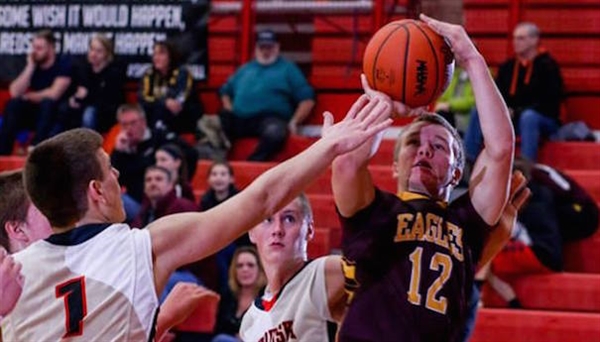
Fowler (6-1) – The Eagles took a mid-December loss to Bath, but remain the mix in the Central Michigan Athletic Conference after last week’s 63-56 win over rival and 2016 Class D semifinalist Fulton.
Deckerville (6-2) – These Eagles are looking to challenge Dryden again after splitting the North Central Thumb League title last season, and will circle the March 2 rematch with the Class C Cardinals after falling to them Dec. 12.
Can't-Miss Contests
Be on the lookout for results of these games coming up:
Monday – Negaunee (7-0) at Marquette (7-1) – Two Upper Peninsula league leaders will face off in one of the north’s top nonleague matchups this season.
Tuesday – Detroit Martin Luther King (6-1) at Detroit East English (7-1) – First place in the Detroit Public School League East Division 1, and superiority in the league as a whole, could be at stake.
Tuesday – Buckley (5-0) at Frankfort (5-0) – The Northwest Conference co-leaders are also potentially two of the best in all of Class D.
Tuesday – Dundee (9-0) at Hillsdale (8-0) – These two lead the Lenawee County Athletic Association and also are rising up the ranks in Class B.
Tuesday – Orchard Lake St. Mary’s (7-1) at Detroit U-D Jesuit (6-2) – The Eaglets are in the Detroit Catholic League Central conversation again, and can take a commanding step against the reigning Class A champion.
PHOTO: Deckerville, attempting a shot, earned a win over Sandusky earlier this season and sit 6-2. (Click to see more from Varsity Monthly.)