

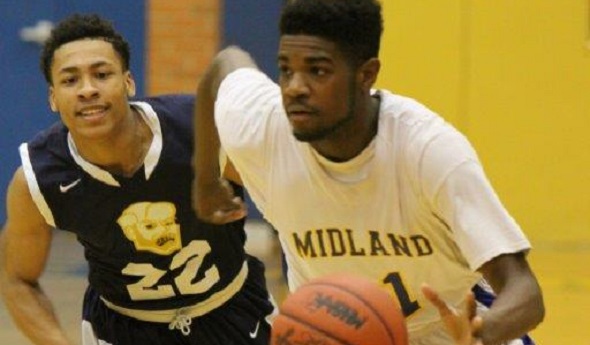
Midland Boys Hoops Earns 'Football' Buzz
March 21, 2016
By Bill Khan
Special for Second Half
MIDLAND — Payton DeWildt is accustomed to pep rallies at school.
 Just not during basketball season.
"It's just not something they do," the Midland High senior said. "Only when we play Dow, our crosstown rival."
And only in football.
"Midland High is known as a football school," said DeWildt, the quarterback on the Chemics' football team last fall. "When I was a freshman (on the varsity basketball team), the seniors were good. I said we've got to keep this winning tradition going and make Midland a basketball school, also."
In four seasons of basketball, DeWildt has known nothing but success, a concept that was foreign to a generation of hoopsters at Midland. The Chemics have won District championships in three of his four years after going 13 years without a title.
What sets this year's team apart is that it also added a Regional championship to the mix, the first for the Chemics since winning back-to-back titles in 1978 and 1979.
Suddenly, basketball is a big deal at Midland, worthy of the treatment usually reserved for the football team. A pep assembly will be part of the pregame hype at Midland before the Chemics face Macomb Dakota at 7 p.m. Tuesday at Grand Blanc in the MHSAA Class A Quarterfinals.
"There's quite a buzz," said 14-year coach Eric Krause. "It was really nice to see the people very excited. In the past football has been there, but it was really cool to see guys getting recognized. You like to see the efforts being rewarded, so it's really exciting. It's nice to see some of the older members of the community who will come to games, no matter what your record, and to see the excitement in their faces."
For the players, there is a sense that they are making history.
"Definitely," DeWildt said. "We just won the first Regional Final since 1979. We're trying to make it one more game. We just want to prove we're one of the best teams to come through Midland High, so we want to make it as far as we can."
If Midland can topple second-ranked Dakota (25-0), the Chemics (17-6) will reach the MHSAA Semifinals for only the second time in school history. The Chemics reached the semis in 1970, losing 82-71 to Detroit Pershing. Midland made the Quarterfinals two more times in the '70s, losing 72-53 to Flint Northern in 1978 and 66-58 to Saginaw in 1979.
A major reason why the Chemics haven't lasted to the final week of the postseason is geography. They not only play in one of the toughest leagues in the state, but they have had to go head-to-head with Saginaw Valley League rivals in the tournament. In the last three seasons, the Chemics lost in the 2013 Regional Semifinals to a Saginaw team that made the MHSAA Semifinals, in the 2014 District Semifinals to a Mount Pleasant team that made the MHSAA Semifinals, and in the 2015 Regional championship game to a Saginaw Arthur Hill team that was the MHSAA runner-up.
It's tough to go deep into the tournament when so many nearby schools are capable of going all the way to the Breslin Center. The Valley has had 12 schools combine to make the MHSAA Class A Quarterfinals 137 times. Five Valley schools — all from Flint or Saginaw — have combined for 22 MHSAA Class A championships.
"You had to play in a league that is arguably the best public school league, some years, in the nation in the 1990s before I got into it," Krause said. "I don't mean to take anything away from what we're doing, but Flint isn't Flint anymore — not the way it was. Dave MacDonald is a good friend of mine who coached Midland Dow for over 30 years. He'd be over .500 most years, some years with 12 or 13 wins. The amount of pros he coached against, people just don't understand.
"I believe the Valley is one of the best leagues in the state. The difference is it used to be one of the best leagues in the nation."
To reach the Quarterfinals, Midland had to take down one of the two elite Saginaw programs for the first time in the postseason since beating Arthur Hill in the 1971 District Final.
The Chemics split their regular-season series with Saginaw, each winning on its own home court, so what happened when the teams met for the Regional championship shouldn't come as a huge surprise. On a night in which the tension was felt on the court and in the stands, Midland knocked off Saginaw, 60-56.
Midland held a 10-point lead in the fourth quarter before Saginaw rallied to grab a four-point lead. Midland finished the game on a 12-4 run.
 "It was the best game I've ever played in my life, the most exciting game," said senior Matt Jarema, another four-year varsity player. "I can probably say that most of my teammates all said it was the most exciting game they ever played; it was something. We knew we were bigger and stronger than them. We knew we could beat them. That's what we came in and did."
The impetus for this year's Regional championship run was a tough loss to Arthur Hill in last year's Regional Final. Midland was within four points early in the fourth quarter before current University of Texas freshman Eric Davis scored 12 points in the final period to lead the Lumberjacks to a 66-52 victory. Arthur Hill went on to play for the Class A title.
"Ever since last year after that Regional Final loss against Arthur Hill, we knew this year we would win the Regionals and we'd be in the Quarterfinals," Jarema said. "Playing against Saginaw and Arthur Hill, they prepare us for pressure like no other. They get up on you. We believe their pressure is some of the best pressure we'll have to face each year to prepare us for this moment now."
Midland has won four postseason games but, much like its regular season, nothing has been easy. Three of the four games have been decided by four points or fewer.
The Chemics opened the postseason by beating Mount Pleasant, 49-48, taking the lead for good on Martin Money's layup with 34 seconds left. After a 58-37 rout of Saginaw Heritage in the District Final, the Chemics overcame adversity to edge Traverse City West, 61-59, in the Regional Semifinal at Gaylord. Center Kyle Johnson was nearly late for that game because of a flat tire, Krause was dealing with a flooded basement before leaving for the game, and West's cheering section dwarfed Midland's because of the travel. Then came the four-point victory over long-time nemesis Saginaw in the Regional Final.
And now a team that has lost six games is within one victory of playing in the Breslin Center.
"We're a very odd team," Krause said. "We know we can play with very elite teams, but we honestly can lose to a lot of teams that are levels below that elite level. We can lose to a lot of teams. Usually when you have teams go this far, that's not the case. We have a strange quality where if things aren't going well, we have to be ready for a close game. Sometimes that makes you not panic when the game is close, because you figure you're going to win the game. We're kind of an interesting team that way."
DeWildt returned from a shoulder injury for the postseason opener to lead Midland's tournament run. He is the only Chemics player averaging in double figures during the tournament, scoring 16.8 points per game.
The scoring is balanced after that, with Virgil Walker averaging 8.8 points, Garrett Willis and Johnson 7.3 apiece, and Jarema 7.0.
 Bill Khan served as a sportswriter at The Flint Journal from 1981-2011 and currently contributes to the State Champs! Sports Network. He can be reached at [email protected] with story ideas for Genesee, Lapeer, St. Clair, Sanilac, Huron, Tuscola, Saginaw, Bay, Arenac, Midland and Gladwin counties.
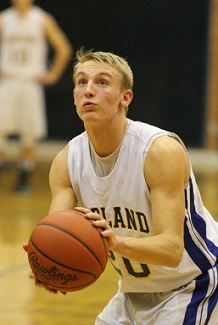
PHOTOS: Midland’s Virgil Walker drives past a Saginaw Arthur Hill player this season. (Middle) Payton DeWildt lines up for a free throw. (Photos courtesy of the Midland athletic department.)
Cass Tech 'Gamers' Force OT, Finish Surge to Reach 1st Final Since 1974
By
Dean Holzwarth
Special for MHSAA.com
March 24, 2023
EAST LANSING – Detroit Cass Tech’s Darius Acuff was held in check for a majority of the second half Friday by Grand Blanc’s defense.
The talented sophomore, however, came up clutch in a pivotal moment.
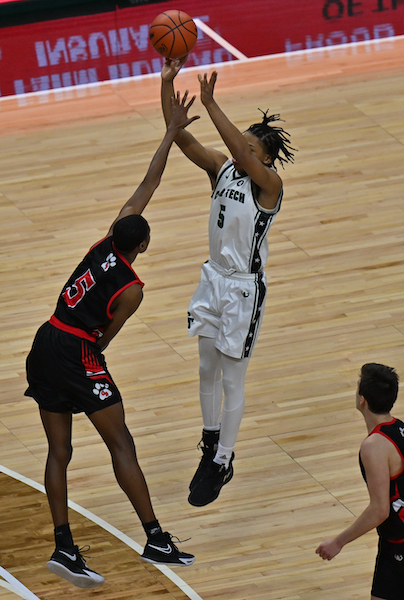
The 6-foot-2 guard forced overtime with a 3-pointer and then scored four points in the extra period to help lift the Technicians to a thrilling 62-56 win in a Division 1 Semifinal at Breslin Center.
Cass Tech (27-1) will play Muskegon in Saturday’s Division 1 Final.
After Grand Blanc senior Robert Williams made two free throws with 9.1 seconds left in regulation to put his team ahead 54-51, Acuff banked in a 3-pointer in the waning seconds.
It was only his second field goal of the second half after tallying 10 first-half points.
“Once I got open, I called for the ball and I knew I was going to shoot it,” said Acuff, who finished with a game-high 19 points, five assists and three steals. “I knew it was going in.”
The Technicians took control in the extra session.
A breakaway layup by Acuff pushed the Cass Tech lead to 59-56 with 55 seconds to play. He followed with a pair of free throws to make it 61-56.
“We have some gamers on this team, and he doesn’t practice to my liking a lot of times, but when those lights come on I can count on him,” Technicians coach Steven Hall said of his standout sophomore. “The last play out of the timeout that we got a 3 on, they executed it to the T.”
Cass Tech was making its first Semifinal appearance since 1993, and will play in its first Final since 1974, when it finished Class A runner-up.
Hall guided Detroit Rogers to three straight Class D titles (2003-05) and returned to his alma mater in 2015-16.
“It’s a wide range of emotions right now,” Hall said. “I’m happy to still be living to fight another day.
“For me, it’s my sixth time here but the first time with my school, and it's a dream of mine. It was a dream of mine for these guys. We came so close last year, and sitting here last year and watching the Semifinals was painful, but I’ve been dreaming of getting here with my school.”
Cass Tech ended a 22-game winning streak by Grand Blanc, which was denied a third-straight appearance in the Division 1 Final.
The Bobcats (25-3) rallied from an early deficit, but committed 18 turnovers for the game and were held to one field goal in overtime.
“We didn’t handle the pressure, and one of the keys of our offensive game plan was limiting turnovers,” first-year Grand Blanc coach Tory Jackson said. “You can't beat great teams like that with 18 turnovers, and we just didn’t handle the pressure like we were supposed to.
“Hats off to Acuff. He’s a tough player and by far one of the best players we've played all year. We got undisciplined at the end, and it’s frustrating because this was supposed to be ours. We left money on the table.”
Cass Tech jumped out to an early 11-4 lead as Acuff scored six quick points.
The Bobcats, however, trimmed the deficit to 17-15 in the second quarter with a 3-pointer in the corner from sophomore Donnie Huddleston.
The Technicians took a slim 26-25 lead into halftime.
Grand Blanc took its first lead, 35-34, midway through the third quarter on an offensive rebound and put-back by junior Anthony Perdue.
Cass Tech has become accustomed to close games.
“That’s us being tough and scrappy,” Acuff said. “It’s always going to come down to one possession, and it came down to that. Once we went to overtime we knew we were going to win, but we knew we had to fight for it.”
Senior Tae Boyd led the Bobcats with 16 points and 10 rebounds, while senior RJ Taylor had nine points.
Senior Kenneth Robertson added 15 points for Cass Tech, and freshman Corey Sadler Jr. added 14 points.
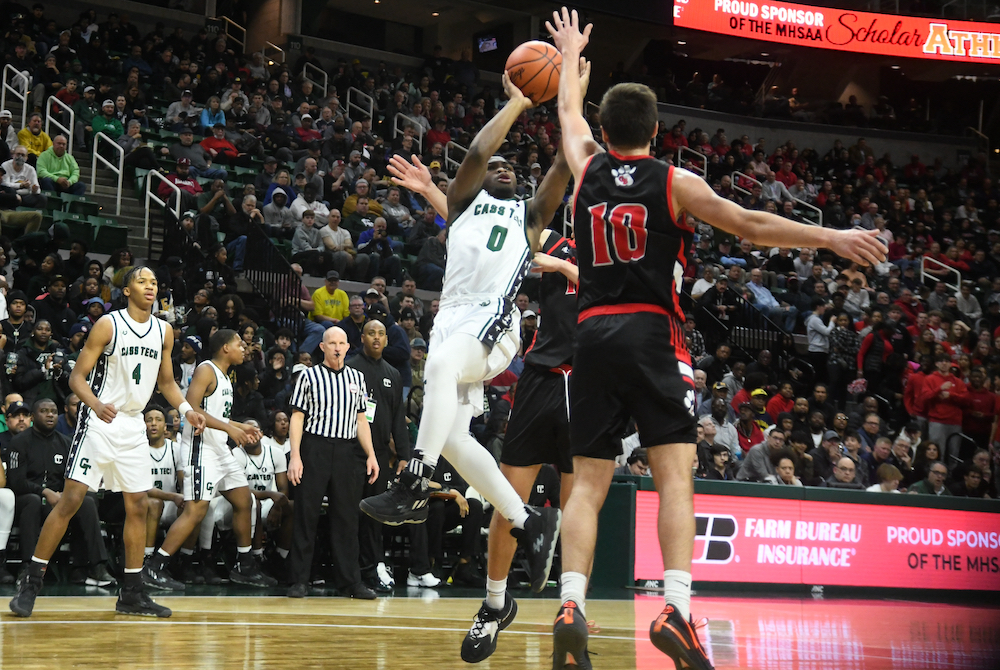
PHOTOS (Top) Detroit Cass Tech’s Corey Sadler Jr. (0) gets up a shot during his team’s Division 1 Semifinal overtime win Friday. (Middle) The Technicians’ Darius Acuff shoots the game-tying 3-pointer at the end of regulation despite the defense of Grand Blanc’s Anthony Perdue (5).